Historical Figures of the Jia Clan: Clues and Examination of Family Lineages
Historical figures including Jia Yi, Jia Sixie, Jia Dao, and Jia Dan demonstrate the cultural presence of the Jia surname in politics, agricultural science, literature, and geography, but sharing a surname cannot establish a clan relationship. Root-tracing still requires item-by-item verification against genealogies, local gazetteers, inscriptions, and family memories.
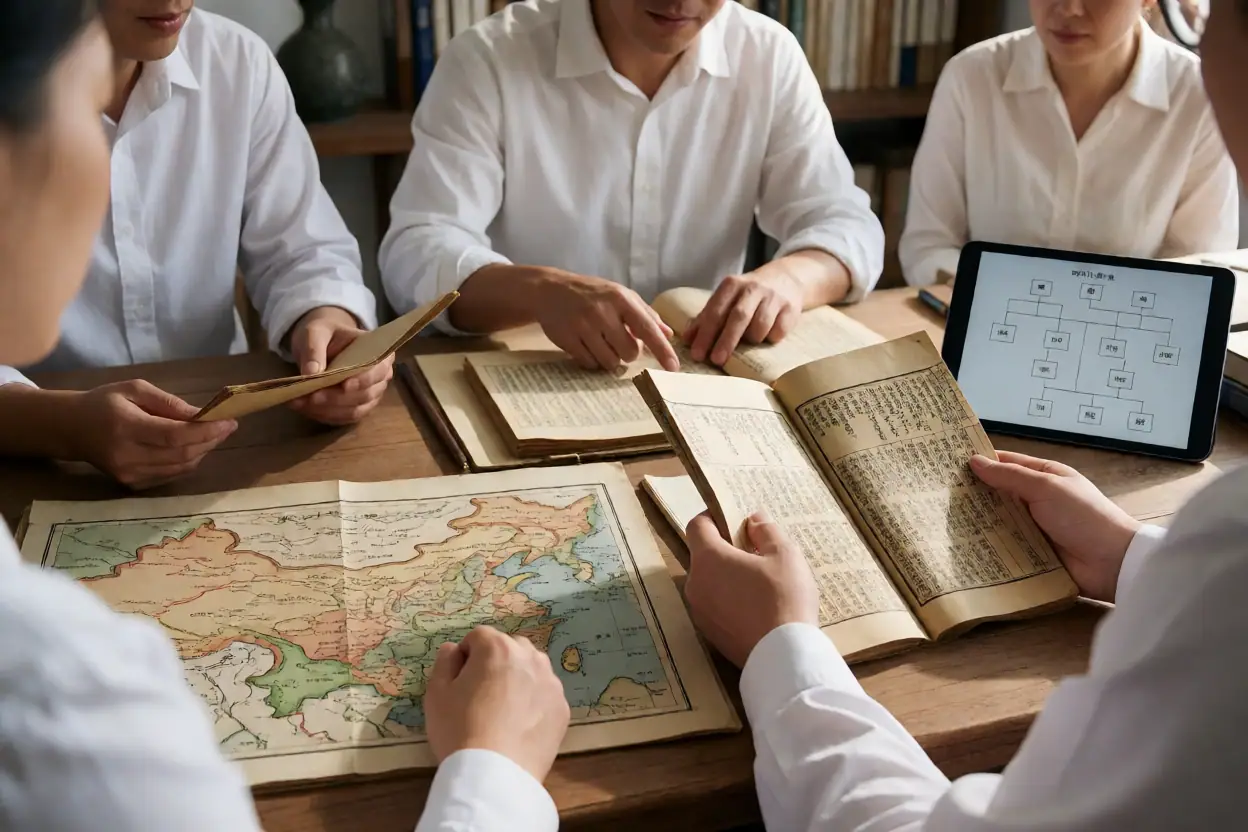
Compiling information on historical figures of the Jia clan reveals the multifaceted cultural imprint this surname left across different eras. Jia Yi of the Western Han was known for his political writings and fu poetry; works such as “On the Passing of Qin” are often used to examine political thought in the early Han. The Essential Techniques for the People, written by Jia Sixie of the Northern Wei, systematically preserved knowledge of ancient agricultural production. The Tang poet Jia Dao was known for his painstaking poetic composition, and the allusion of “pushing and knocking” has been passed down for centuries. Jia Dan of the Tang dynasty combined a political career with research into geography; catalogs of his related writings show that he paid considerable attention to regional geography, transportation, and knowledge of frontier regions. These figures can serve as an entry point for cultural research on people with the Jia surname, but they cannot be directly connected into a single clan lineage.
The value of a list of historical figures lies first in establishing research leads. Personal names, periods of life, official careers, titles of works, and areas of activity can each be compared with biographies in official histories, collected works, local gazetteers, inscriptions, and catalogs of genealogical records. For courtesy names, assumed names, birthplaces, official careers, and claims about ancestral residences passed down among the public, records dating close to the relevant period should be sought first. When different sources conflict, divergent accounts should be preserved side by side; conclusions should not be determined solely on the basis of a single biographical story.
There may be different origins and numerous local branches within the Jia surname. Even if two figures share the same surname, or their families use similar ancestral hall names or generation names, this is not sufficient to establish that they belong to the same clan. Ancestral hall names are sometimes adopted by multiple regions and branches, while generation names may be adjusted through genealogical revisions, branch divisions, or relocation. Determining whether a historical figure belonged to a particular family generally requires continuous records across generations, corroborated by the first ancestor to migrate, the ancestral residence, spouses, descendants, burial sites, and migration points.
Online genealogies are suitable for gathering genealogical prefaces, lineage charts, biographies, and records of genealogy compilation scattered across different regions. However, digitized entries must still retain information on the version, compiler, date of printing, and repository of the original item. Family memoirs can supplement details about relocations, occupations, marriages, and terms of kinship in modern and contemporary times, but oral accounts are susceptible to memory bias and should preferably be cross-checked against household registers, tombstones, contracts, letters, and inscriptions on old photographs. For modern and contemporary personal data involving privacy, the consent of family members should also be obtained and the scope of public disclosure controlled.
In the course of tracing family roots, local gazetteer databases can help verify changes in historical and modern place names, administrative divisions, figures who passed the imperial examinations, official records, and the settlement patterns of clans. If a genealogy records that a branch of the Jia clan moved from one place to another, one can first confirm the historical names and administrative changes of both places, then check whether genealogical records, ancestral hall records, and village documents in the destination contain the same ancestral names and kinship relationships. Catalogs of genealogical records preserved by overseas and regional libraries may also provide the titles and compilation information of lost versions, but a catalog entry does not mean that the lineage has been verified.
Accordingly, research on figures of the Jia clan should treat “the person’s historical record can be verified” and “the lineage can be connected” as separate matters. The former focuses on confirming an individual’s life and writings; the latter requires continuous, verifiable evidence of kinship. Only by comparing surname-related materials, online genealogies, family memoirs, and local gazetteers on the same timeline can the actual inheritance and migration route of a particular branch gradually be clarified.