An Examination of Historical Figures of the Qin Surname and Clues to Branch Migrations
Historical accounts of the Qin clan involve Wuling, Hanzhong, Shizhou, Jingzhou, Jinzhong, and other areas, with biographical events intertwined with migration legends. When organizing these clues, official historical records, local gazetteer materials, and genealogical lineages should be distinguished, and cross-checked through dates, place names, official titles, and different editions of genealogical records.
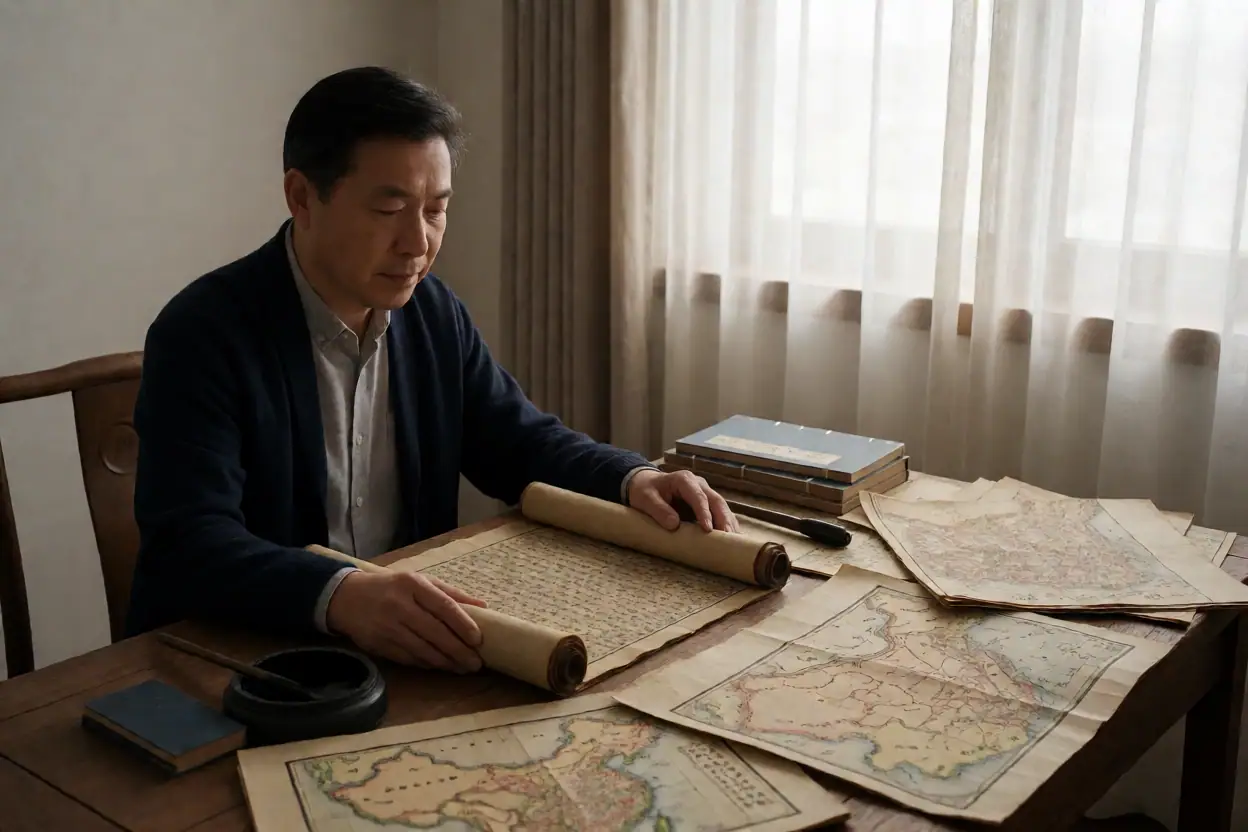
Accounts of historical figures of the Qin surname and family migrations often connect Hanzhong, Wuling, Wuxi, Shizhou, and Jingzhou with Sichuan, Chongqing, Shaanxi, and Shanxi. These records provide direction for understanding the formation of different Qin branches, but sharing a surname does not mean sharing the same lineage. Nor can Qin families in different places necessarily be traced to the same ancestor or migration route. Research should first establish the era in which each figure lived, and then examine when the genealogy was compiled and what sources it cited.
Earlier clues include Qin Erjian (覃儿健), Qin Wanchuan (覃万传), and Qin Yuanxian (覃元先). Accounts of Qin Erjian link his family's activities to the Wuling and Wuxi regions at the end of the Western Han dynasty. Qin Wanchuan is placed against the historical backdrop of southern campaigns during the Three Kingdoms period and the pacification of the Wuling mountain region, and some family narratives regard him as an important figure in the local development of the lineage. The story of Qin Yuanxian concerns the early years of the Southern Liang, Nanzheng in Hanzhong, and Dongningzhou, while accounts in later writings describe his name change and his office as a provincial governor. Because these figures lived in remote periods, and because the records may contain local legends, official titles, and later embellishments, the original texts of official histories, successive changes in geographical administration, and early genealogical editions still require verification.
Materials on Qin branches become relatively abundant after the Song dynasty. Accounts of Qin Ruxian (覃汝先) and his son Qin Bojian (覃伯坚) concern Qutang Pass, Shizhou, and Liucheng, and connect the family's establishment of household registration there with military events during the Southern Song. Accounts of the Qin Ao (覃鳌) branch center on migration from Taihe County in Ji'an Prefecture, Jiangxi, to Quyáng in Jingzhou, and also refer to titles such as Commander-in-Chief of the Imperial Forces and Marquis of Conquering the Frontier. Whether such official titles accord with the institutions of the time, and whether the relevant events can be corroborated in officially compiled histories or local gazetteers, is key to assessing the reliability of these records.
There are also inherited accounts concerning the ancestors of branches such as Qin Hong (覃洪) and Qin Tianze (覃天泽). The Qin Hong branch is described as having changed its surname from 秦 to 覃, after which its descendants moved through Chengkou, Ziyang, Hechuan, Yuechi, Xuanhan, and Zhenba. The Qin Tianze branch is considered to have originated in Dexing, Raozhou, Jiangxi, after which its descendants migrated to Jiaocheng, Shanxi, because of official appointments or settlement, and gradually spread across Gujiao and Taiyuan. The reasons for the surname change, the date of the first migration, kinship relationships, and the number of generations of descendants rely primarily on branch genealogies; they cannot be used to infer that all local Qin families share common ancestry.
The ZongMai surname archives also preserve information on Qin hall names, commanderies of origin, and regional distribution. These include the Longxi Hall designation and references to Longxi, Tianshui, and Henan as commanderies of origin, while the current distribution of descendants includes Hubei, Hunan, Henan, Jiangxi, and Anhui. Hall names and commanderies of origin often carry cultural identities; they do not necessarily correspond to ancestral homes or bloodline genealogies that can be continuously documented, and they cannot directly replace genealogical evidence.
Research into Qin family roots can begin by establishing the relevant region and range of generation characters in surname materials, followed by comparing lineages, genealogy prefaces, migration records, and information about compilers through online genealogies. Family memoirs can supplement details about migration, marriage, and daily life in modern times, while local gazetteer databases are suitable for verifying former place names, changes in administrative divisions, official positions, and historical figures. If images of old genealogies, inscriptions on tombstones, contracts and other documents, and oral accounts preserved within the family can be collected at the same time, with the date and custodial status of each item recorded, this can help distinguish historical facts, branch traditions, and later legends, and gradually establish a more reliable picture of the family's history.
Learn More and Verify
- Migration clues and branch analysis in the genealogical records of the Pan clan
- Historical Figures of the Pang Surname and Clues for Tracing Family Roots
- Hou surname figures and branch clues: from historical records to tracing family roots
- Historical figures associated with the Yang clan and a critical examination of family-root research
Genealogy Knowledge and Methods for Compiling Genealogies · Finding Genealogies and Local Gazetteers · Organize family-root-seeking leads