The Cemetery Layout of Emperor Jing of Han’s Yangling and an Analysis of Han Surname Root-Seeking
Han Yangling is the joint burial cemetery of Liu Qi, Emperor Jing of Han, and Empress Wang. Its archaeological remains provide important clues for understanding the imperial mausoleum system, court life, and funerary rites of the Western Han. The “Han” in the name mainly refers to the dynasty, and cannot be used to infer a relationship with Han-surname clans.
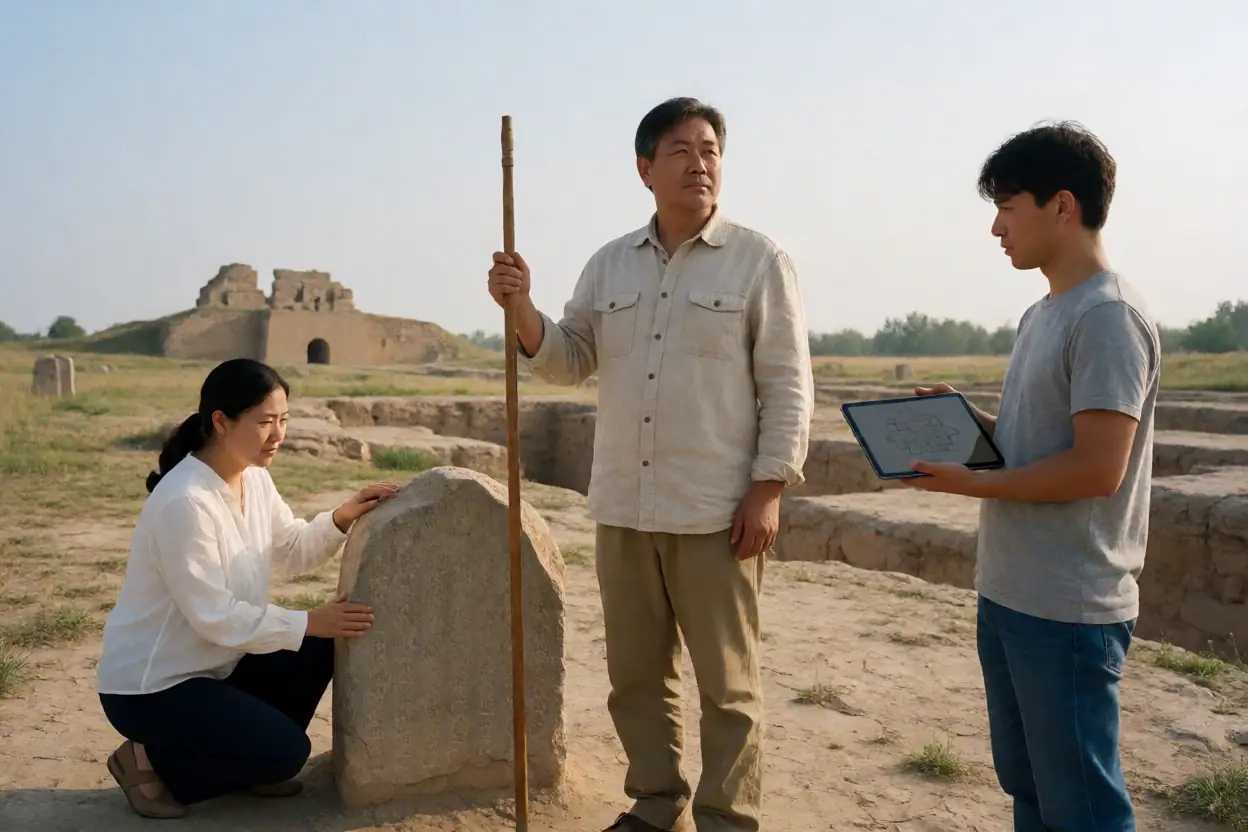
Han Yangling generally refers to the joint burial cemetery of Liu Qi, Emperor Jing of Han, and Empress Wang. According to recorded sources, the cemetery is located on the Xianyang Plain in the area of present-day Xianyang, Shaanxi, spanning parts of Weicheng, Jingyang, Gaoling, and other areas. Since the 1990s, relevant institutions have carried out surveys, mapping, drilling, and excavations at the site, gradually clarifying the cemetery’s spatial structure and types of remains.
According to existing archaeological introductions, Yangling extends nearly six kilometers from east to west, is about one to three kilometers wide from north to south, and covers a total area of about twelve square kilometers. The site includes the emperor’s mausoleum, the empress’s mausoleum, northern and southern attendant burial pits, accompanying burial grounds, convict cemeteries, ritual buildings, and Yanglingyi. The emperor’s mausoleum is located slightly west of the center of the cemetery, with the empress’s mausoleum, some attendant burial pits, and building foundations distributed around it. The accompanying burial grounds are mainly found on both sides of the road east of the emperor’s mausoleum, presenting an overall plan centered on the emperor’s mausoleum, with a clear axis and an emphasis on symmetry.
The burial forms and orientations of the emperor’s and empress’s mausoleums, along with the discovery of more than eighty attendant burial pits, are important materials for studying the imperial mausoleum system of the Western Han. The attendant burial pits in the southern and northern areas have yielded or revealed warrior figurines, pottery models of livestock and poultry, as well as ceramic, iron, and bronze daily utensils. These objects may be symbolic representations of military life, storage, production, and the daily order of the court. Whether they directly correspond to specific Western Han military institutions should still be determined based on formal archaeological reports and subsequent research.
The remains of the cemetery’s southern gate towers also have significant value for the study of architectural history. Related excavation materials cover the layout of the gate towers, architectural components, and ritual spaces, providing physical evidence for observing high-status architecture of the Han dynasty. The Luojingshi site is located in the southeastern part of the cemetery. Sources indicate that its plan is close to square, that a ditch may have been set around its perimeter, and that large stones remain in the central area. However, its exact nature and function should not be judged solely from its name.
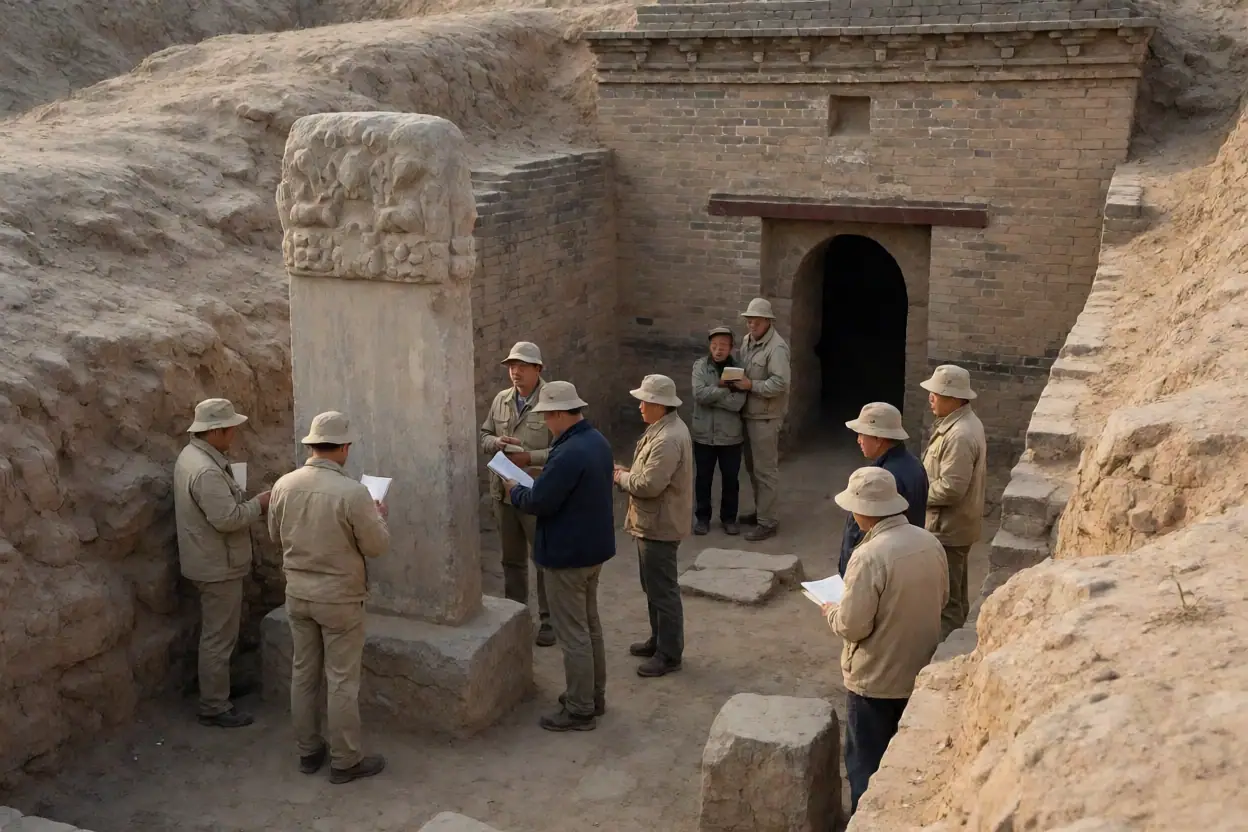
From the perspective of surname culture, the “Han” in “Han Yangling” is first and foremost a dynastic identifier, not the name of a Han-surname clan. It is not possible to derive Han ancestors, branches, or migration relationships directly from the place name. ZongMai surname materials summarize the Han surname as having multiple origins, with related accounts possibly involving place names, official positions, and local branches. Information such as the Henan Hall and commandery-based hall names including Henan, Runan, and Jingzhao can serve as search clues, but cannot replace cross-verification through original genealogies, inscriptions, household registers, and local gazetteers. People who share the Han surname are not necessarily of the same lineage, and a family line cannot be connected solely on the basis of having the same hall name.
When conducting Han surname root-seeking, one can first check online genealogies for records of the first migrant ancestor, generational names, places of residence, and marital ties, then use village histories, biographies, ancestral halls and tombs, and migration records in local gazetteer databases as supporting evidence. Family memoirs can supplement modern and contemporary life history, but dates, kinship terms, and migration routes in oral accounts should be verified against documents. Placing Yangling archaeology alongside family research is valuable for understanding the historical background of the Han dynasty, not for directly incorporating the name of an imperial mausoleum into a particular surname lineage.