Tracing Clues to the Zeng Family Roots in Volume 2 of the Wucheng Zeng Clan Genealogy, Fourth Revision
Existing archival materials indicate that the complete set of the Four-Revised Genealogy of the Zeng Family of Wucheng may consist of thirty-eight volumes, and that Volume Two contains approximately one hundred and fifty-six pages. Since the meaning of “Wucheng” in the genealogy’s title, the date of compilation, the editor, and the branch to which it belongs have not yet been established, conclusions concerning the lineage and migrations still require further verification against the genealogical preface, catalog, local gazetteers, and old family holdings.
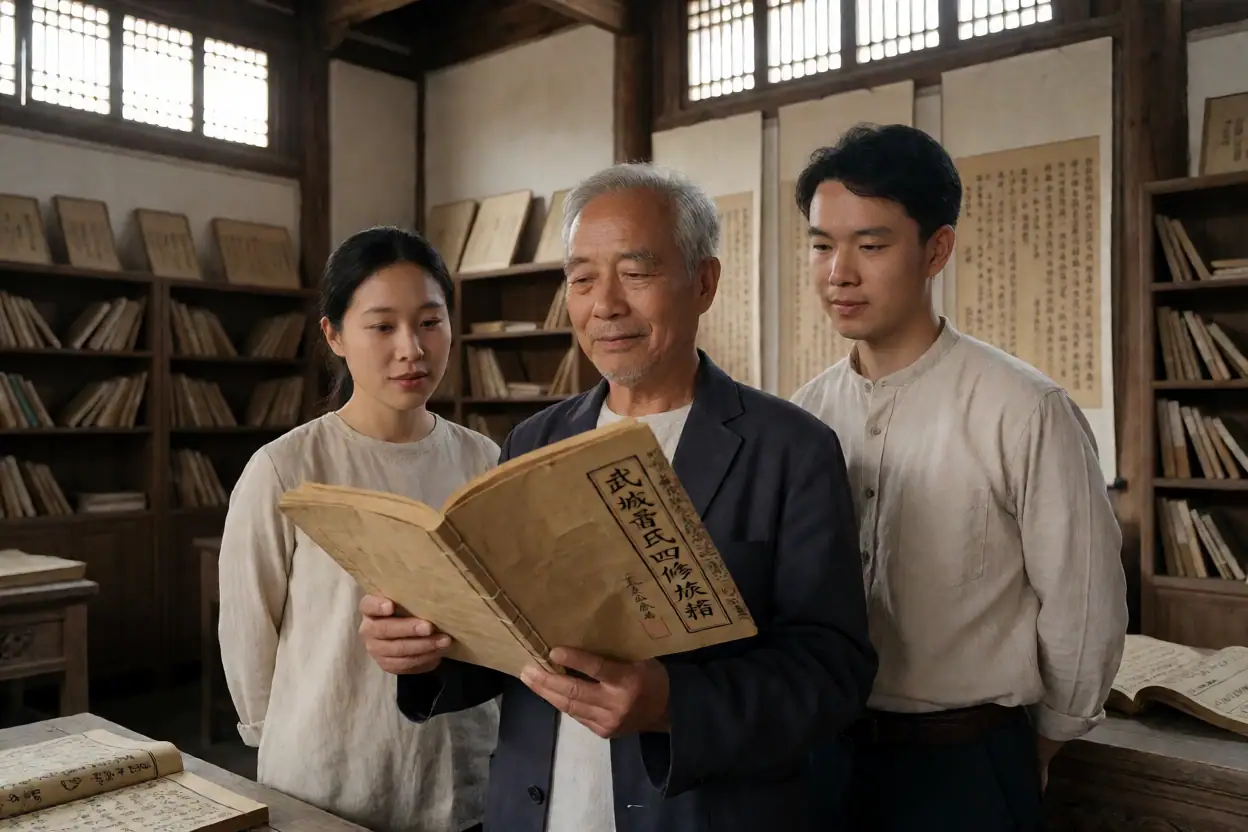
The Wucheng Zeng Clan Genealogy is a genealogical record centered on the Zeng family. Existing catalog clues indicate that the complete set may consist of 38 volumes; the volume available here is Volume 2, listed as approximately 156 pages. “Fourth revision” usually means that the genealogy underwent multiple continuations or revisions after its initial compilation. However, the dates of the various revisions, their organizers, participating branches, and the relationships among successive editions currently lack prefaces, editorial notes, and postfaces that can be directly verified. Its specific period therefore cannot be inferred from the title alone.
The term “Wucheng” in the title requires particularly careful analysis. It may be a geographic name, a branch designation, a commandery or ancestral-origin term, or may have another meaning within the clan. Until the cover inscription, preface, and migration records have been examined, “Wucheng” should not be directly identified as a surname, nor should it be asserted on that basis that the genealogy has a definite connection with any present-day administrative area. The surname represented in this genealogy should be understood from the title as Zeng, but people who share the Zeng surname do not necessarily belong to the same ancestor or branch.
The role of Volume 2 within the complete genealogy remains to be confirmed. When traditional genealogies are divided into many volumes, they may allocate the preface, origins and lineage, lineage charts, biographical entries, ancestral-hall property, tomb maps, writings, or a genealogy-compilation roster among separate volumes. These are only common organizational formats and cannot replace an examination of this volume’s table of contents and main text. When tracing family roots, one should first record the first page, table of contents, page-center inscriptions, page numbers, and volume sequence, then check whether the volume contains information that can be cross-verified, such as the founding migrant ancestor, places of residence, generation names, branch names, spouses, children, and burial sites.
To determine whether a particular family corresponds to this genealogy, begin with established facts from the most recent three to five generations. Organize variant forms of names, birth order, birthplaces and places of residence, marital relationships, and oral accounts of relocations, then connect them generation by generation in an online genealogy based on the evidence. Family memoirs can preserve elders’ accounts of ancestral residences, rituals, ancestral halls, and migration routes, but orally transmitted dates are often misaligned. The speaker, recording date, and uncertain portions should be noted, and missing generations should not be filled in directly on that basis.
Local gazetteer databases can be used to verify changes in former place names, village establishments, population movements into an area, ancestral halls and temples, and records of Zeng family activities in the locality. If a hall name or generation-name sequence appears in the genealogy, its geographic scope of use and ordering should also be compared, because similar hall names may be shared by different regions and branches, while the same characters may be used in different generational orders. Surname databases provide a starting point for searches; actual kinship relationships should still be established on the basis of the original text within the genealogy, household-registration documents, inscriptions, contracts, and mutual corroboration from multiple family members.
At present, the most valuable information provided by this genealogy is its title, the indication of the number of revisions, the scale of the set, and the page-count clue for Volume 2. Only if the preface, editorial notes, table of contents, and key lineage pages can later be supplied will it be possible to further confirm its compilation period, geographic scope, hall name, generation-name sequence, and the migration patterns of its branches.
Learn More and Verify
- Organization and ancestral research leads from Volume 34 of the Zeng Clan Genealogy, Ninth Revision, descendants of Fu Gong
- Jiang Clan Genealogy, Book 43: Tracing Family Roots Through the Genealogy Book Number
- Hainan Zhu Clan Genealogical Records: Tracing Family Roots Through a Single Genealogy Volume
- Village memories and clan ancestral-root clues of the Lao surname
Genealogy Knowledge and Methods for Compiling Genealogies · Finding Genealogies and Local Gazetteers · Organize family-root-seeking leads