Origins and Development of the Mingguang Yue Lineage: Migration and Surname-Change Clues in Shrine Records
Among the Yue families in the Dayue and Xiaoyue areas of Mingguang, Anhui, local memory includes accounts that they were descendants of the Yang family of the Song dynasty and that some changed their surname to avoid calamity. Existing ancestral spirit tablets and local writings, however, offer another clue: at the end of the Ming dynasty, a Yue woman took a Yang-surnamed man as a live-in husband to continue the Yue ancestral line. The relevant lineage and the more remote origins of the Yue surname still require cross-checking against genealogies, inscriptions, and local gazetteers.
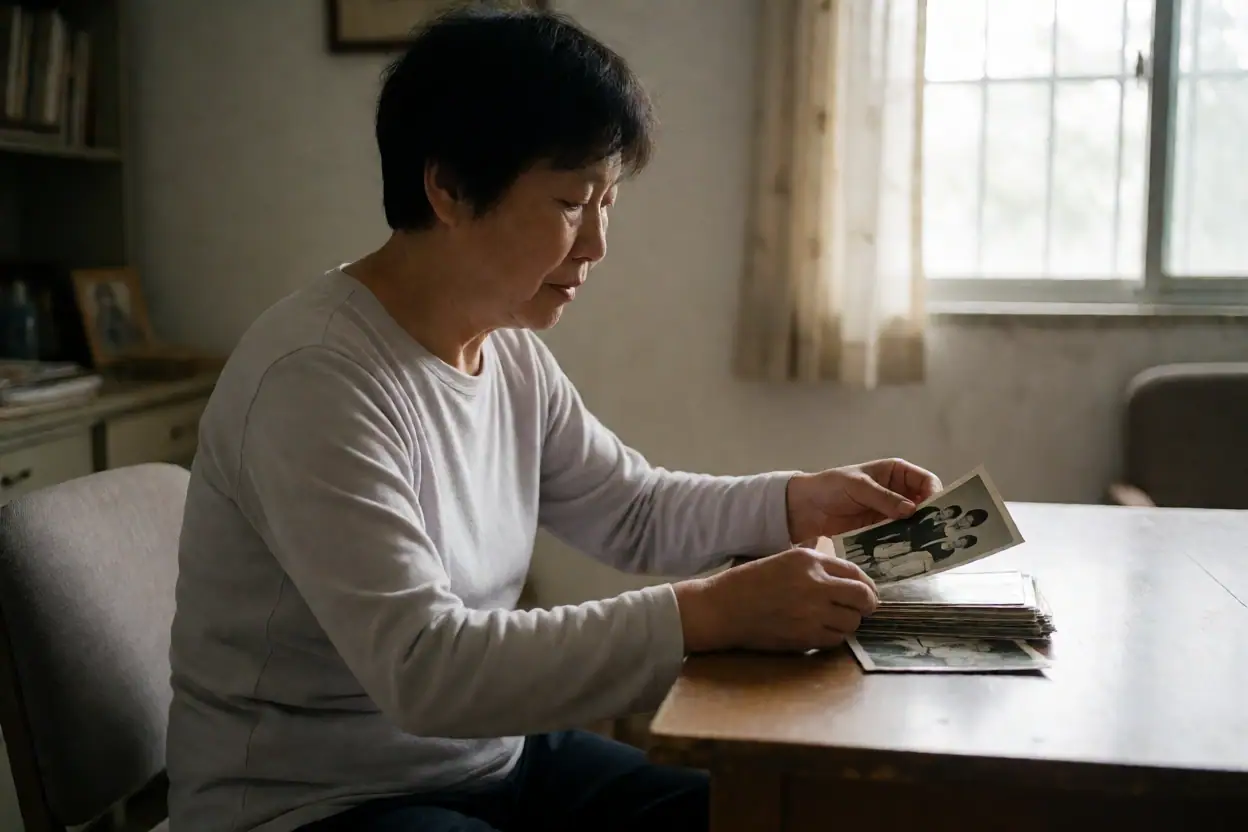
In the area around Guandian Town in Mingguang, Anhui, there are now settlements such as Dayue and Xiaoyue associated with the Yue family. Local traditions about the family's origins are extensive. One widely circulated account links this branch of the Yue family to Yang Yanzhao of the Song dynasty, known in popular tradition as “Yang Liulang,” and explains that Yang descendants changed to the Yue surname either to avoid calamity or through adoption. Because such accounts rely mainly on later oral testimony, and because there is currently no genealogy, epitaph, or contemporaneous document that can provide a continuous link between the Song-era figure and the Mingguang Yue family, they should be preserved as family memory and cannot be directly treated as a verified lineage conclusion.
Records in local writings concerning the Yue ancestral shrine's spirit tablets provide more specific clues for understanding this branch. The relevant text states that after the wars at the end of the Ming dynasty, only one daughter remained among the Yue descendants. She therefore took Yang Jiu, the son of a Yang-surnamed maternal uncle, as her husband, and Yang Jiu, who was sixth in birth order, entered the Yue family line. To continue the ancestral line and make the arrangement clear to later generations, the text on the spirit tablet also explains how forms of address and surnames were handled. If this record is indeed from the original shrine spirit tablet, or from a reliable transcription of it, one possible path by which the Mingguang Yue family developed its present line of descent is that a Yue woman took a Yang-surnamed man as a live-in husband and their descendants continued the Yue lineage, rather than Yang descendants generally changing their surname to Yue to escape disaster.
This may also explain the local memory of “three ancestral portraits.” Following the account recorded in the shrine text, those commemorated in the portraits may have included Yang Jiu, his Yue wife, and later descendants. However, the specific names, kinship relationships, and arrangement of the portraits should still be determined from the originals, inscriptions, or genealogical records, and should not be filled in solely from legend. Names appearing in the writings, such as “Yue Shanhai,” also need to be compared one by one with extant genealogies, ancestral spirit tablets, and later genealogical prefaces.

As for the Yue family's earlier origins, another text states that it “originated in Jinyang” and identifies the state of Yue in the Spring and Autumn period and King Goujian of Yue as remote ancestors, while also noting that they were already being worshipped in the Xiaoheng Mountain area of Xuyi at the beginning of the Ming dynasty. Because claims involving “Jinyang,” the “Si surname,” and “descendants of the state of Yue” carry strong cultural and genealogical symbolism, they cannot by themselves prove that the local Mingguang branch has a complete, verifiable paternal line connecting it to the royal house of ancient Yue. The geographic correspondence between Dayue and Xiaoyue and Xiaoheng Mountain, separated by the Nansha River, can only indicate a connection between the settlements and the locations mentioned in the records that merits investigation; it cannot alone establish an uninterrupted lineage spanning more than six hundred years.
For further ancestral research, cross-checking should be conducted on multiple levels. First, compile the names, birth-order numbers, spouses, and places of residence recorded on the shrine spirit tablets, portrait-box notes, tombstones, and old genealogies, then compare them with drafts of the Jiashan County local gazetteer, changes in administrative divisions, and the generation names used within the clan. Online genealogies can be used to establish a preliminary lineage and identify variant readings, while family memoirs are suitable for preserving oral traditions; both should, however, identify the recorder, date, and nature of the evidence. By consulting surname materials, local gazetteers, and physical documents against one another, it will gradually become possible to assess when the Mingguang Yue family settled there, how the surname was passed down, and whether different branches truly share a common ancestral relationship.
Learn More and Verify
- An Analysis of the Origins and Development of the Mingguang Yue Lineage: The Yang–Yue Marriage Alliance and Local Memory
- The Dongguan Li Family Ancestral Shrine Stele: Clues to Ancestral-Shrine Construction in the Inscription
- From Dongxing to Wumen: Migration and Examination Traditions of a Branch of the Miao Family
- Clues from the genealogy of the Wen Ancestral Hall in Huangxi, Ningdu, and research pathways
Genealogy Knowledge and Methods for Compiling Genealogies · Finding Genealogies and Local Gazetteers · Organize family-root-seeking leads