Yang Xiu and Sima Yan: Trust and Boundaries in Elite Social Networks of the Wei-Jin Period
Yang Xiu came from the Yang clan of Taishan and was connected by marriage to the Xin clan. In his youth, he studied alongside Sima Yan. The two later developed a deep friendship, and Yang Xiu supported Sima Yan in the competition over succession rights and throughout his political career. However, their relationship is more appropriately described as that of classmates, friends, and political allies, rather than blood relatives of the same lineage.
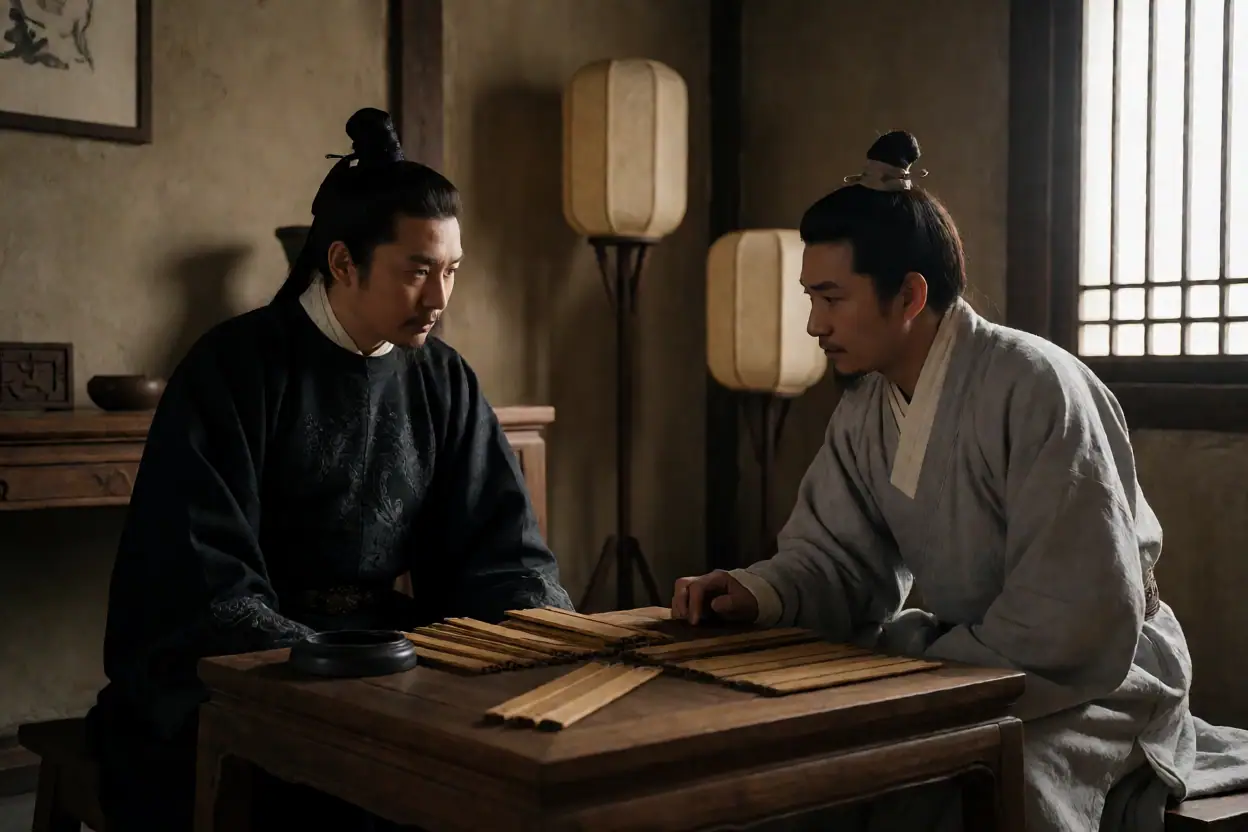
Yang Xiu was an important figure of the Yang clan of Taishan during the Wei-Jin period. Existing biographical materials state that his father, Yang Dan, once served as Minister of Ceremonies, and that his mother was Xin Xianying; his maternal family, the Xin clan, likewise had a distinguished aristocratic background. Yang Xiu also had clan ties with figures of the Yang family such as Yang Hu, and he is therefore often examined within the broader development of the Yang clan of Taishan. However, in the Wei-Jin period, people sharing the same surname did not necessarily belong to the same branch of a lineage, and the precise degree of kinship should still be verified through mutual comparison of genealogies, epitaphs, and official histories.
The special relationship between Yang Xiu and Sima Yan was mainly founded on the bond of having studied together in their youth. According to relevant accounts, the two met quite early when they were young and maintained close contact. Before Sima Yan became heir apparent to the Prince of Jin, Yang Xiu was already close to him and provided support in the succession struggle and in political planning. After Sima Yan ascended the throne, he still remembered this old friendship, and therefore showed a certain degree of leniency when dealing with Yang Xiu’s faults. From this perspective, Yang Xiu was not a member of Sima Yan’s imperial clan; their connection was mainly that of classmates, old friends, and political allies.
Yang Xiu’s official career was also intertwined with the political situation of the Wei-Jin period. When Zhong Hui set out on the campaign against Shu, Yang Xiu served as his military aide. Relevant records state that before his departure, Xin Xianying reminded him to observe the situation carefully; Zhong Hui later launched a rebellion, and although Yang Xiu tried to dissuade him, he was unable to change the outcome. After returning to the state, Yang Xiu still received certain rewards for his conduct. This experience shows, on the one hand, that Yang Xiu was positioned at the center of military and political affairs, and on the other, that his personal reputation and family background were influential at the time.
Biographies also preserve several stories about Yang Xiu’s character: he was self-assured in his dealings with others, paid attention to refined household objects and the scale of banquets, once had an unpleasant encounter with Du Yu over the way he received guests, and was also associated with anecdotes about warming wine in winter and making finely crafted wine vessels. Such anecdotes help present the lifestyle of Wei-Jin aristocratic families, but should not be treated directly as a complete and unquestionable personal chronology. In studying Yang Xiu, one may compare biographies, surname materials, online genealogies, family memoirs, and local gazetteers, with particular attention to verifying the specific relationships among his paternal line, maternal line, relatives such as Yang Hu, and the migration clues of the various branches of the Yang clan of Taishan. As for the Si family, materials related to Sima Yan can also be further traced in conjunction with records of the Si family’s commandery origins, hall names, and local gazetteers. However, whether a more distant marital or branch-line connection existed between the Si surname and the Yang surname cannot be inferred solely from personal association or activity in the same locality.
Learn More and Verify
- The Si Surname and the Compound Surname Sima: Records of Historical Figures and Analysis of Clan Lineages
- Clues to the Sihui Gong Branch in the Huangtun Wang Genealogy
- Sima Rangju: A Spring and Autumn–period General Who Disciplined the Qi Army Through Military Orders
- Emperor Gong of Jin, Sima Dewen: His Life and Fate Before and After the Fall of the Eastern Jin
Genealogy Knowledge and Methods for Compiling Genealogies · Finding Genealogies and Local Gazetteers · Organize family-root-seeking leads