Genealogy Continuation and Joint Compilation Activities of the Cong Clan in Wudi, with Clues for Cross-Regional Ancestral Root-Seeking
A record of a clan activity indicates that the Cong clan of Wudi once convened local clan members and members from various other areas to discuss continuing and consolidating their genealogies. The focus was on adding branches that had migrated elsewhere, verifying genealogical lines, and restoring connections. The migrating ancestor, dates of migration, and relationships among branches in different places still require further verification against old genealogies, local gazetteers, inscriptions, and household-registration documents.
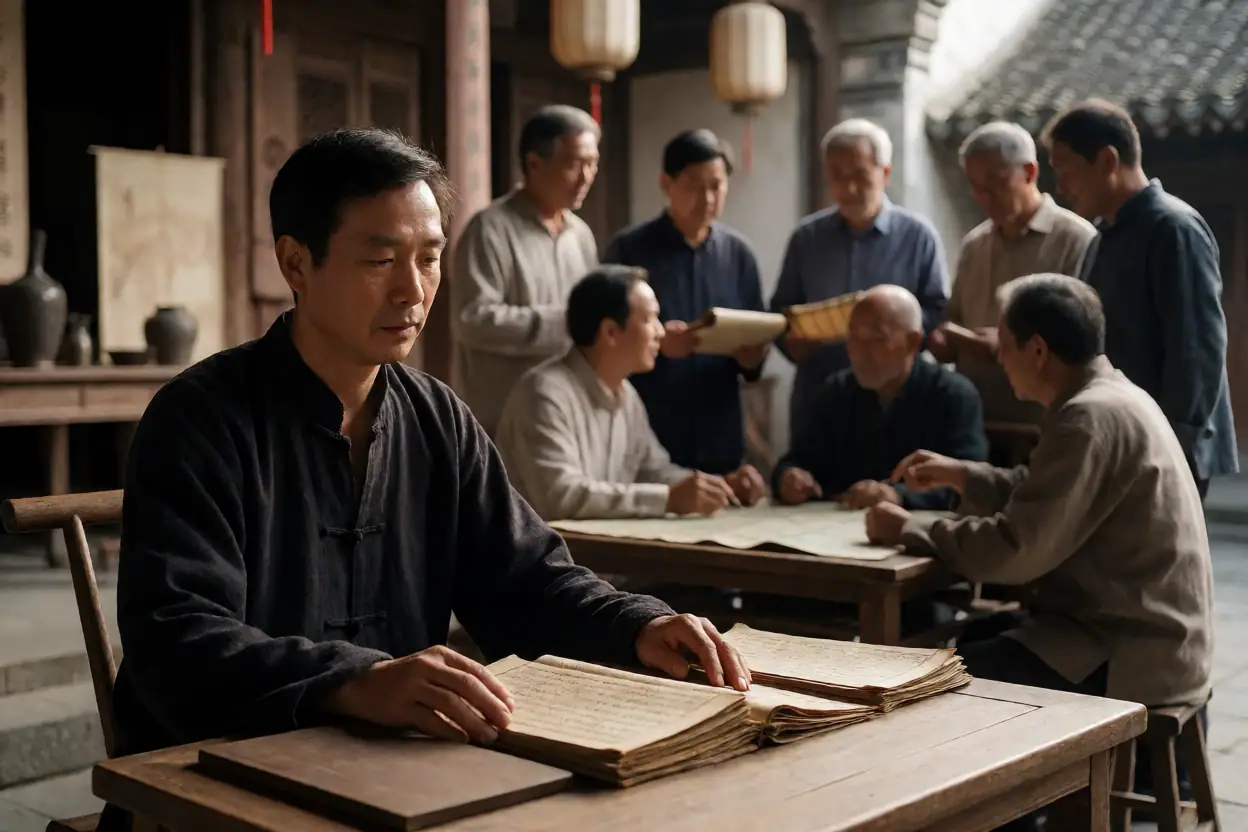
An activity to continue and jointly compile the genealogy of the Cong clan in Wudi provides a relatively concentrated set of clues for examining local family migrations, branch distribution, and the continuation and revision of genealogical records. Existing records state that the event took place at Wuying Mosque in Chewang Town, Wudi County, and that, in addition to local clan members, Cong clan members attended from Chifeng, Inner Mongolia; Tianjin; Heze, Shandong; Cangzhou, Hebei; Encheng, Dezhou, Shandong; Shenyang, Liaoning; and Changchun, Jilin. The records give differing figures, including “more than 1,000 people gathered” and “nearly 300 relatives from outside the area attended.” These may refer respectively to the total number of people present and the number of guests from elsewhere, but they should still be checked against sign-in registers, conference rosters, or visual materials.
The core purpose of this activity was not simply to hold a gathering, but to discuss continuing and jointly compiling the genealogies. As the range of population movement has expanded, contact between some families that moved elsewhere and their places of origin has gradually weakened, while old genealogies are also prone to omissions, gaps between generations, variant forms of names, and changes in place of residence. Genealogical continuation work usually begins by collecting old genealogies, family-held documents, inscriptions on tombstones, ancestral tablets, household registration records, and oral memories, and then classifying and cross-checking them by family, branch, and place of residence. Where the evidence cannot form a complete chain of verification, uncertainties should be retained rather than connecting lineages solely on the basis of a shared surname, identical generation names, or oral tradition.
Regarding the origins and development of the Cong clan in Wudi, the activity record puts forward a noteworthy account: one local branch honors an ancestor known as “Yingzu” as the ancestor who migrated there, stating that he moved from Changle to Wudi during the Yongle period of the Ming dynasty, more than 600 years before the relevant activity took place. Since the materials currently available do not include original pages from old genealogies, records of the first migrant ancestor, inscriptions, or entries in local gazetteers, this account of migration may serve as a direction for ancestral research, but should not yet be regarded as a fully verified historical conclusion. The full name of “Yingzu,” his position in the genealogy, the reason for the migration, and the village where he first settled also await supplementation from additional family archives.
The Cong surname itself may encompass different origins and local branches. ZongMai surname materials list Guangling Hall as a clue concerning the Cong clan hall name and include Guangling, Jiangdu, and Henan among its commandery-origin designations, while also recording distributions in Jiangxi, Fujian, Guangdong, Zhejiang, Taiwan, and other places. These materials reflect certain aspects of Cong clan culture and population distribution, but cannot establish that Cong clans in all these places descend from a single ancestor. Hall names and commandery-origin designations are sometimes cultural identifiers used by branches over long periods, and may sometimes also derive from later identification. Determining whether the Wudi branch has a documentable bloodline connection with Cong clans in other regions still requires continuous genealogical records and reliable documents.
Further compilation can proceed on three levels: first, establish a basic directory of Cong clan families in each village of Wudi; next, trace the people and dates of migration from among the groups that moved to Chifeng, Tianjin, Cangzhou, Shenyang, Changchun, and other places; and finally, compare genealogical records with the local gazetteers of Wudi, Changle, and the places where migrants settled. Online genealogies are suited to collecting lineage information from clan members in different locations; family memoirs can preserve migration experiences, marital ties, and memories of daily life; and local gazetteer databases can help verify changes in place names, administrative arrangements, and settlement records. Only by labeling documentary evidence, physical materials, and oral information by category can the continuation and joint compilation of the genealogies develop a relatively clear and verifiable foundation while respecting family memories.