The Legend of Bosi Zhuang and the Nai Surname in Yangzhou: A Local Memory Still Awaiting Verification
Stories about Bosi Village and descendants of the Nei surname have circulated in the area around Daqiao Town in Jiangdu, Yangzhou. Existing accounts involve the Maritime Silk Road, cross-regional marriages, and changes in local place names, but the origins, genealogies, and surviving traces still require further comparison with family genealogies, local gazetteers, and material evidence.
In the area around Daqiao Town, Jiangdu District, Yangzhou, there is a village that local people commonly call “Bosi Zhuang.” Local stories about its origins have long connected it with Persian merchants. According to one account, Yangzhou was an important hub for water and land transport and overseas trade during the Tang dynasty. A merchant from the West married a local woman of the Guo surname and later died while helping resist troops and bandits, after which the village came to be known as “Bosi,” meaning Persian. This legend links the place name with marriage and community memory, and also reflects the cross-regional exchanges associated with Yangzhou as an ancient transportation hub.
Another widely circulated local account holds that residents of the Nai surname in the Bosi Zhuang area may be connected with this story. According to a 2018 field-visit record, the village had several dozen households and more than 100 residents of the Nai surname. Some older residents said that their ancestors had come from “a very distant West.” Stone bars and carvings considered to have an exotic style were also once seen in the village. However, these oral accounts and surviving remains can currently serve only as leads for research. They are not sufficient on their own to prove the specific ancestral origin of the Nai-surname group, still less to establish that all people bearing the Nai surname descend from the same branch. Sharing a surname does not mean belonging to the same lineage; family relationships should still be assessed through mutually corroborated continuous genealogies, migration records, and primary documents.
There is indeed a long historical background of interaction between Yangzhou and the Persian world. The ancient Maritime Silk Road connected East Asia, Southeast Asia, the shores of the Indian Ocean, and the Persian Gulf region, with Yangzhou serving at various times as an important port and commercial node. Objects and other clues related to overseas trade have been found in Yangzhou and its surrounding areas, while archaeological discoveries along the Persian Gulf have also been associated with exchanges involving Chinese ceramics. These materials can indicate that trade existed between the regions, but they cannot directly prove that a particular village was founded by a specific Persian merchant, nor can a family’s ancestry be confirmed solely through a place name or artifact.
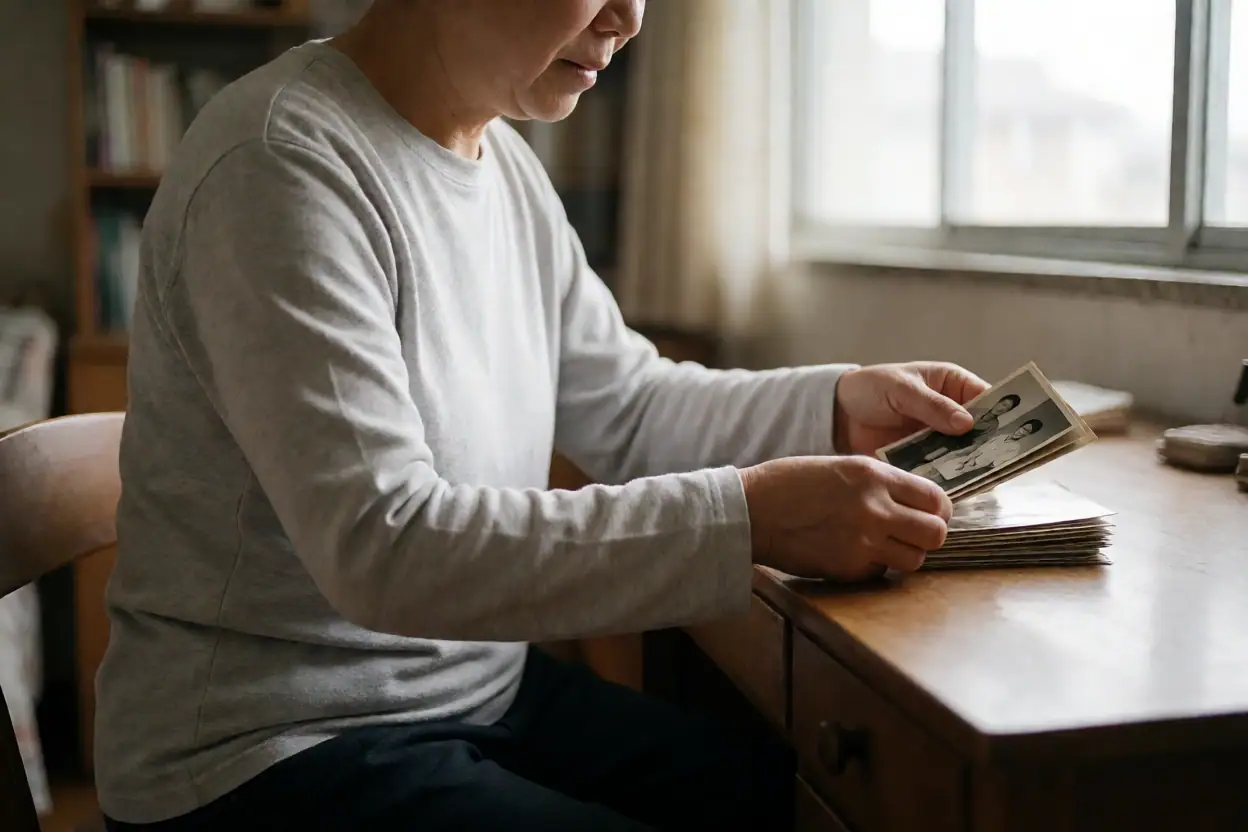
Further research into the relationship between Bosi Zhuang and the Nai surname could proceed along several lines. First, researchers should seek out Nai clan genealogies, handwritten family registers, tomb inscriptions, ancestral hall records, and generation-name materials, paying attention to the first ancestor to migrate to the area, places of residence, marital relationships, and the dates of successive genealogical revisions. Second, oral accounts in family memoirs can be compared with Jiangdu local gazetteers, township gazetteers, old maps, and household-register materials to distinguish legends and retellings from verifiable records. Third, the precise locations, forms, estimated dates, and preservation conditions of stone inscriptions, architectural components, and excavated objects should be documented and submitted to professional institutions for appraisal.
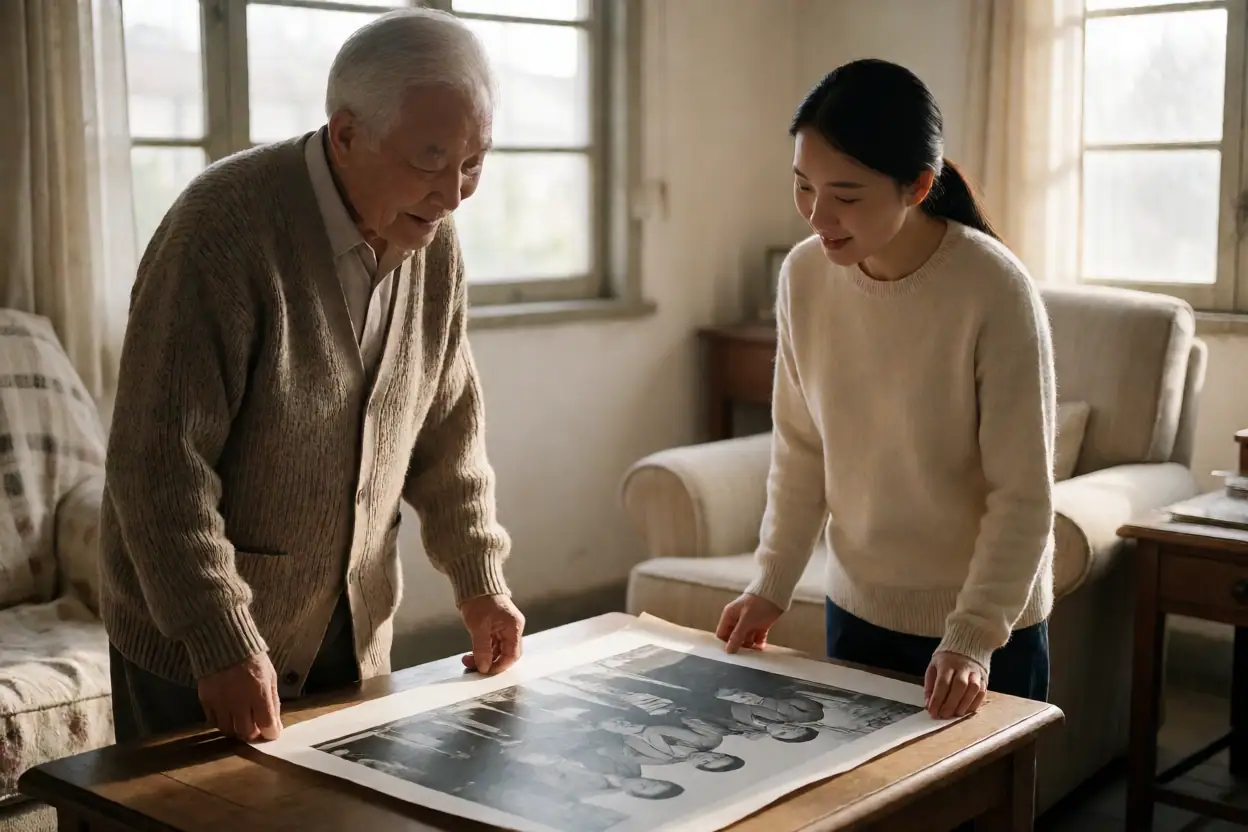
Online genealogies and surname databases can help researchers search for branches sharing the same surname in other regions and reconstruct migration routes, while also making it easier to consolidate scattered family records into genealogical leads. However, search results can serve only as a starting point for comparison and cannot replace appraisal of original materials. During the search for ancestral roots, attention should also be paid to possible omissions caused by the pronunciation of the character “佴,” variant forms, transcription errors, and surname changes. Only when genealogies, local gazetteers, burial sites, or other historical materials form a mutually supportive chain of evidence can judgments concerning Persian descendants, the first ancestor to migrate to the area, and the dates of migration become more reliable.
The value of Bosi Zhuang therefore lies not only in a village name with an exotic character, but also in its preservation of a shared local memory of ancient exchanges, marital integration, and the continuity of families. This history should be approached with respect for oral traditions as well as scholarly caution in documentary and archaeological research, allowing legends, surname records, and local history to draw gradually closer to the facts through continued verification.
Learn More and Verify
- The Yu Surname in Dongzhi, Anhui: From the Former Sima Surname to Memories of Local Migration
- Geographical memories and ancestral-root clues of the ancient city of Weishi through the legend of “Guidi”
- Clues to the Migration of the Si Surname and Genealogical Transmission: From Local Memories to Lineage Examination
- Restoration of the Former Site of the Shanghang Normal School Training Institute and Memories of Local Cultural Heritage
Genealogy Knowledge and Methods for Compiling Genealogies · Finding Genealogies and Local Gazetteers · Organize family-root-seeking leads