Restoration of the Former Shanghang Normal School Training Institute Site and Memories of Local Cultural Heritage
The former site of the Shanghang Normal School Training Institute preserves memories of modern teacher education and Taiwan-related cultural artifacts. The restoration focuses on preserving its historical appearance, while also providing concrete clues for observing changes in modern Shanghang society through local gazetteers, family memories, and regional family-root research.
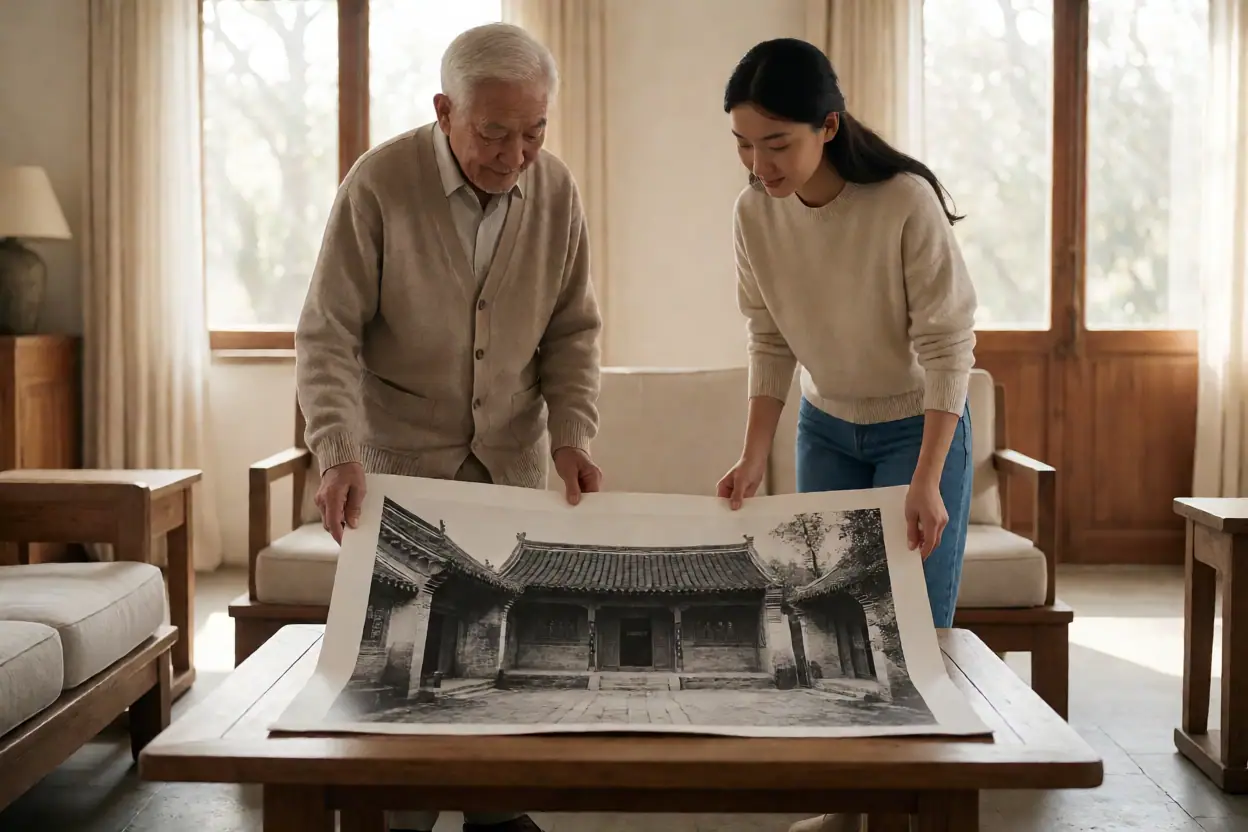
The former site of the Shanghang Normal School Training Institute is a historic building associated with the development of modern education and changes in local society. Existing materials indicate that the restoration project received an investment of approximately 3.48 million yuan, with a focus on preserving the building’s original layout, form, and historical appearance as far as possible; the project was largely complete by the time this record was published. For historic buildings, restoration is not merely about recovering their external appearance. More importantly, it preserves the spatial information left by the era in which they existed, enabling future generations to understand the historical context of local education, social organization, and cultural exchange through the building itself.
According to existing records, in 1905, Qiu Fengjia sent students to Shanghang and established the Shanghang County Normal School Training Institute at the Qiu Clan Grand Ancestral Hall. The institute offered courses in Chinese, English, mathematics, history and geography, and botany. In an environment where modern learning was gradually developing, it played a role in training educational professionals. It has been described as one of the earlier privately run normal education institutions in Fujian, indicating that Shanghang was not merely a traditional local society but also actively participated in the transformation of modern educational institutions and methods of knowledge dissemination. The founding process, scale of the school, teaching staff, and subsequent destinations of its students still require further verification through archives, local gazetteers, and family documents.
In 2006, the former site was included among Fujian Province’s key Taiwan-related cultural heritage sites. This designation reminds us that the history embodied by the building is not limited to a single locality or surname; it is also connected with the movement of people between Fujian and Taiwan, educational ties, and memories of modern society. Qiu Fengjia and his related activities clearly belonged to a particular historical era, but specific personal relationships, the scope of those activities, and their historical impact should still be corroborated through official archives, local gazetteers, and reliable research, rather than inferred solely from later legends or shared-surname relationships.
From the perspective of family-history research, the area where the former site is located can also serve as an entry point for examining local population movements and social networks. Online genealogies, family memoirs, and local-gazetteer materials can help trace people’s places of residence, occupations, marriages, and educational experiences during different periods. Surname databases can be used to compare surname distributions, ancestral hall names, generation names, and migration clues. However, sharing a surname does not mean belonging to the same lineage, and sharing an ancestral hall name cannot directly prove membership in the same branch. When investigating ancestors, migration routes, and the continuity of genealogical lines, priority should be given to checking original genealogical records, inscriptions, prefaces to clan genealogies, household registration records, local gazetteers, and other materials.
At present, the De Surname Database is still being supplemented with information on the origins, commanderies of prominence, ancestral hall names, generation names, and distribution of the surname “De,” and there is not yet enough information to establish a specific clan connection with the former site of the Shanghang Normal School Training Institute. If a relevant family once studied, taught, or settled in Shanghang, an evidentiary chain can be built item by item from names, dates, places of origin, school records, and family memories. Combining the surviving building, local gazetteers, and family materials can both prevent hearsay from being treated as fact and enrich local history through more detailed individual experiences.
Learn More and Verify
- 整理 of Materials on the Niu Surname: Branch-Lineage Memories and Regional Clues
- Clues to the Migration of the Si Surname and Genealogical Transmission: From Local Memories to Lineage Examination
- Historical Memories of Jiangnan and Ancestral Research on the Sima Surname Through an Ancient Tomb in Yuhang
- The Ancestral Hall of the Zeng Clan in Quannan: Where Architectural Remains Meet Collective Memory
Genealogy Knowledge and Methods for Compiling Genealogies · Finding Genealogies and Local Gazetteers · Organize family-root-seeking leads