A Study of the Migration Memories and Yijing Hall Genealogy of the Qu Clan in Tongcheng, Anhui
An old genealogy of the Qu clan in Anhui preserves family memories of a move from Poyang, Jiangxi, to Tongcheng, and includes accounts of separate settlements, surname changes, and descendants moving north. Because the dates of migration, descriptions of ancestors’ names, and some place names remain uncertain, the relevant lineages require further verification against the original genealogical volumes, local gazetteers, tomb inscriptions, and household-registration documents.
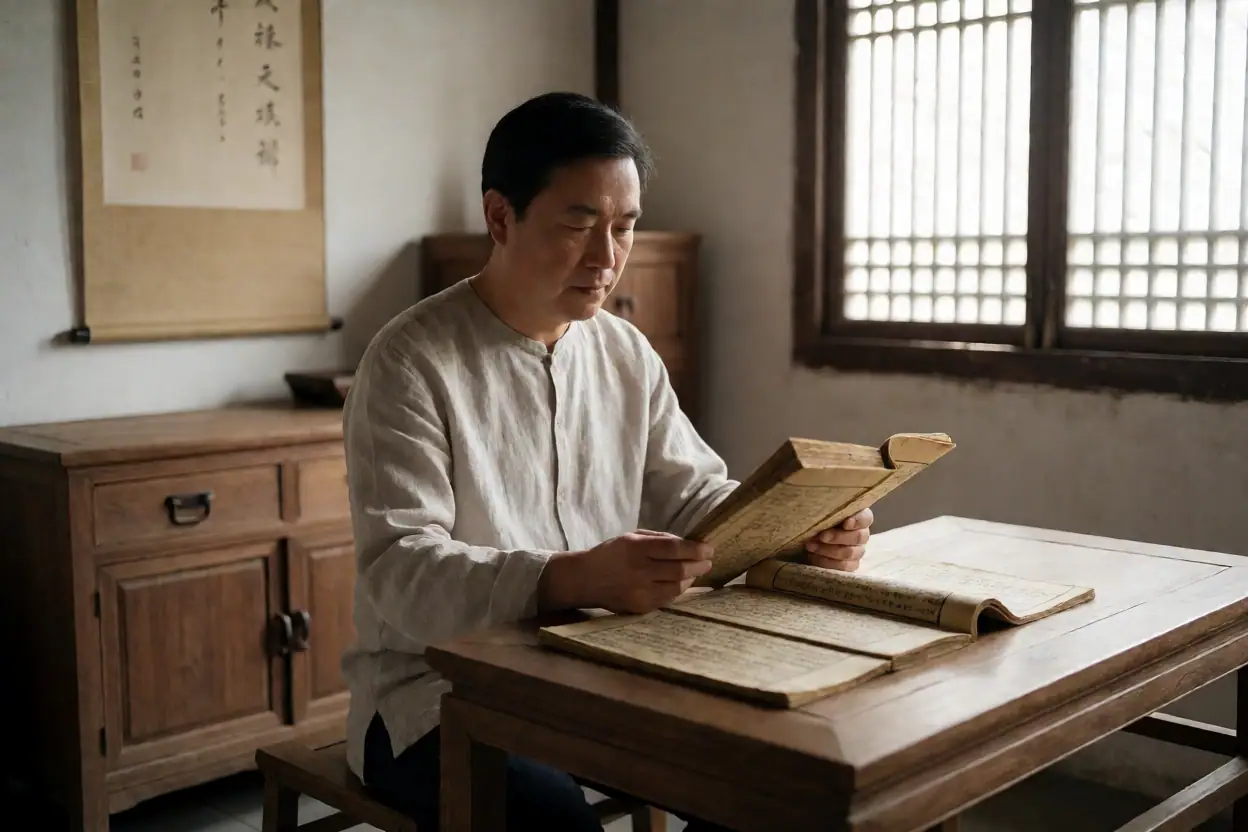
The early migrations of the Qu clan of Tongcheng are recorded mainly in accounts preserved in the old genealogical records of Yijing Hall. According to one account, a genealogy first compiled in 1724 recalls that De Xian Gong, whose personal name was Kui and whose wife was a woman of the Wu clan, lived in the Poyang area of Jiangxi in his early years. Zu Yi, Shen Yi, and Hong Yi were later honored as the pioneering ancestors of the migration to Tongcheng. The genealogy records Huayuanban, Guaiche River, and Hualingang as separate settlement locations, forming the basic family memory of the Qu clan of Tongcheng, Anhui, concerning migration, branching, and the growth of its descendants.
However, this account still contains several points requiring analysis. On the one hand, the old account places the migration against the background of “the people being scattered at the end of the Yuan”; on the other, it dates the migration to Tongcheng to the first year of the Hongwu reign of the Ming dynasty. Whether these two statements refer respectively to the departure, the establishment of household registration, or different branches cannot currently be confirmed. The generational characters in ancestral names and the relationships indicated by the titles may also have been affected by repeated copying, punctuation, or later editorial work. The original place of residence in Jiangxi is written variously as “瓦砌坝” and “瓦霄坝”; the characters in the original genealogy should be checked, and the place names should be cross-referenced with immigrant place names in the local gazetteers of Poyang and Tongcheng.
The genealogy also mentions that, when the line of Shen Yi reached its third generation, the individual named Shi Zhang was raised in childhood by maternal relatives of the Fang clan and consequently changed his surname to Fang. The local community later referred to some members of the Fang clan as “Qu Fang,” reflecting their remembered origins in the Qu clan. This account is useful for understanding shared origins across different surnames, adoption and surname changes, and local lineage relationships, but it cannot be used to infer that all Fang families in Tongcheng descended from the Qu clan. Sharing a surname does not necessarily mean belonging to the same lineage, and different surnames do not automatically indicate a common genealogy. Specific affiliations must still be established through branch genealogies, generational characters, marriage records, and continuous generations.
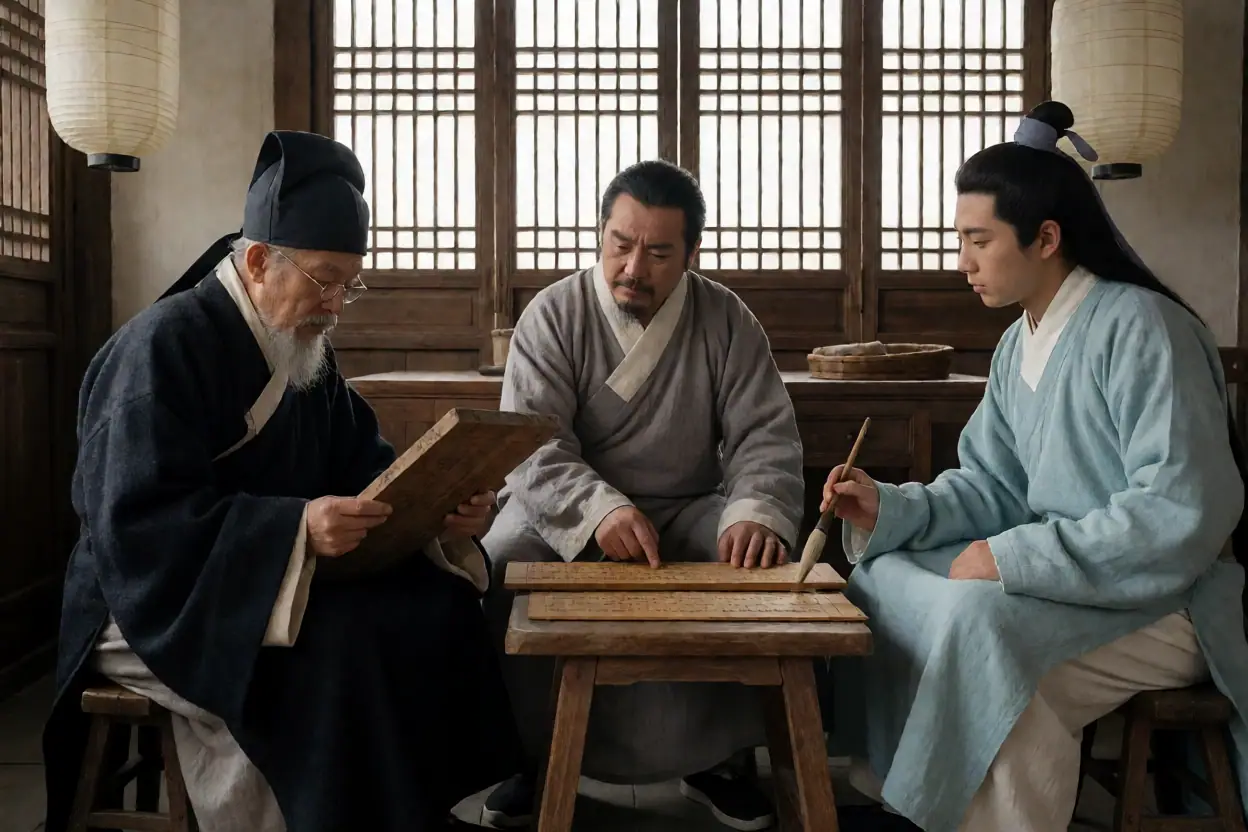
Regarding the Hong Yi branch, the old genealogy states that it once changed its surname to Hou and lived in Hualingang; several generations later, some members migrated to a certain guard garrison in Beijing, after which news of them gradually ceased. Because the name of the relevant garrison and the wording of the tomb inscriptions may be incomplete, this should at present be treated as a family migration account awaiting verification, and should not be directly extended into a complete Beijing branch. If archives of Ming- and Qing-period guard garrisons, old gazetteers of Tongcheng, epitaphs, or Hou-clan genealogies are discovered, they may help further assess the reliability of the accounts of the surname change and northward migration.
When organizing materials on the Qu clan of Tongcheng, Anhui, first distinguish the relevant branches under the three surnames Qu, Fang, and Hou in surname resources, then enter identifiable names, spouses, places of residence, and migration points generation by generation in an online genealogy. Family memoirs are suitable for preserving the locations of tomb visits, former place names, orally transmitted migration routes, and memories of branches that lost contact. Genealogical research, however, should return to the original records and cross-check them against changes in village history, Ming- and Qing-period administrative arrangements, and population migration records in local gazetteer databases. Only by establishing a chain of evidence linking multiple types of sources can the relationships among the various branches of the Qu clan of Tongcheng, Anhui, be explained with reasonable confidence.