Jidong Weishi Ancestral Hall: An Architectural Record of a Rural Ancestral Hall and Clues for Tracing Family Roots
The Wei ancestral hall in Wei Village, Jidong Town, is a Qing-dynasty building, with surviving features including the entrance hall, theater stage, main hall, and side rooms. The relevant records present not only the ancestral hall’s spatial layout but also clues for members of the Wei clan researching the village’s history, genealogical lineages, and local changes.
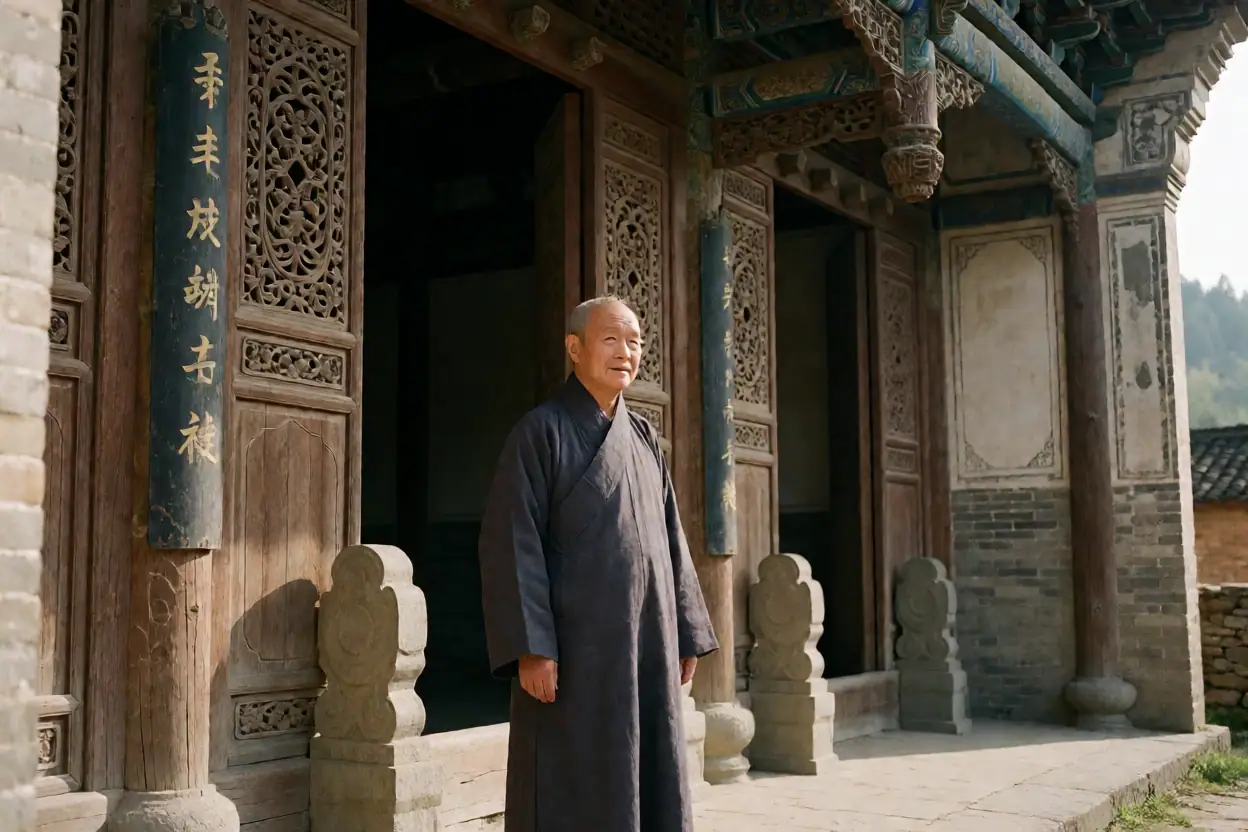
In Wei Village, Jidong Town, Shaoxing, there is an ancestral hall bearing the name of the Weishi clan. Existing records show that the hall stands within the village, surrounded by a village-run primary tea-processing plant, roads leading to Zhutian Tou and Huangrang Wu, residences, and a communal drying ground; about fifty meters to the northwest, there was also an old ginkgo tree. Such environmental details not only help identify the former site but also preserve historical traces of the hall’s interdependence with the village’s communal spaces.
The hall is a Qing-dynasty building that was discovered and registered during a local cultural relics survey in July 1985. It occupies approximately 685 square meters and sits facing north, with the original entrance hall, stage, and main hall arranged along the central axis, and side rooms on both the east and west sides. As for its present condition, the entrance hall has been altered, while the stage, main hall, and side rooms on both sides are largely preserved. This shows that the building’s overall layout remains identifiable, but that the state of preservation varies by section; its complete historical appearance cannot be reconstructed from the surviving form alone.
The stage adjoins the rear eaves of the entrance hall. Nearly square in plan, it has a single-eaved hip-and-gable roof, while its stone columns, carved beams, and caisson ceiling form a relatively complete stage structure. The couplets on the columns have worn away, but one that remains legible reads, “A realm of mirages; prose of flowers reflected in water and the moon reflected in a mirror.” The main hall is five bays wide and has front and rear corridors. Its roof framework combines post-and-beam and column-and-tie construction. The boat-canopy veranda, dougong brackets, and carved queti brackets in the front corridor reflect the integration of ritual space and decorative craftsmanship in traditional ancestral hall architecture. Multiple couplets also survive on the stone columns of the central bay, concerning ritual offerings, virtue and achievement, literary accomplishment, and official distinction. They reflect the common educational and commemorative functions of clan ancestral halls.
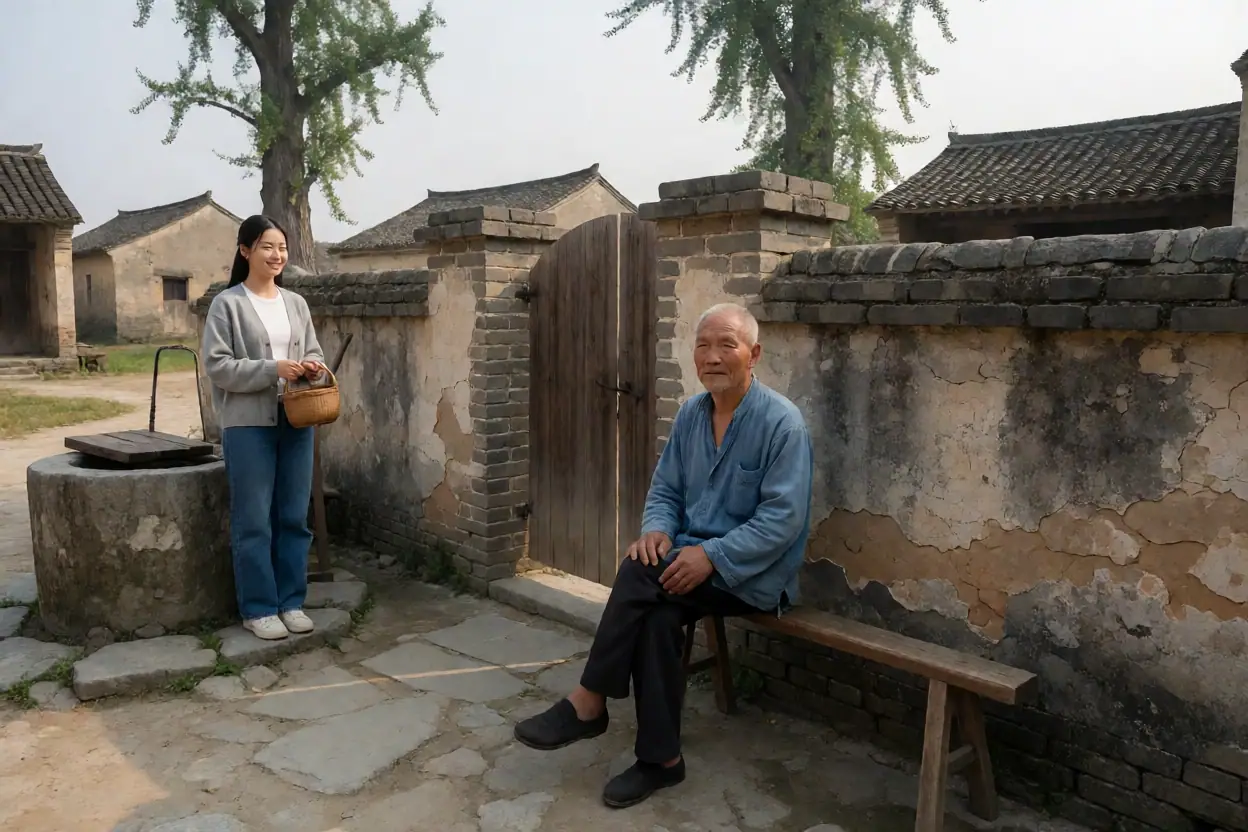
An ancestral hall is an important carrier of family memory, but the building itself cannot independently prove the complete lineage of a particular branch, nor can the ancestral hall name, couplets, or village name alone be used to determine the origins of distant ancestors. The migration routes, founding ancestor, branch divisions, and succession of generation names of the Weishi in Wei Village still need to be cross-checked against surviving genealogies, tomb and stele inscriptions, marriage and household-registration records, as well as local gazetteers and family memoirs. Online genealogies can help organize known kinship relations, branches in other places, and generation-name clues. When tracing roots, priority should be given to comparing specific ancestral residences, branch designations, the dates of genealogy prefaces, and verifiable personal names, so as to avoid simply treating people with the same surname as members of the same lineage.
For Weishi descendants, this ancestral hall is both a tangible clue to the study of village history and a spatial witness to the record of the clan’s communal life. If records of its construction, renovations, rituals, and the dates when clan members moved away can be supplemented in the future, and if the building’s dimensions, the wording of its couplets, and the condition of its components can be reexamined, the hall’s archival record could be more clearly correlated with the Weishi genealogy and local gazetteer materials. At this stage, the more prudent approach is to regard it as an important surviving trace of the Weishi clan’s history in Wei Village, while maintaining a cautious judgment regarding the specific lineage and origins.