Historical Clues for Remembering Ao-Surname Figures and Tracing Family Roots
Historical figures bearing the Ao surname appear across local gazetteers, biographical accounts, and family documents. Organizing clues concerning Ao Yue, Ao Xinzu, Ao Taosun, and modern and contemporary figures can help clarify the Ao surname's patterns of activity in different regions, but the figures' affiliations, migration relationships, and lineage continuity still require item-by-item verification against genealogical records, local gazetteers, and original archives.
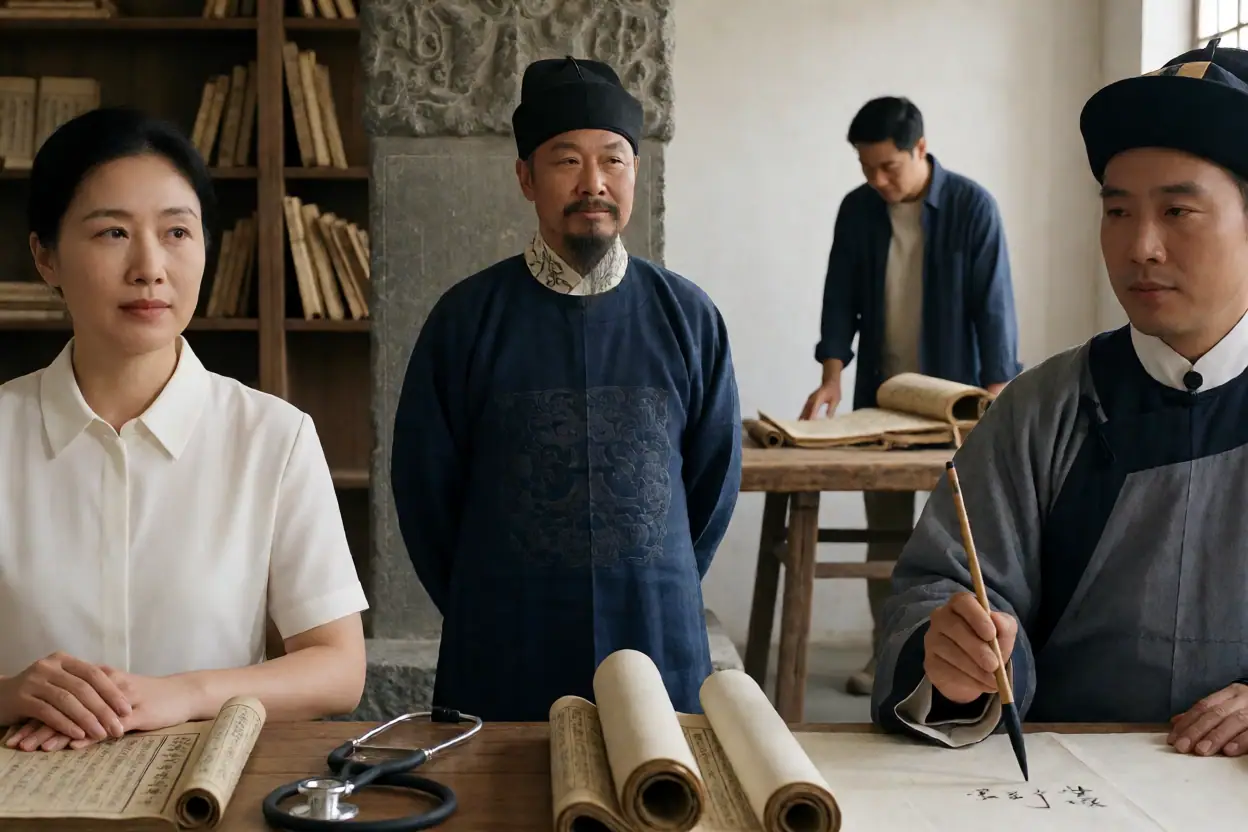
Records concerning people bearing the Ao surname span multiple periods. They include local officials, scholars, medical professionals, calligraphers and painters, and cartoonists. Existing surname materials list Qiaoguo Hall as an associated ancestral hall name of the Ao surname and record Qiaoguo, Runan, and Henan among the claimed commanderies of origin. Regional information likewise involves Hubei, Hunan, Henan, Sichuan, Jiangxi, and other areas. These materials can serve as an entry point for understanding the historical distribution of the Ao surname, but they cannot directly prove that Ao families in different places belonged to the same clan.
The deeds of 敖钺 of the Ming dynasty constitute one of the more specific sets of clues found in local gazetteers. Relevant records state that his courtesy name was 秉之, that he was from Gao'an, and that he once served as magistrate of Qianjiang County. After a flood occurred during his tenure, he submitted a memorial requesting reductions in certain taxes and levies, and he oversaw the dredging of waterways and the administration of local affairs. He was later included by local people among the officials honored in official sacrifices. Accounts stating that he held office in the early Jiajing period, had previously served as magistrate of Susong County, and returned to office after completing mourning leave should still be checked against different editions of the Qianjiang County Gazetteer, local writings on Susong, and Ming administrative and official records in order to clarify the dates and titles.
Qing-dynasty figure 敖馨祖 also left clues in local documents. Existing accounts state that he was from Rongchang, Sichuan, took the palace examination in the 30th year of the Qianlong reign and ranked second, and was subsequently assigned and appointed to office; they also state that he served in positions related to river works, was an incorruptible official skilled in calligraphy, and donated his salary to provide relief during an outbreak of disease. His examination credentials, official postings, and calligraphic activities can be further investigated through examination rosters, official and administrative gazetteers, local gazetteers, and catalogs of calligraphy and painting to determine whether different sources corroborate one another.
In literary history, 敖陶孙 is often described as a Southern Song scholar, poet, and critic of poetry. 敖英, an educational inspector of the Ming dynasty, as well as the modern and contemporary cartoonist 敖幼祥, calligrapher 敖永才, and academic journal editor 敖行维, also appear in directories of notable figures. Such brief listings provide only directions for further research. Before a complete biography can be established, evidence such as native place, educational background, employing institutions, and catalogs of works must be added. In particular, a shared surname alone cannot be used to infer a blood relationship between individuals.
Materials on the medical professional 敖建华 indicate that she was born in 1953 and graduated from the Second Military Medical University. She worked clinically in kidney transplantation, tissue typing, postoperative follow-up, and blood purification, among other areas, and also pursued further study overseas. Her professional title, employing institutions, periods of further study, and medical achievements should be verified against hospital archives, official résumés, and professional publications. When statistics such as group survival rates are involved, the statistical period, case range, and calculation methodology should also be specified.
Research into Ao family roots can begin by building an evidence chain within the family. Old genealogies, ancestral tablets, tombstones, contracts, letters, photographs, and oral memories can supplement information on variant forms of names, generation names, changes in residence, and terms used for relatives. By entering confirmed parent-child, marital, and relocation relationships into an online family tree and comparing them with ancestral hall names and commandery information in surname databases, researchers can gradually identify points requiring further investigation. Family memoirs are suitable for preserving the experiences of elders, but oral accounts should identify the narrator, the date of recording, and any points that remain uncertain.
Local gazetteer databases can be used to investigate the backgrounds of figures’ official appointments, the development of villages, disasters, schools, and ancestral temple property. To determine whether a branch of the Ao family migrated from Jiangxi to Hubei, Sichuan, or another region, researchers should seek continuous records across generations of names, generation names, spouses, burial places, and migrations, and verify the date when the genealogical preface or genealogy was compiled. Traditional accounts linking the Ao surname with the Ao lineage of the ancient State of Chu or with branches originating in ancient official positions may be retained as clues in surname culture. However, without a continuous genealogy and contemporaneous documents, they should not be used to establish the founding ancestor of a single family.