Historical Connections Between Eminent Figures of the Ran Clan and the Confucian Tradition of Confucius
Ran Geng, Ran Yong, and Ran Qiu all appear in Confucian classics and were important figures among Confucius’s disciples. The historical connections between the Ran and Kong clans are reflected mainly in teacher-student transmission, the spread of learning, and later commemorative worship; they should not be taken as evidence that the two surnames share a common ancestry. Information on the relevant genealogical lines, branches, and ancestral shrines and tombs still needs to be verified against genealogies, local gazetteers, and cultural heritage records.
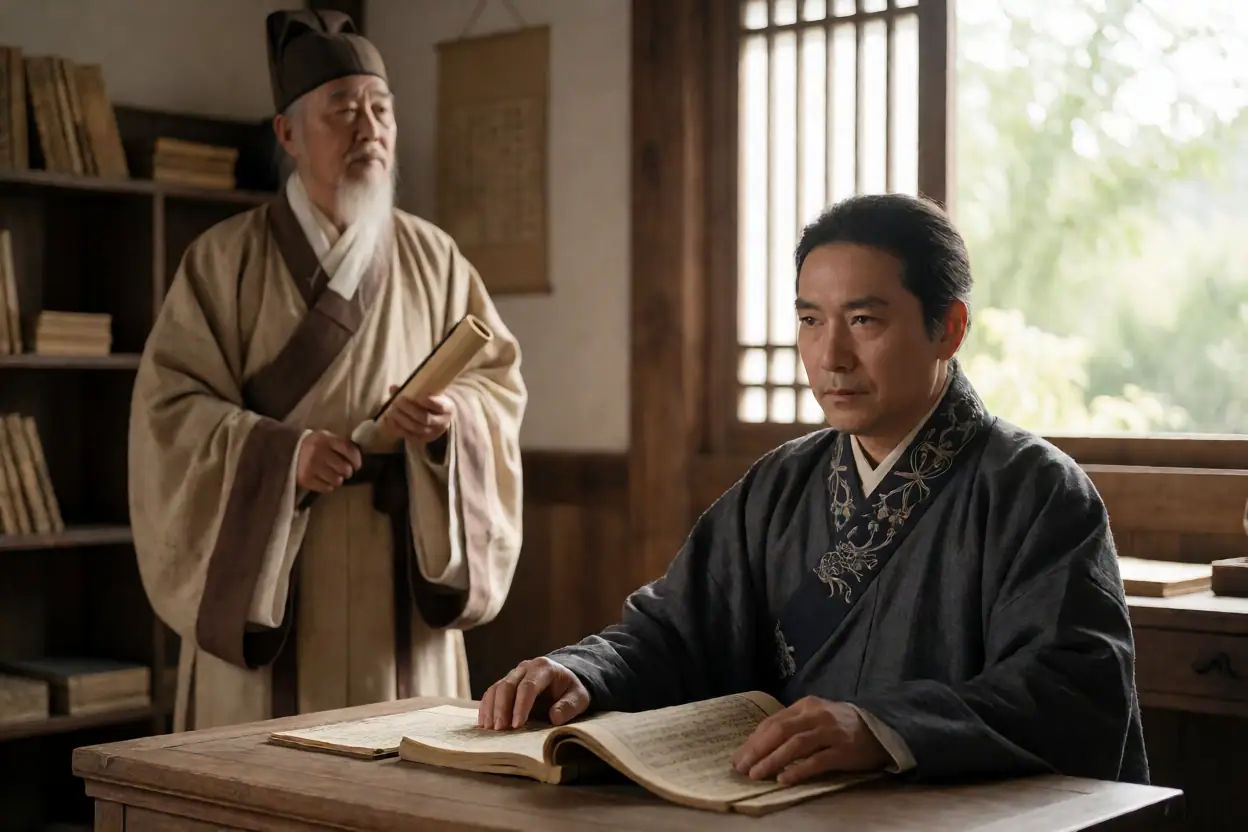
By the late Spring and Autumn period, an intellectual community had formed in the state of Lu around Confucius’s teaching activities. Ran Geng, Ran Yong, and Ran Qiu all appear in transmitted Confucian classics and are generally listed among Confucius’s disciples. Ran Geng’s courtesy name was Boniu, Ran Yong’s was Zhonggong, and Ran Qiu’s was Ziyou. Their words and conduct in areas such as moral character and government were valued by later generations, making them among the figures with the strongest documentary basis for discussions of the relationship between the Ran clan and early Confucianism.
The relationship between Confucius and his Ran disciples was primarily one of teacher and student, as well as one of intellectual transmission. The institutions governing worship at Confucian temples were repeatedly adjusted in later periods, and some of Confucius’s disciples were included in systems of joint or auxiliary worship and given different titles. Ran Geng, Ran Yong, and Ran Qiu held relatively prominent positions in these systems, but their specific titles, ranks, and dates of establishment should be examined separately through ritual regulations, inscriptions, and local documents from each period. The systems of different periods should not be combined into a single fixed and unchanging hierarchy.
Some Ran genealogies and local traditions also record figures such as Ran Ru, Ran Ji, Ran Meng, and Ran Lie, summarizing the family’s cultural tradition as “many members of one family studied under Confucius.” However, the identities, courtesy names, family relationships, and whether all of them directly studied under Confucius may differ among sources. In particular, identifying them respectively as sons of Ran Yong or Ran Qiu, and using this premise to divide the family into first, second, and third branches, requires verification against earlier classics, genealogy prefaces, epitaphs, and records of successive revisions.
The long-standing connections visible between the Ran and Kong clans have been expressed more through interactions involving reverence for Confucius and Confucianism, local education, ritual and commemorative worship, and family narratives; blood relationships cannot be inferred directly from teacher-student ties. Even people with the same surname are not necessarily of the same lineage, so the Ran and Kong surnames should all the more be distinguished in terms of intellectual lineage, ritual-institutional relationships, and clan genealogies. The names, locations, history, and protection status of Ran residences, Ran temples, Ran forests, and related shrines and tombs should likewise be confirmed item by item against local gazetteers, cultural heritage lists, and on-site inscriptions.
The Kong-surname materials held by ZongMai associate traditional accounts of the Kong clan’s ancestral origins with the Zi surname and the tradition that it descended from Kongfu Jia. They also include the Lu State Hall and commandery-origin labels such as Lu, Kuaiji, and Henan; the geographic entries cover Shandong, Henan, Jiangsu, Zhejiang, and Sichuan. These materials may serve as leads for searching documents on Kong clan branches, but they cannot encompass every Kong-surname family and are insufficient to prove a genealogical relationship between any particular family and the Kong lineage of Qufu. Hall names and commandery origins generally reflect cultural identity or genealogical tradition and are not equivalent to a person’s actual place of origin or direct proof of blood relationship.
When conducting further ancestral research, one may first check variant names, courtesy names, and historical appellations in surname materials, then use online genealogies to compare genealogy prefaces, generational names, founding migrants, and branch records, while also consulting local gazetteers for entries on schools, ancestral worship, notable figures, and historic sites. Family memoirs are suitable for preserving oral accounts, migration routes, and clues from old objects, but the narrator, date of recording, and matters still awaiting verification should be noted. Only by cross-checking classical records, genealogical lineages, local documents, physical inscriptions, and household registers and contracts can one establish with reasonable confidence the transmission history of a particular Ran or Kong branch.