Zhao'an Nanpi Lin Clan's Huai De Hall: The Migration Memories of an Ancestral Hall
Huai De Hall in Nanpi Village, Xiage Town, Zhao'an County, carries the historical memories of one branch of the Lin clan concerning settlement, clan formation, migration, and the development of branches. Existing accounts refer to Wen Kang Gong, Yuan Long Gong, and the history of the Nanpi ancestral hall, but some dates, population figures, and genealogical lines still require further verification against genealogies, local gazetteers, and physical evidence.
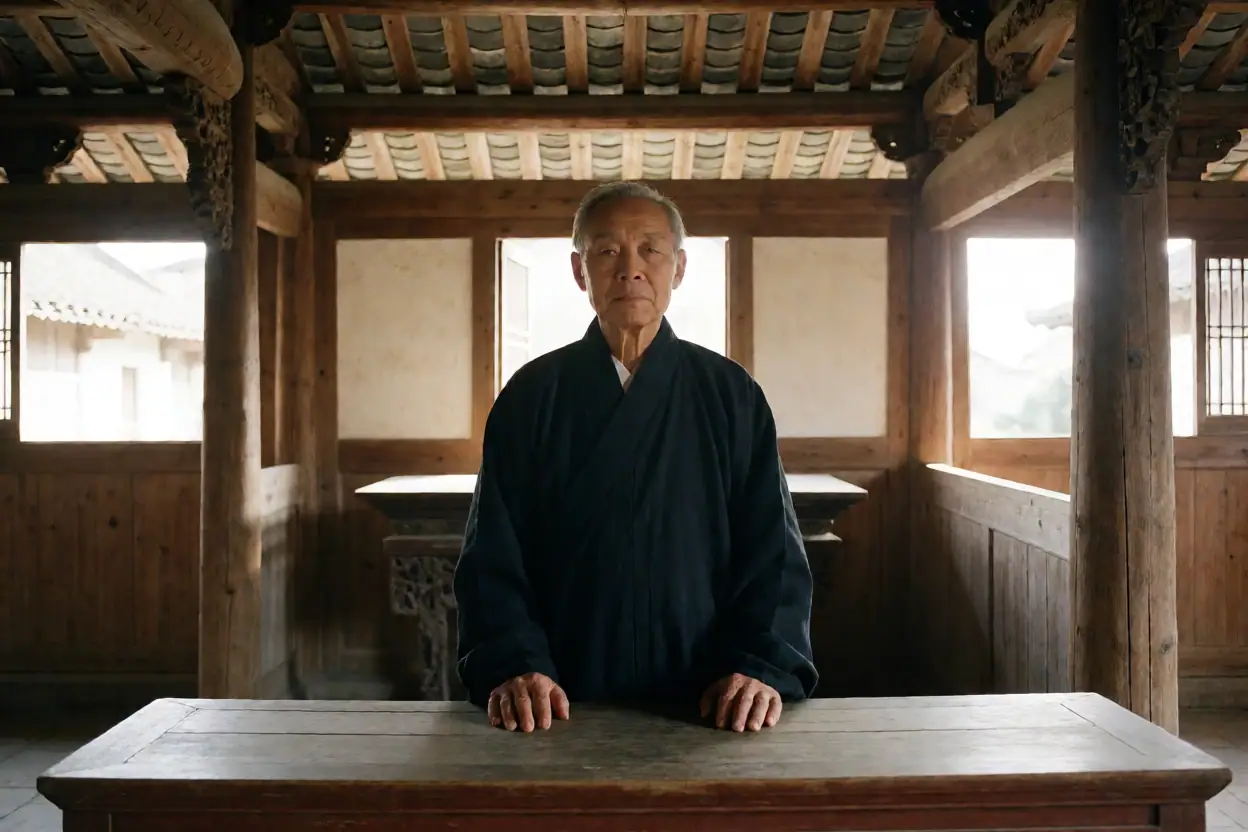
In Nanpi Village, Xiage Town, Zhao'an County, Zhangzhou, Fujian, a clan memory associated with the Lin clan's Huai De Hall has been passed down. Sources state that the Nanpi Lin clan regards Wen Kang Gong as one of its early ancestors. His family originally lived in the Shibi area of Ninghua and later migrated to the coastal area of Zhangzhou to establish a settlement. Wen Kang Gong had four sons—Yuan Ji, Yuan Xing, Yuan Qing, and Yuan Long. Among them, Yuan Long Gong took his family at the end of the Yuan dynasty to settle at Datang Chun in Erdu Linpo She, near present-day Nanpi, where a village community organized around the clan gradually took shape. The genealogical lines and migration routes described above should still be cross-referenced against surviving original genealogies, tomb inscriptions, ancestral-hall steles, and local gazetteers.
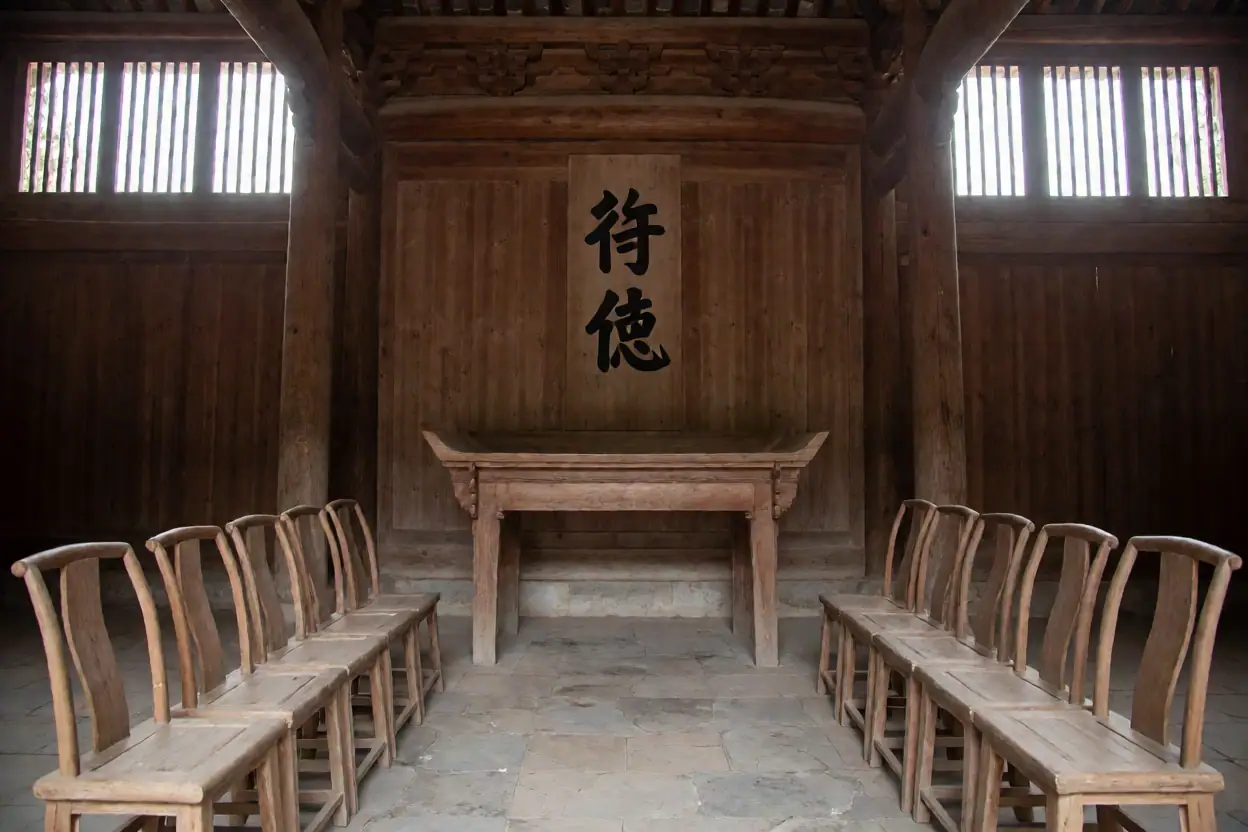
Regarding the establishment of Huai De Hall, related accounts state that during the Jiajing period of the Ming dynasty, Nanpi Village built an earthen fort in response to local security conditions, and clan members also constructed the Lin clan's main ancestral hall within the fort. The hall is a traditional earthen-and-timber structure, described as having a layout of one entrance and two halls; more specific accounts have also been given regarding its orientation, fenjin divisions, and floor area. The hall name “Huai De” may be understood both as a remembrance of the ancestors' virtue and as reflecting the ancestral hall's functions as a place for ancestor worship, deliberation, and the maintenance of clan ties. The identities of those enshrined in the shrine and the order of worship belong to the ritual arrangements of this branch of the clan; specific details should still be determined from the tablets, incense burners, inscriptions, and clan rules preserved in the hall.
From the perspective of local social development, the significance of Huai De Hall lies in more than the building itself. The ancestral hall, earthen fort, and village together formed a clan settlement unit, recording how the family settled its population, organized protection, maintained ancestral rites, and preserved shared memories through genealogy compilation and regular ceremonies in a particular historical environment. As the population grew and livelihoods changed, descendants of the Nanpi Lin clan gradually moved to other parts of Fujian, Guangdong, Guangxi, Taiwan, and overseas. Accounts of their geographic distribution and population size can serve as clues for tracing one's roots, but cannot directly be treated as conclusions that have undergone statistical verification.
For members of the clan who hope to trace branches of the Nanpi Lin lineage, a hall name can provide direction but cannot by itself prove kinship. People with the same surname may belong to different branches or lineages, have different founding ancestors of migration, or even originate in different regions. A more reliable approach is to compare, item by item, ancestral places of residence, generational names, lineage designations, ancestral graves, ancestral-hall tablets, and family memories, then consult online genealogies, surname databases, family memoirs, and local gazetteer databases to identify variant accounts. If a preface, genealogy table, migration record, or genealogy-compilation title is found in an old genealogy, its compilation date and process of copying and transmission should be checked further to distinguish early records, later additions, and oral traditions.
Learn More and Verify
- An examination of the Chushi settlements, ancestral halls, and migration memories in eastern Shandong
- Yihuang, Jiangxi Hu Clan Ancestral Hall: An Ancestral Hall and Local Family Memory
- The Rise and Decline of the Rong Clan Ancestral Hall in Fuxing Township, Rong County, and Local Memory
- Architectural Memories and Family Clues of the Diao Family Ancestral Hall in Guangxing, Jintang
Genealogy Knowledge and Methods for Compiling Genealogies · Finding Genealogies and Local Gazetteers · Organize family-root-seeking leads