Memories of Lijiang in Needle and Thread: Mu Yufang and the Inheritance of Mu Embroidery
Naxi embroidery in Lijiang carries traditions of dress, local aesthetics, and family memory. Mu Yufang’s learning and creative experiences offer a window onto the contemporary continuation of Mu embroidery; her family lineage, the origins of the craft, and related titles still require further verification against genealogies, local records, and official registers.
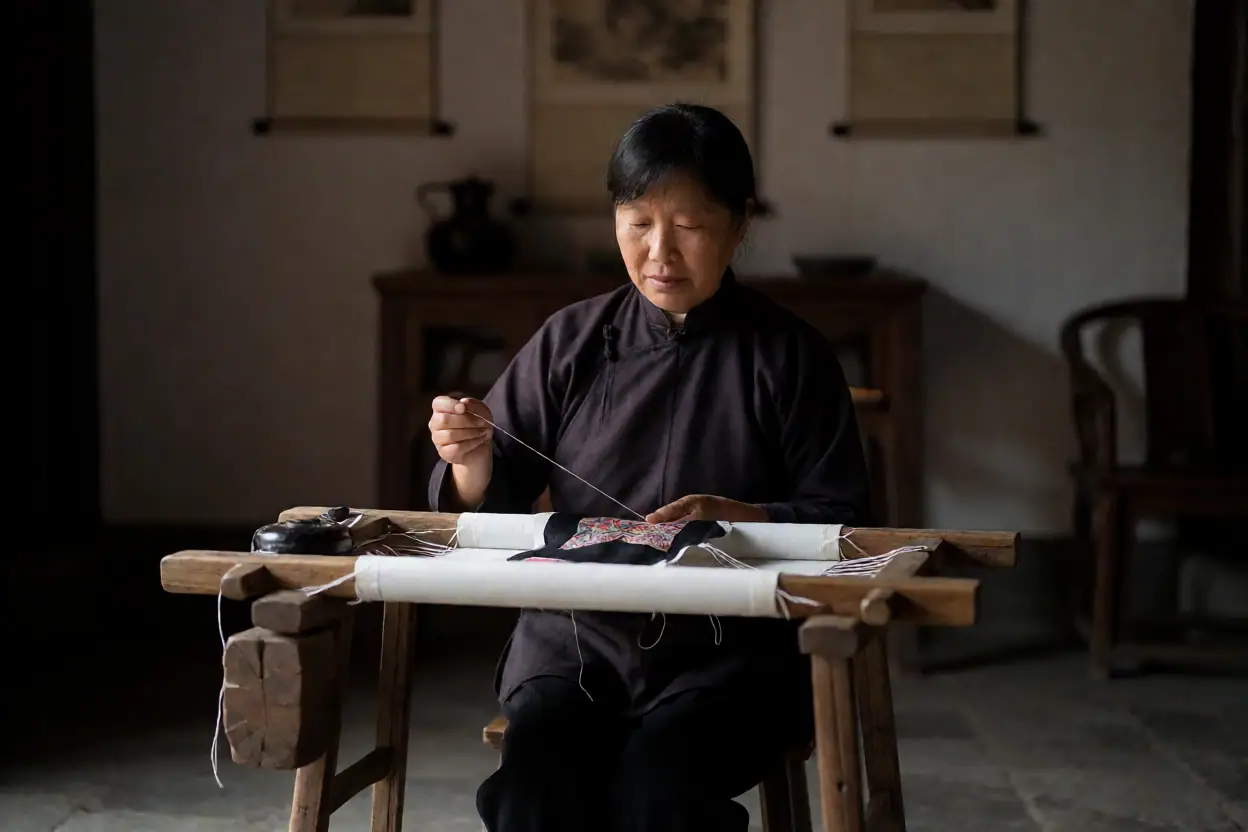
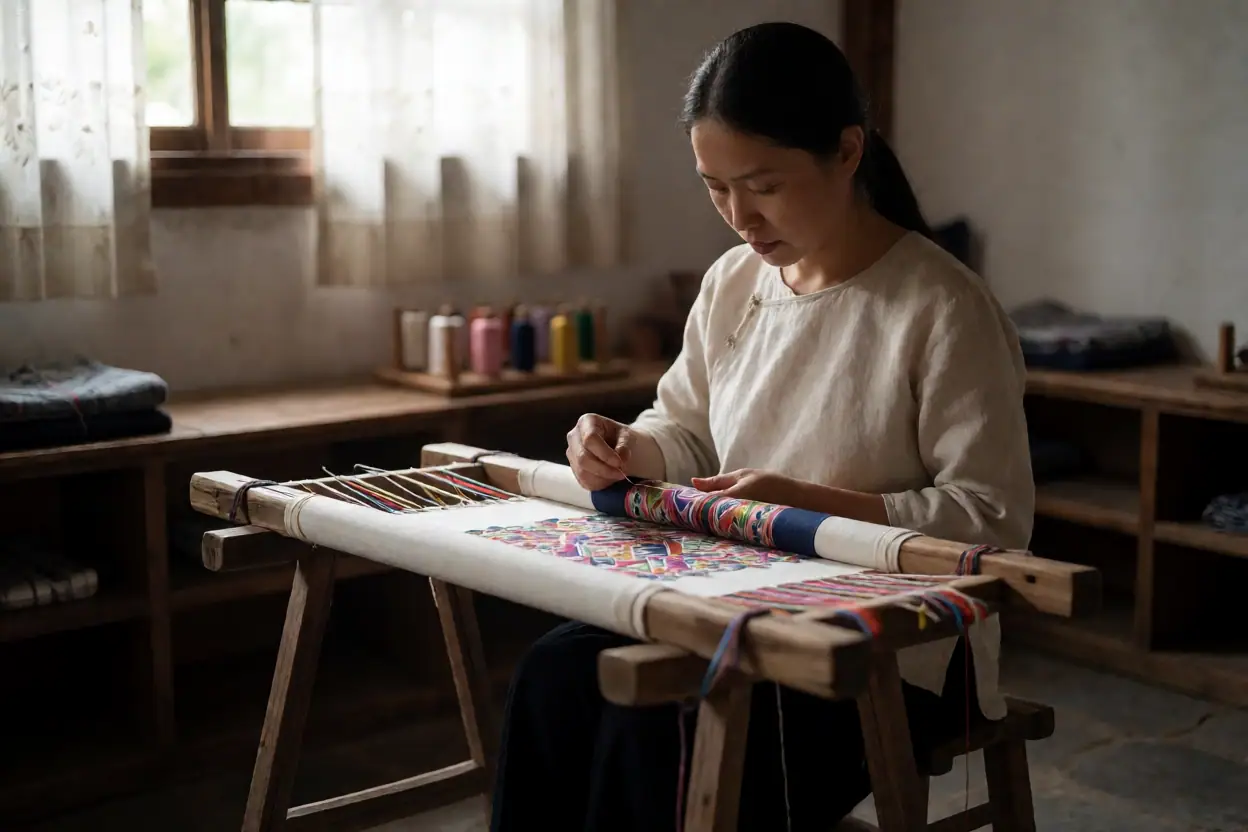
In the life traditions of the Naxi people of Lijiang, embroidery is not only a meticulous craft but is also connected with clothing, rituals, beliefs, and family memory. Naxi women are often known for their diligence and capability, and needlework skills have been passed down through generations in the course of daily life. Mu Yufang grew up in such a cultural environment. Existing accounts state that she was exposed to embroidery from an early age, later studied with several embroidery practitioners, and tried to incorporate different techniques from Shu embroidery, Suzhou embroidery, Miao embroidery, and Tibetan embroidery, gradually developing a creative approach that combines local subject matter with personal expression.
Materials concerning the history of Mu embroidery often link it to the period of the Mu tusi rulers of Lijiang and state that it was once used to make items such as official garments. Some accounts also suggest that the Mu tusi rulers valued exchanges with Han Chinese culture and arranged for local women to study embroidery techniques from elsewhere. However, these narratives involve questions of continuity over time, transmission routes, and specific institutions, and need to be corroborated through Ming- and Qing-dynasty documents, archives related to the Mu Residence, local records, and dating of surviving objects. Traditional crafts often arise from the long-term convergence of multiple cultures, so a single origin should not be established solely on the basis of later oral accounts.
Mu Yufang’s creative subjects are said to include calligraphy and painting, Lijiang’s local culture, and thangka art. She went to Shanghai in 2015 to participate in training for intangible cultural heritage inheritors, after which she placed greater emphasis on using needle and thread to convey the layers of painting and the creator’s emotions. Related introductions also state that she was born in 1982, received a provincial-level title in embroidery craftsmanship, and participated in creative work for cultural and artistic institutions. These personal details can be cross-checked against training records, official registers, award certificates, and institutional registration materials to distinguish media descriptions, professional evaluations, and administrative designations.
Some accounts call Mu Yufang a “32nd-generation descendant” of the Lijiang Mu Residence. This statement has a clear genealogical implication and cannot be substantiated merely by a shared surname, place of residence, or family oral tradition. A more reliable research method is to begin with her parents, grandparents, and other recent relatives, compare genealogies, household registers, inscriptions, contracts, and local archives generation by generation, and explain the founding ancestor and branch criteria used to calculate the generations. The Mu surname does not inherently indicate descent from the Mu Residence; people with the same surname may also belong to different origins and families.
It is especially important to distinguish that the “cong” (从) in the title’s phrase “emerging from needle and thread” is a preposition, not an indicator that the person bears the Cong surname. The Cong-surname materials recorded by ZongMai contain accounts of multiple origins; the commonly cited ancestral hall name is Guangling Hall, while related claims about commanderies of origin involve Guangling, Jiangdu, and Henan. Distribution records are found in Jiangxi, Fujian, Guangdong, Zhejiang, and Taiwan. These details cannot, on that basis, establish a kinship relationship with Mu Yufang or the Lijiang Mu clan. Ancestral hall names and commandery associations are clues for examining family history, but they cannot independently prove blood ties.
Research on figures and crafts of this kind can cross-reference surname materials, online genealogies, and local records, while also organizing elders’ oral accounts, old photographs, embroidery samples, certificates, and records of relocation to create a family memoir. The value of tracing one’s roots lies not only in following the line back to a particular ancestor, but also in preserving the specific experiences of ordinary families participating in the transmission of local culture.