Lijiang Old Town and Memories of the Mu Surname: From Urban Narratives to Genealogical Research
Lijiang Old Town is often considered within comparative discussions of China’s historic towns, while historical memories of the Mu clan are also connected with the development of local society. Any examination of this relationship should distinguish among local history, branches of the Mu clan, and the broader Mu surname, verifying each layer against genealogical records, local histories, and family memories.
China’s historic towns often preserve multiple layers of historical information: the formation and transformation of town sites, the administration of local governments, interactions among different groups, and the institutions, architecture, and memories that families have left behind locally. Lijiang Old Town is often discussed alongside Huizhou, Langzhong, and Pingyao. Each of the four places has a distinct geographical setting, history of urban formation, and cultural tradition. Placing Lijiang within this comparative framework helps clarify that a historic town is not the product of a single historical event, but rather a living space formed through long-term accumulation.
Existing accounts of the relationship between Lijiang and the Mu clan often connect the migration of Mu ancestors, local governance, and the development of the old town. However, “Mu clan” may refer either to a particular family or political group in a specific historical period or to a summary term used by later generations for related historical memories; “the Mu surname,” by contrast, is a broader surname concept. The two should not be treated as equivalent. A shared surname alone is insufficient to prove that Mu-surname residents in different regions belong to the same lineage, and it cannot directly establish a common ancestor, migration route, or complete genealogy.
Verifiable surname records show that the Mu surname is distributed in Songjiang, Shanghai; Wuqing, Tianjin; Jize and Xinji, Hebei; Dongping and Pingyi, Shandong; Qingyuan, Liaoning; Taiyuan, Shanxi; Hancheng, Shaanxi; Chenghai, Guangdong; and Lushui, Hekou, and Qiubei, Yunnan. These regional details can provide leads for ancestral research, but they do not mean that clear clan ties have already been established among Mu-surname families in these places. In the available materials, the origins, traditional commandery affiliations, hall names, and generation names of the Mu surname still require further documentation. Relevant conclusions should be mutually corroborated through specific genealogical records, inscriptions, local histories, and family documents.

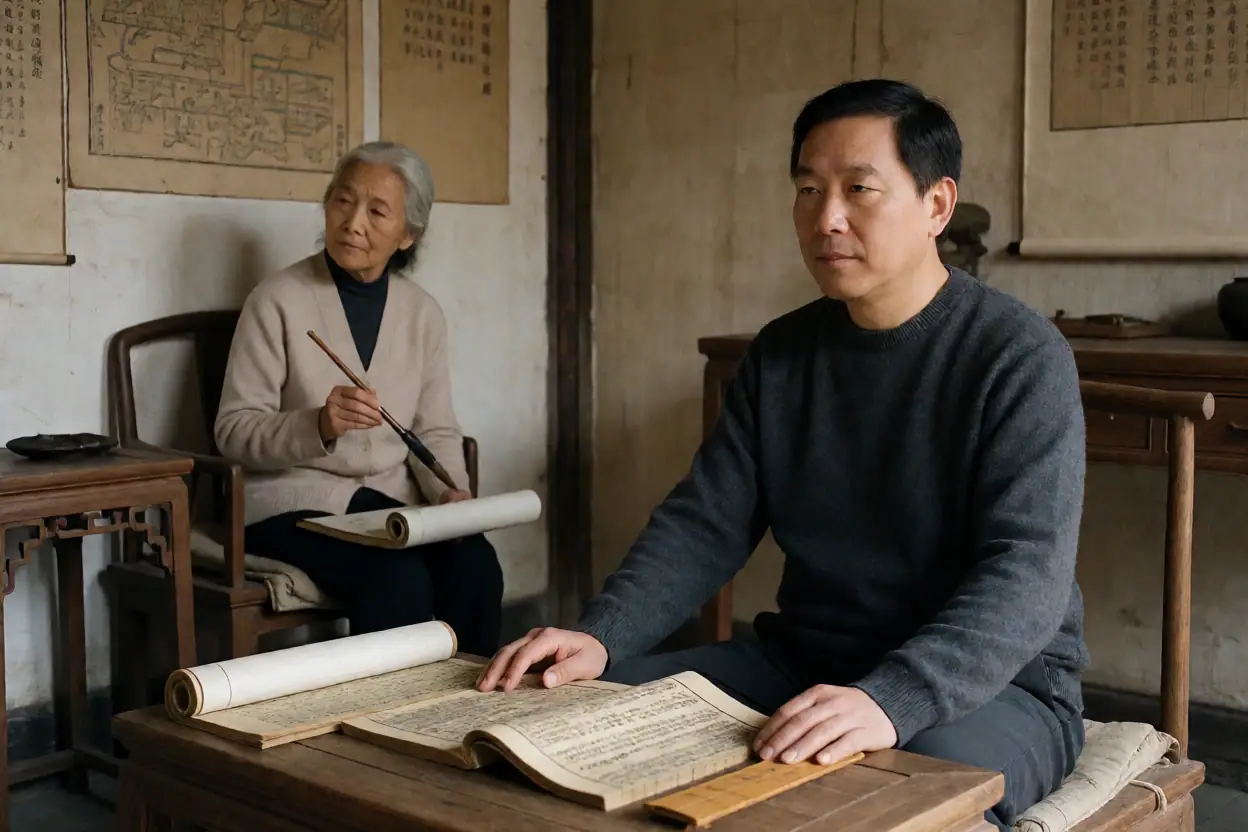
To study the history of the Mu clan or related families in Lijiang, one can first identify personal names, places of residence, generational names, marital relationships, and key points of migration, then compare them with branch records in online genealogies. Family memoirs can preserve oral traditions, the locations of ancestral halls, and names used for ancestral residences, but the period in which the memories were formed and the process by which they were transmitted also need to be documented. Local histories can help verify administrative changes, notable figures, changes in villages, and related buildings, preventing later legends from being treated directly as early historical fact.
Accordingly, the historical connection between Lijiang Old Town and the Mu clan can be regarded as a research topic worthy of further investigation. At present, however, it is more appropriate to describe it as a family narrative with a local historical background, rather than as a single conclusion that has been fully clarified. In ancestral research, surname records, online genealogies, family memoirs, and local histories should be examined as part of the same chain of evidence, with a clear distinction made among established facts, family traditions, and conjectures that remain to be verified.