Clues from Diao Generation-Name Sequences in Multiple Areas of Beijing and a Compilation of Family Lineages
Existing materials preserve fragments of Diao generation-name sequences from multiple districts and counties in Beijing, providing an entry point for identifying branches, verifying generations, and tracing migration routes. However, the generation-name sequences vary considerably across locations, so they cannot yet be used to determine a common ancestor. Each point still requires verification against original genealogies, inscriptions, household registers, and local gazetteers.
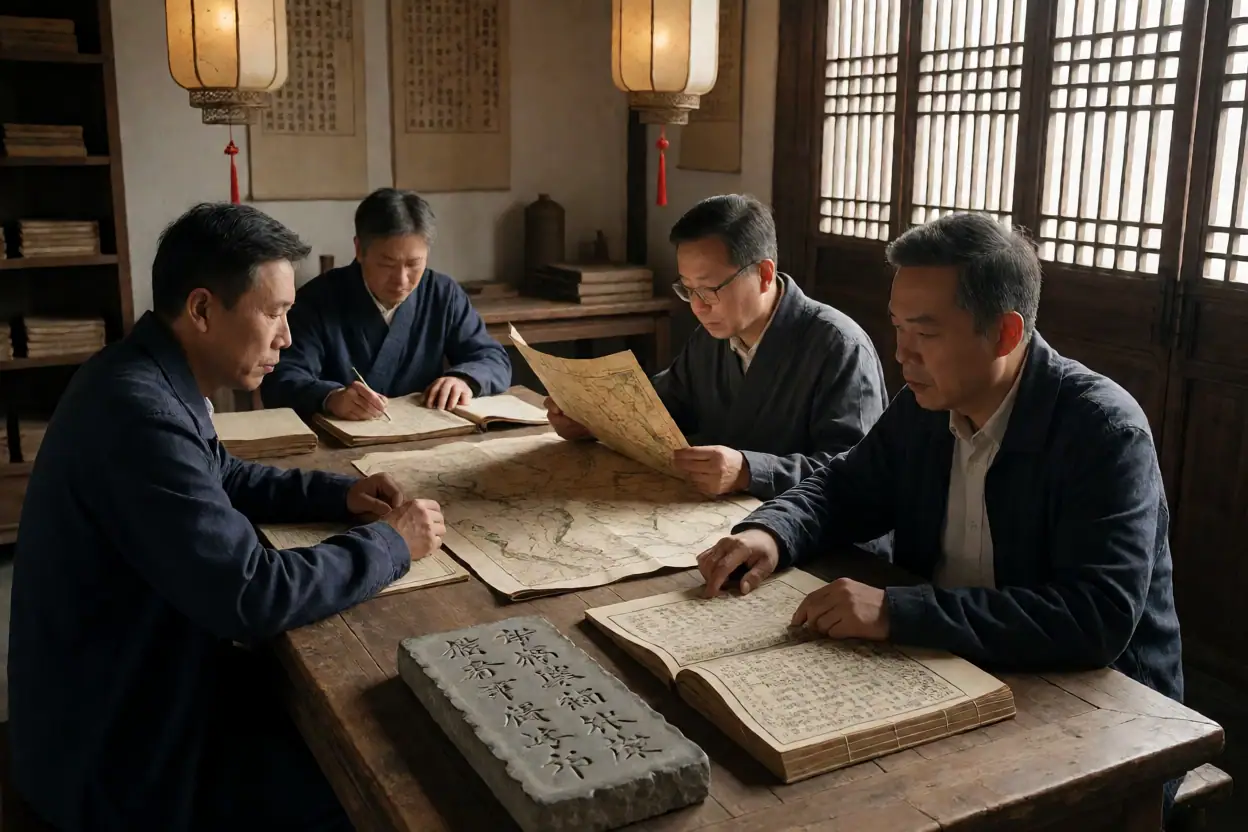
Generation names are an important record of a family’s naming system and are often used to identify generations and branches. An existing compilation of Diao family materials covers multiple districts and counties in Beijing, recording generation-name information from Chaoyang, Haidian, Tongzhou, Fangshan, Fengtai, Changping, Daxing, Shunyi, Xicheng, and Yanqing, among other areas. These records indicate that Diao families in the Beijing region did not use completely identical generation-name characters, suggesting that the various branches may have different migration backgrounds, genealogy-compilation traditions, or branch-continuation processes.
Based on the fragments currently available, one Chaoyang branch includes the characters “广、文、士、鸣、振,” while a Tongzhou branch includes “佩、实、端、人、品.” A Fangshan branch organizes its generation names using phrases such as “忠孝,” “诗书,” “贤良,” and “家邦.” The generation-name sequence recorded for Haidian is relatively long and includes “继述,” “忠厚,” “仁,” “礼,” “孝友,” and “文章,” among others. A Yanqing branch includes “中正,” “启祥,” “敬承,” and “作述.” These texts may serve as search leads, but there is currently insufficient evidence to establish the starting generation, scope of use, period when the sequence was continued, or whether transcription variants exist.
When organizing this type of material, it is advisable to first create a family-based table of individuals, recording names, generation-name characters, places of birth, spouses, parent-child relationships, places of residence after migration, and burial sites separately. These details can then be compared with the prefaces, lineage charts, generation-name pages, and genealogy-compilation registers in online genealogies. If a generation-name character appears consistently for more than three consecutive generations and family relationships can be corroborated through genealogies, household registers, or inscriptions, the branch affiliation will have greater evidentiary value. The appearance of the same Chinese character in names alone cannot directly establish generational position, much less prove membership in the same lineage.
Migration research should also make use of local-gazetteer collections. The administrative divisions, village names, and jurisdictional relationships of urban Beijing and its nearby districts and counties have changed over time, so place names in old genealogies may not correspond directly to addresses today. During research, the ancestral village, ancestral hall, graves, former property, and time of migration can be cross-checked against county gazetteers, township and town gazetteers, village gazetteers, and historical maps. The materials also contain topical leads concerning Diao ancestral halls, ancestral commandery affiliations, family instructions, and branches outside the region. However, titles alone are insufficient to support specific conclusions; the main texts and their documentary bases still need to be consulted.
Family memoirs can supplement details of daily life not recorded in genealogies, such as reasons for migration, terms used for relatives, ancestor-worship practices, and branches that became separated. Oral accounts should identify the narrator, the time of recording, and the source of the information, while retaining descriptions such as “as told by an elder.” When tracing one’s ancestors, it is advisable to first work backward from the family’s recent lineage and then compare generation names and place names, rather than presupposing an ancestor or lineage hall and searching for matching materials. Diao communities sharing the surname are widely distributed, and whether connections exist between them should be determined by generation records that can be continuously verified.
The existing materials can be used to create an index of Diao generation-name sequences in Beijing, but they are not yet sufficient to establish a complete lineage. If images of genealogy books, the text on ancestral tablets, rubbings of tomb inscriptions, old household registers, and information about the people who compiled the genealogies can be collected in the future, and regional, chronological, and edition differences can be marked in surname databases, this will help clarify how the generation-name sequences were actually used in each branch and reduce misidentification caused by shared characters, locations, or surnames.