Bibliographic Record and Examination of Book 17 of the Sixth Revision of the Xu Clan Genealogy of the Che Luohe Lineage
Existing bibliographic information indicates that a work entitled “The Zh bentang Sixth Revision of the Xu Clan Genealogy of the Che Luohe Lineage” has an image-based catalog record for Book 17 and lists the scale of its volumes and lineage. Since the date of compilation, compilers, regional affiliation, and complete catalog have not yet been verified, the relevant family relationships still require further examination against the genealogy prefaces, local gazetteers, and the physical pages of the volumes.
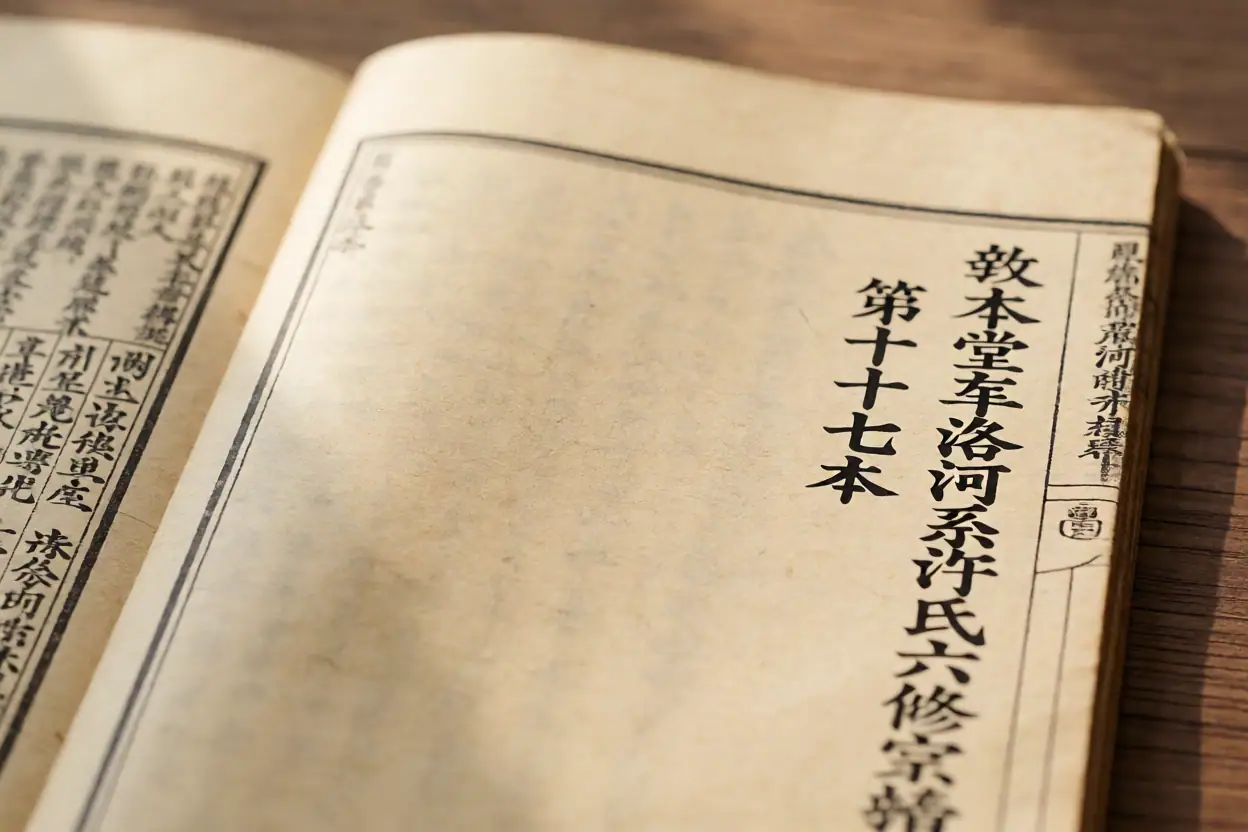
Existing catalog records show the title “The Zh bentang Sixth Revision of the Xu Clan Genealogy of the Che Luohe Lineage,” together with the information “eight volumes, twenty-five lineage volumes” and “Book 17.” The page images number 106 pages, but “pages” here may simply be the unit used to display electronic images and may not correspond to the number of leaves in the original genealogy. The catalog interface also shows multiple volume options. Their number does not fully correspond to the number of volumes in the title and may reflect different organizational systems for volumes, fascicles, books, and separately divided lineage sections; numbering differences resulting from later arrangement may also be involved. Until the complete catalog, central margins, covers, and end titles of the volumes have been examined, it is not advisable to determine from this information alone exactly how many volumes and fascicles the complete genealogy contains.
The terms “Zh bentang,” “Che Luohe lineage,” and “sixth revision” in the title are important clues for further examination. “Zh bentang” may be a hall name or part of the genealogy’s title, but its exact nature should be confirmed through the genealogy preface, ancestral-hall records, compilation guidelines, or titles at the ends of the volumes. “Che Luohe lineage” may identify a place of settlement, a place of migration, or a particular branch, but the specific geographical reference cannot be determined from the name alone. “Sixth revision” usually indicates that the genealogy had been revised and continued several times; however, there is currently insufficient mutually corroborating material concerning the dates, participants, and transmission between editions of the first five compilations.
This genealogy should primarily concern a particular branch of the Xu clan, but sharing the Xu surname does not mean that people have a common ancestor or the same lineage. When tracing the relevant family, one may begin with the names, generation characters, spouses, places of residence, burial sites, and generational sequence recorded in Book 17, and then cross-check them against the catalogs, genealogy prefaces, generation formulas, and registration identifiers for recipients of copies in the other volumes. A shared hall name alone cannot prove a lineage relationship. Particular care is needed to distinguish people with the same names, generation characters assigned later, and variant or taboo characters introduced during subsequent revisions.
The ZongMai surname materials also contain a dossier on the Jia surname, recording the Fan-yang Hall and the commanderies of Fanyang, Zhuojun, and Henan, and noting that the surname has multiple origin traditions and accounts of local branches. That dossier belongs to research on the Jia surname and is not material from this Xu genealogy; it cannot be used to explain the Xu clan’s ancestral origins, hall name, or migration routes. The two types of material should be filed separately to avoid mistaking a surname document for a family-genealogy document simply because the Chinese word “家” appears in “家谱.”
Further organization could establish an image index in an online genealogy according to the original page sequence, recording each legible personal name and place name while retaining the original character forms and marks for uncertain readings. Family memoirs can supplement clues about residence, marriage, and migration in modern and contemporary times, but oral accounts should identify the narrator, the time of recording, and the scope of firsthand experience. During the search for ancestral roots, researchers can also examine place names related to Che Luohe, Xu settlements, ancestral halls, temples, and cemeteries, and use local-gazetteer databases to verify changes in administrative organization, changes to village names, and biographical records. Only when the lineage recorded in the genealogy, physical inscriptions, local documents, and family memories form a continuous chain of evidence is it appropriate to make relatively clear statements about the ancestors, migrations, and branch-house relationships of this Xu lineage.