Clues from the Catalog Record and Research Path for Book Seven of the Chen Clan Shenyi Genealogy
Existing catalog records indicate that the Chen Clan Shenyi Genealogy may be a Chen clan genealogy identified by “Shenyi Hall,” described as comprising twenty-four volumes, with a record of Book Seven. As the compilation date, editors, geographic origin, and complete set of volumes remain unclear, its branch affiliation and genealogical contents still need to be verified against the genealogy’s prefaces, contents, local gazetteers, and surviving physical pages.
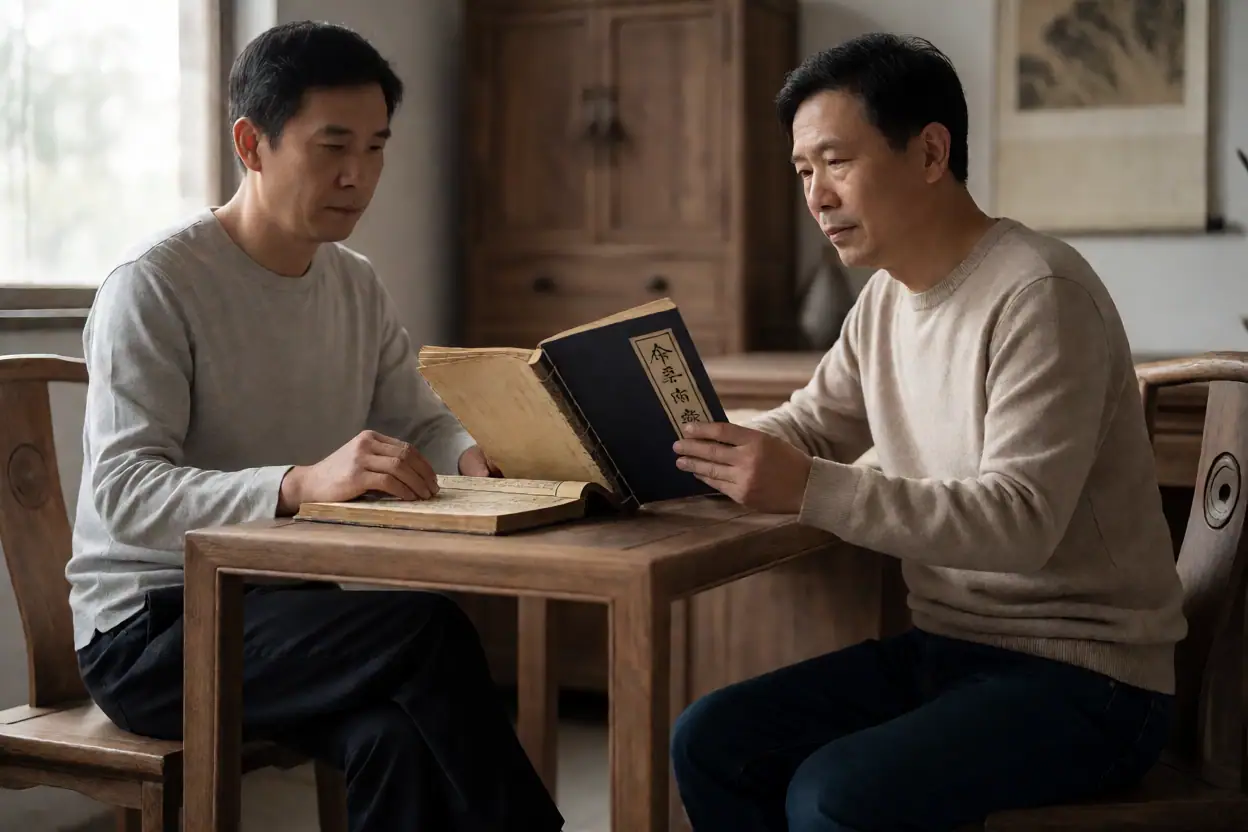
The Chen Clan Shenyi Genealogy is currently recorded as comprising twenty-four volumes, with information preserved for Book Seven. “Shenyi Hall” may be the hall name, branch designation, or name of the organization that compiled the genealogy, but its precise meaning cannot be determined from the title alone. Existing information does not clearly list the compilation date, editors, founding migrant ancestor, principal places of settlement, edition type, or provenance and collecting history. For now, it is therefore best treated as a Chen clan genealogy clue requiring further verification.
The Chen surname has a long history, and surname sources generally present Hu Gong Man and the descendants of the State of Chen as important elements of the traditional account of the Chen surname’s origin. Common Chen ancestral commanderies include Yingchuan, Runan, and Xiapi; some branches use Yingchuan Hall and other hall names, and Chen communities have been widely distributed over the generations across Henan, Zhejiang, Fujian, Guangdong, Taiwan, and other places. However, ancestral commanderies and commonly used hall names primarily reflect surname culture and clan identity; they cannot directly prove that all Chen branches share one continuous, traceable bloodline. Whether the Chen Clan Shenyi Genealogy belongs to a branch descended from Yingchuan, or has an inherited connection with Chen communities in a particular region, must still be supported jointly by its prefaces and colophons, source-and-lineage studies, genealogical charts, and migration records.
When researching this genealogy, first compare the title on the opening page of Book Seven, the page-center inscriptions, contents, and page numbers, then cross-check them against the first volume, final volume, and other separate books. If the preface, notes on compilation, list of compilers, ancestral-hall property records, generational characters, biographies, and burial materials can be examined, it will be possible to assess the sequence of the books and the branches covered by the genealogy. Existing catalog records describe it as comprising twenty-four volumes, while also presenting book-number options exceeding twenty-four. These may correspond respectively to the number of volumes and the number of bound books, or may result from cataloging inconsistencies; the actual number of books in the complete genealogy should not be inferred from this alone.
In tracing one’s roots, personal names, generational characters, and places of residence can serve as search points, but cases involving people with the same name, variant forms of characters, historical place names, and adoption into another family must be taken into account. A more reliable approach is to cross-check genealogical page information available online against village histories, surname migrations, ancestral halls, temple inscriptions, stelae, and biographical materials recorded in local gazetteer databases, using continuous records of births, marriages, relocations, and burials to verify intergenerational relationships. Old genealogies, ancestral spirit tablets, deeds, letters, and photographs kept by families can also be organized into a family memoir, providing corroborating evidence for missing genealogy pages or breaks in the record in the modern period.
If the place and date of compilation can later be confirmed, searches can also focus on the term “Shenyi” in connection with local ancestral halls, schools, charitable estates, branch names, or ancestral names, in order to determine its actual nature in this genealogy. The resulting research should distinguish between information recorded in the genealogy, oral accounts, and inferences, and should note the volume and page number corresponding to each item of information. Only after a verifiable chain of evidence has been established is it appropriate to discuss the genealogy’s ancestral narratives, migration routes, relationships among hall names, and branch lineages in greater detail.