
Many people think memoirs are only for famous people. In fact, what is truly worth preserving is often the life inside an ordinary family that no one can fully tell anymore: the old family home, a first job, a move, a reunion meal, and the words passed down only within the family.
Not knowing how to write does not mean having no story. The most important thing in a memoir is not ornate language, but explaining people, scenes, relationships, and changes clearly. This “four-act writing method” does not require you to write an entire book at once; it only asks you to begin with questions you can answer.
First understand one thing: memories are stored as scenes
Years are useful as an archive index, but they are not always the best starting point for writing a story. When people recall the past, what usually appears first is not “1978,” but a place, a job, a person, a sentence, or a sound and smell.
So there is no need to rush into writing from your birth year all the way to the present. You can first list the places you have lived, the jobs you have done, and the people who cannot be left out of your life, then add the years beside these scenes. The timeline is for checking accuracy; the scenes are what bring readers into the story.
Archive-style writing:I was born in 1952 into an ordinary family in a county in Henan, and I was the third child in the family.
Scene-based writing:The first image I remember is my mother crouching in front of the stove to tend the fire, the flames lighting half her face red. I was probably four years old that year.
Write first about what you saw, then about what it meant.The light in the room, the road under your feet, and the words someone said are usually better than “I had a hard time” or “I was very happy” at helping later generations understand what life was like then.
Act One: Who I am, and where I come from
The opening should establish the narrator’s coordinates within a relatively short space, so children and grandchildren know what kind of family, place, and era the narrator grew up in. The best entry point is usually a sufficiently specific early memory.
- What is the earliest image in your mind? Where were you at the time?
- What sounds and smells did the old family house, street, or village have?
- What work did your parents do? What was something they often said?
- Who gave you your name? Why was this name chosen?
- How many children were in the family? How did your birth order affect you?
- What was the most difficult period of your childhood like?
Recommended length:2–3 chapters, about 2,000–3,000 Chinese characters per chapter. There is no need to explain every relative here; just let readers see where the story begins.
Act Two: Choose one main thread for your life
Act Two usually accounts for more than half of the book, and it is also the part most likely to become a running account. The solution is not to delete experiences, but to identify a main thread, with other content appearing as side threads when needed.
| Main Thread | Best suited for | What to follow |
|---|---|---|
| Career | People who have changed jobs several times and whose career itself has a story | Start from the first job and write about positions, colleagues, rules, and changes |
| Place | People who have experienced moves, going to the countryside, entering the city, or living away from home for a long time | Develop the story by the places lived in, explaining the reasons and trade-offs each time you left |
| Family relationships | People who want to focus on preserving stories about parents, a partner, and children | Develop the story around meeting, building a family, raising children, separation, and reunion |
| People | People who do not want to write a long work, but have many important people in their lives | Select eight to twelve key figures, with one chapter for each person |
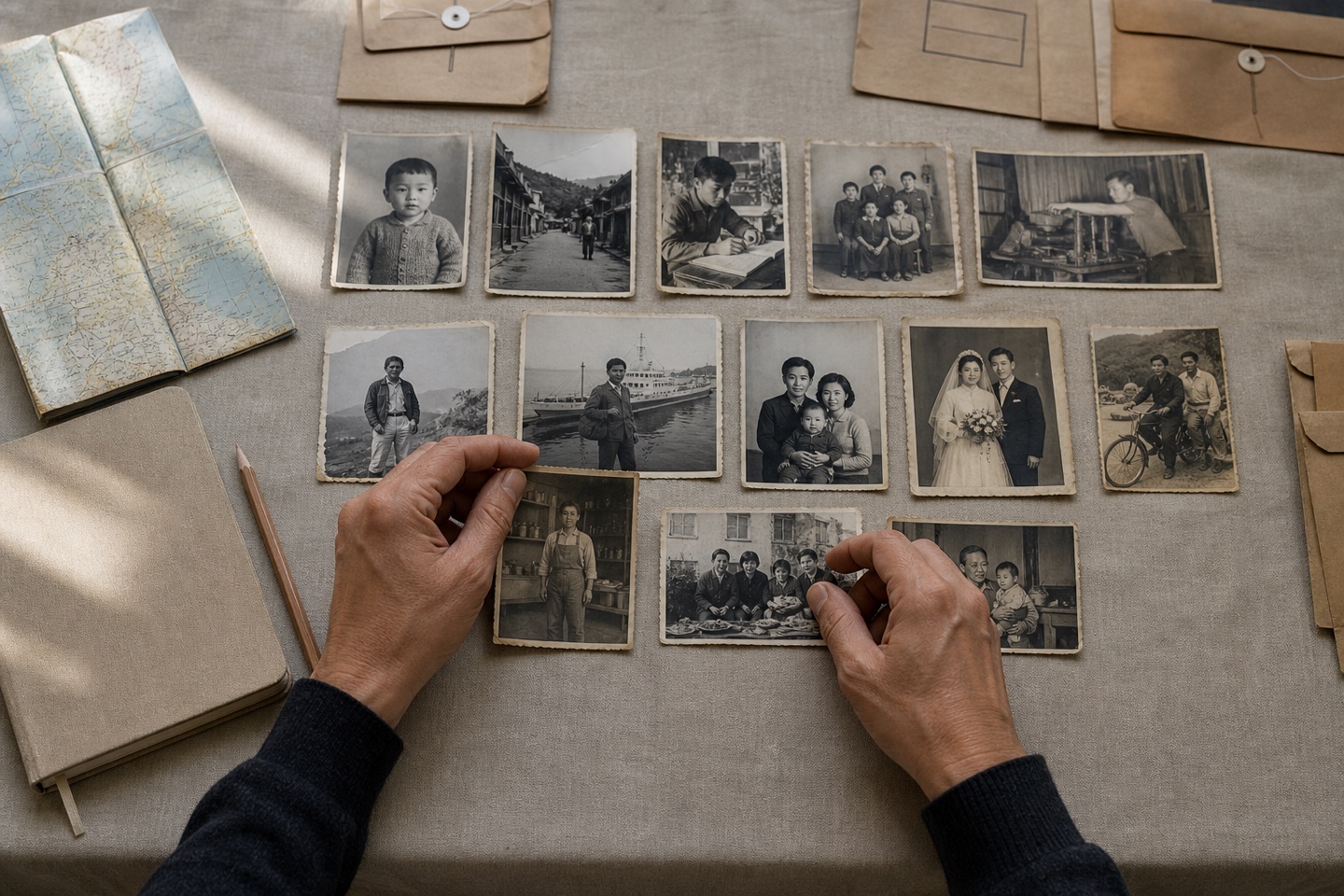
Detail anchors that can be used with any main storyline
- How did you find your first job? What did you wear and bring on the first day, and whom did you meet?
- How much was the first money you earned? What did you end up spending it on?
- The most unforgettable meal: whom did you eat with, where was it, and what was on the table?
- Which move changed your life? What did you take with you, and what did you leave behind?
- What kind of person did you once want to become? Why did that change later?
Three rules for main-storyline writing
- Write details; do not rush to judge.Writing “my shoes were filled with water” is more powerful than writing “that day was very hard.”
- Allow uneven emphasis.One event can take three chapters, while ten years can be covered in one paragraph; length depends on its impact on a life.
- If you cannot remember clearly, say clearly that you cannot remember.“It was probably during the years when the child was in primary school” is more credible than inventing an exact year.
Recommended length:10–18 chapters, about 3000–5000 Chinese characters per chapter. One interview or one focused writing session usually covers only one chapter.
Act Three: Write About the Event That Changed You
A memoir that readers can finish needs a point where emotion and fate clearly change. It does not have to be earth-shattering; it may be the loss of a loved one, leaving one’s hometown, a career setback, or a renewed understanding among family members.
| Type of turning point | Questions to explore |
|---|---|
| Loss | What was the last ordinary day like before it happened? What place in life was left empty afterward? |
| Breakdown and change of direction | At what moment did you realize the old path could no longer continue? What was the first change you made? |
| Reconciliation | How did you understand the other person in the past? What event changed your view? |
| Starting over | What sustained daily life at the lowest point? Who provided practical help? |
The climax usually only needs one or two chapters. Write the time, place, weather, dialogue, and actions clearly, and let the emotions emerge from the event itself. Real lives do not necessarily have perfect answers, and there is no need to force a reconciliation for the sake of “elevation.”
Act Four: How I Look Back on My Life Today
The ending is not responsible for summarizing grand lessons; instead, it brings readers back to the present and helps them understand why the narrator is willing to leave these stories behind. You can keep three parts:
- Who I am now:How I live today, what I care about most, and whom I stay in touch with.
- How I view this life:What the most important choice was, and what I would like to say to my younger self.
- Why I write:Whom I hope will read it, and what I most hope later generations will remember.
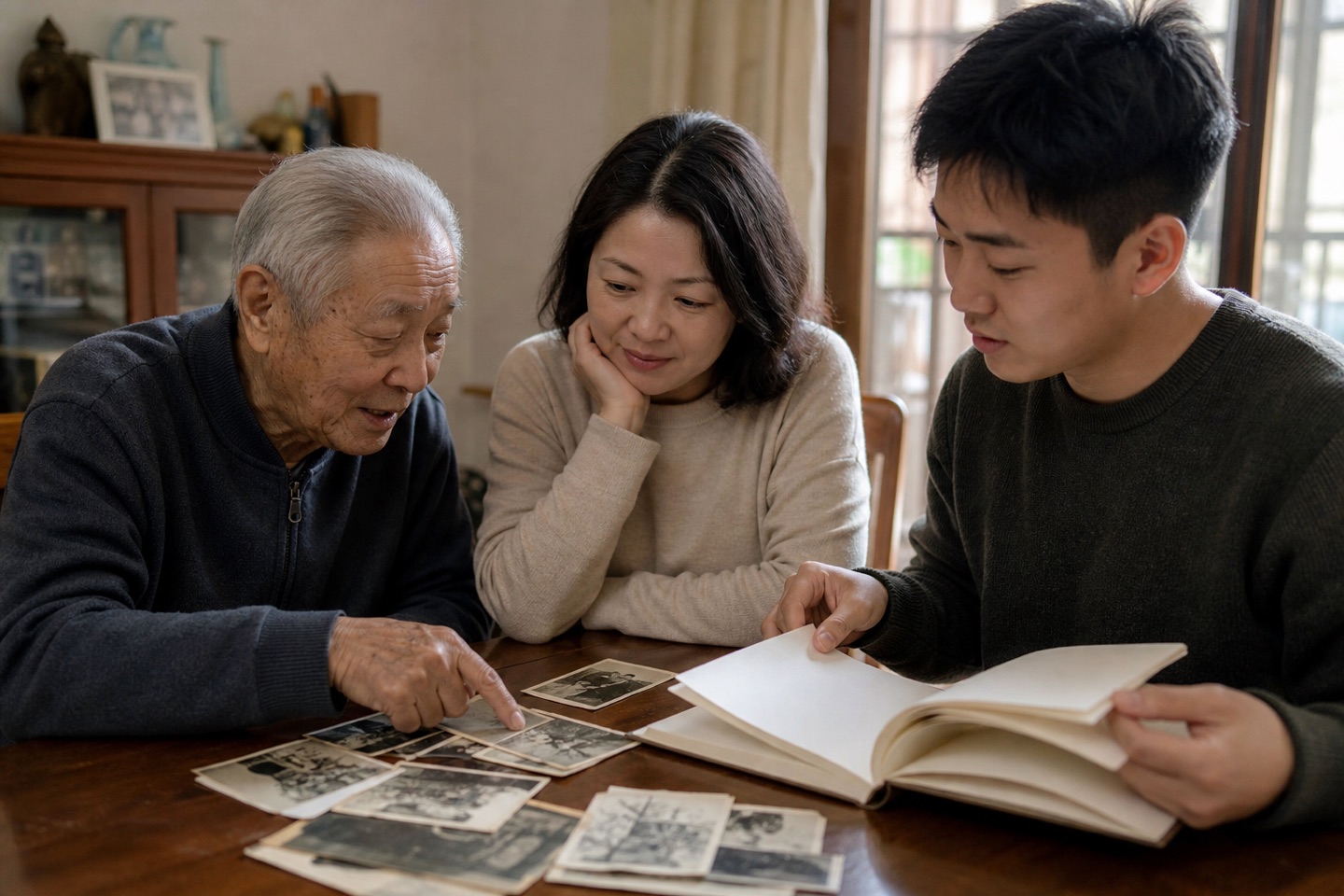
You can also invite a partner, children, or grandchildren to each write a short passage, creating different perspectives. When adding a photo index at the end of the book, captions should at least clearly state the people, time, place, and event; for information that cannot be confirmed, note the source of the account.
How long should a memoir be?
The word count should follow the material, not stretch the story the other way around. For a photo-rich commemorative album with ample white space, the text on each page will be significantly less than in a text-only book. Below are common ranges for planning a project:
| Book type | Recommended word count | Number of chapters | Suitable for |
|---|---|---|---|
| Concise commemorative album | 20,000–40,000 Chinese characters | 8–12 chapters | Focusing on one stage or mainly using photos |
| Standard personal memoir | 60,000–100,000 Chinese characters | 16–24 chapters | Covering a relatively complete life experience while maintaining reading rhythm |
| Complete life biography | 100,000–160,000 Chinese characters | 20–28 chapters | Rich life experiences, with relatively complete interviews and materials |
A single chapter is usually kept to 3,000–5,000 Chinese characters, making it convenient to dictate in one focused session and suitable for family members to review in sections. Before final typesetting, the page count also needs to be determined based on trim size, font size, number of photos, and white space.
Four Steps You Can Start Today
- First, record “the earliest scene you can remember,” without rushing to polish the writing style.
- List the places you have lived, the jobs you have done, and ten important people in your life.
- Choose one photo, and clearly write down who is in it, when and where it was taken, and what was happening at the time.
- Create three categories of fact markers: “confirmed,” “to be verified,” and “different accounts.”
The real difficulty is often not “writing,” but being asked the right questions to begin with. Today, you do not need to decide on a book title, nor promise to write 100,000 words. Just answer one question fully:What is the earliest scene you can remember?
Structural Observations and Editorial Notes
This article is organized based on the scene arrangement, character narration, and stage-based structure commonly found in memoirs by ordinary people, and also refers to the public tables of contents and reading experience of published works such as Qiu Yuan, I Deliver Parcels in Beijing, My Mother Works as a Cleaner, and In the Market, Among People. This article provides writing methods and does not replace verification of specific life experiences, dates, and family relationships.