Clues to the Distribution of the Ji Surname and a Cautious Path to Genealogical Research
Existing materials record clues to the distribution of the Ji surname in multiple areas and mention accounts tracing its origins to the State of Ju and Jingzhao, among other theories. Since Ji clans in different regions may not share the same ancestry, their origins, migrations, and genealogical lineages still need to be verified item by item against clan genealogies, local gazetteers, gravestones, and family memories.
The Ji surname has a relatively long history of documented use. Existing surname references note that Ji ranked 113th in the Song edition of the Hundred Family Surnames. Data on population size and contemporary ranking, however, vary according to statistical methodology and period, and cannot be determined from a single record alone.
One widely circulated account of the Ji surname’s origins connects it with the former territory of the Ju State and its capital, Jijin, suggesting that some descendants of the Ju State’s ruling clan may have adopted a place name or the name of the capital as their surname. Other sources trace the distant ancestors of the Ji clan to the ancient Si-surname system and state that the Ji clan once formed a prominent lineage in Jingzhao. These accounts belong to traditional surname narratives; whether they correspond to any particular branch must still be established through continuous and mutually connected genealogies, genealogical prefaces, epitaphs, local gazetteers, and other historical documents. The fact that people share the same surname is not, by itself, grounds for concluding that Ji clans in different regions descend from the same founding ancestor or belong to the same lineage branch.
Currently visible distribution clues involve Anhui, Jiangxi, Jiangsu, Zhejiang, Henan, Hubei, Sichuan, Guangxi, Hebei, Shaanxi, Shandong, Heilongjiang, Liaoning, Yunnan, and Guizhou, as well as Tianjin, Shanghai, Hong Kong, and Taiwan. The clues include place names such as Jijia Village, Jijia Ferry, Jijia Bay, Jijia Dam, and Jiwei, along with information about certain ancestral halls, genealogy compilations, and donated genealogy holdings. These place names can provide direction for ancestral research, but cannot alone prove a direct blood relationship between a particular village and Ji clans elsewhere. Migration dates, the names of founding migrants, places of origin, and branch relationships still need to be compared individually.

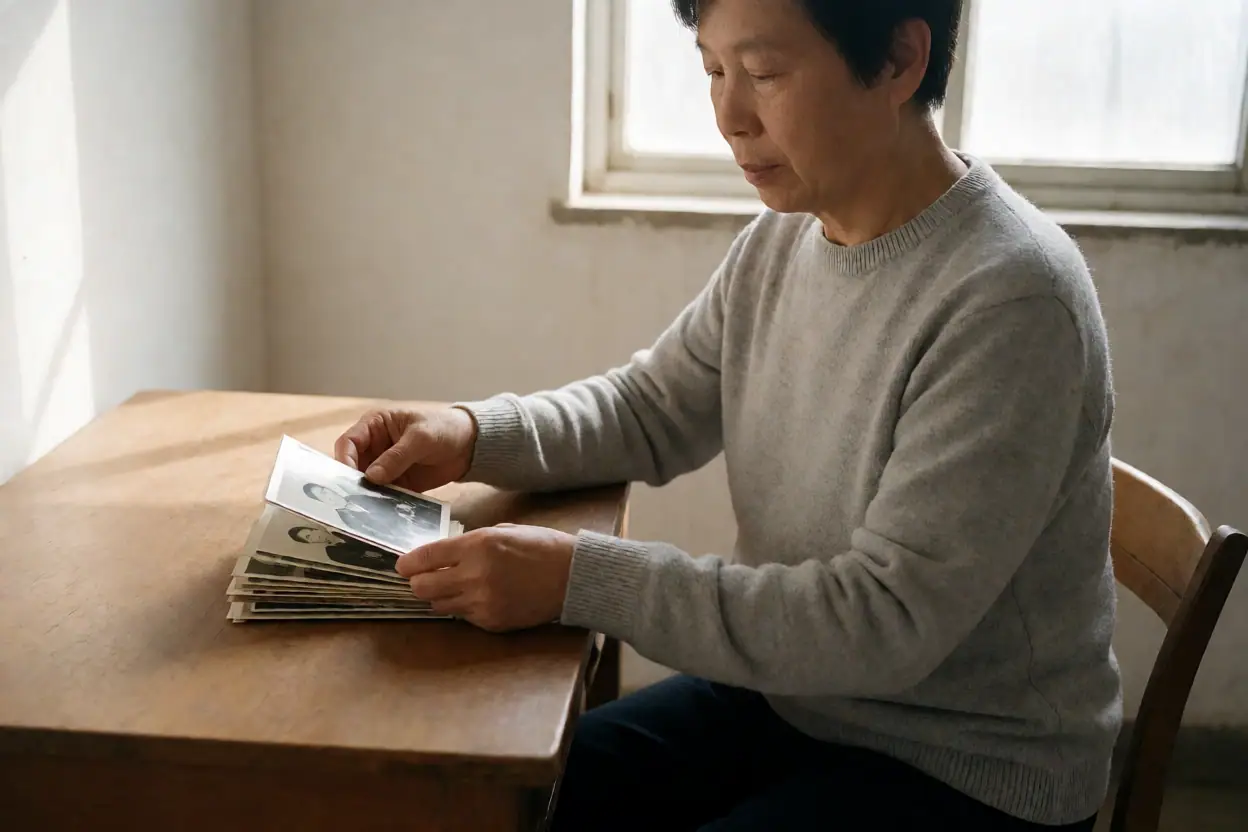
Ji descendants undertaking family historical research can begin by recording their ancestral residences, the names of known forebears, generation names, burial locations, marital relationships, and dates of relocation, and then search for local genealogies, county gazetteers, township gazetteers, ancestral-hall inscriptions, contracts, and school or clan documents. Online genealogies are useful for establishing preliminary leads, while family memoirs help preserve oral traditions, former names, and migration stories; however, both should be cross-checked against primary documents. Local gazetteers can supplement information on changes in administrative divisions, the evolution of villages, and the background to individuals’ activities. Where necessary, potential misjoins can also be investigated by comparing variant characters, taboo characters, former place names, and differences among editions of genealogical records.
At this stage, the more cautious formulation is that the Ji surname is distributed across many parts of China, and that some branches may be related to traditional origin narratives associated with Ju and Jingzhao, among others; however, the clan relationships among Ji groups in different regions cannot be treated as uniform. The focus of ancestral research is not to find a single definitive answer, but to establish a lineage chain extending upward from recent ancestors, with the evidence consistently corresponding at each stage.
Learn More and Verify
- Clues from the Chen clan generational naming system in Bobai and pathways for genealogical ancestral research
- Clues to the migration and distribution of the Shu surname and pathways for tracing family roots
- A Method for Distinguishing Shang Surname Generation-Name Distribution and Tracing Family Roots Through Genealogies
- Anhui Shao Clan Generation-Name Clues and Genealogy Research Methods
Genealogy Knowledge and Methods for Compiling Genealogies · Finding Genealogies and Local Gazetteers · Organize family-root-seeking leads