Bobai Chen Clan Generation-Name Clues and Genealogical Research Paths
Existing materials record a set of generation-name clues associated with the Bobai Chen clan and mention “the descendants of Shiliuguan, sons of Lord Chen Chongli.” These materials may serve as a starting point for genealogical research, but they are not sufficient on their own to establish a specific branch, ancestral origins, or a complete lineage. Further verification is still needed against genealogy books, tomb inscriptions, local gazetteers, and family memories.
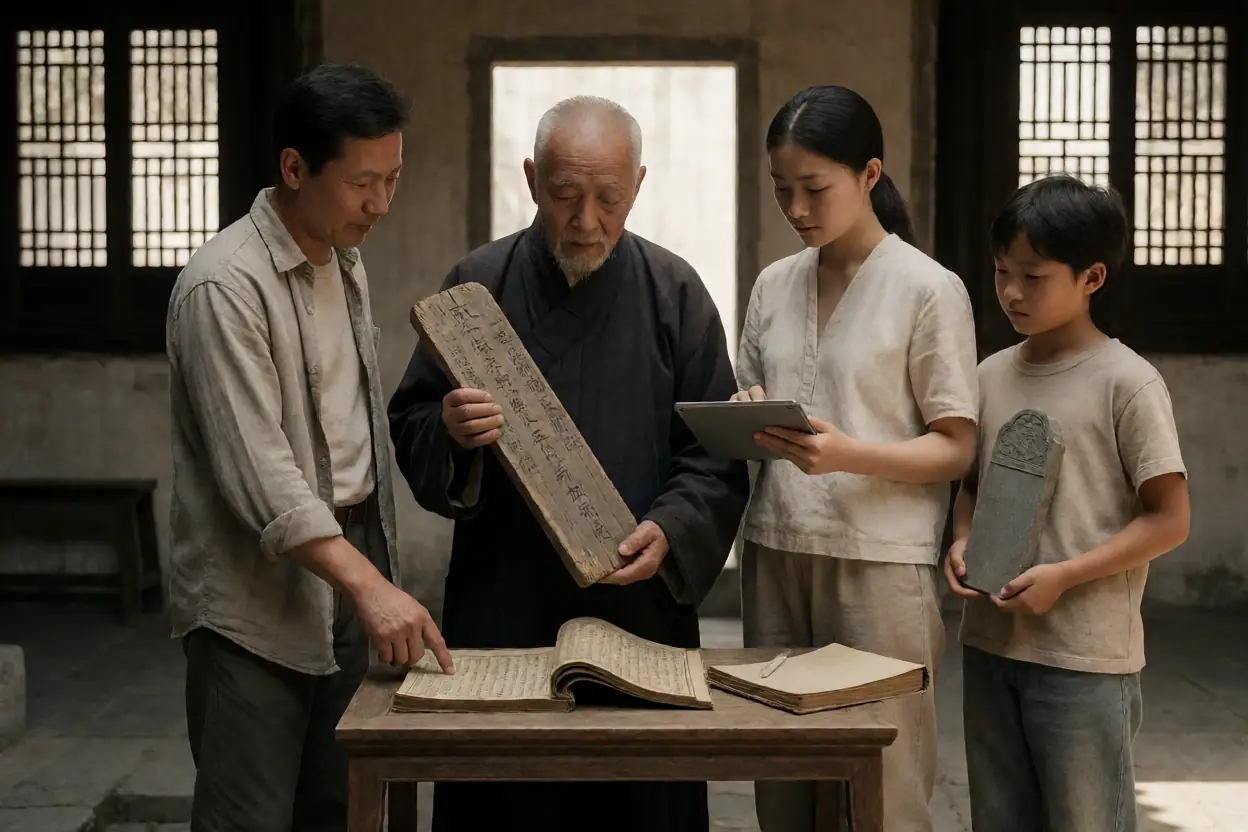
Regarding the Bobai Chen clan’s generation names, the existing clues include the statement “the descendants of Shiliuguan, sons of Lord Chen Chongli,” along with a sequence of generation-name characters: “奕朝圣世科甲第,祖宗德业国家基,燕怡照日月,赞绪永乾坤”. This passage may belong to the naming sequence used by a particular branch, or it may reflect sentence segmentation introduced during compilation or transcription. Since a complete preface, lineage table, genealogy-revision dates, and specific branch information are currently unavailable, it is advisable to treat this material as a clue for further genealogical research rather than directly infer that all branches of the Bobai Chen clan shared the same generation-name sequence.
Generation names are commonly used to distinguish naming positions across successive generations within the same clan. However, sharing a surname does not mean sharing the same lineage, and Chen families in the same area may have originated from different migration routes or different founding ancestors. Even when generation names are identical, reliable lineage connections can be established only by examining consecutive naming sequences, parent-child relationships, changes in place of residence, marriage records, tomb inscriptions, and branch designations in genealogies. The titles “Chongli Gong” and “Shiliuguan” must also be confirmed against the original genealogy to determine whether they refer to a founding ancestor, a branch ancestor, an official title, or a later honorific; no conclusion should be drawn from fragmentary text alone.
When conducting genealogical research, family elders can first organize the surviving materials, including ancestral villages, former ancestral-hall sites, cemetery locations, ancestors’ names, generation-name characters, dates of relocation, and oral traditions, while distinguishing certain memories from speculation. Next, search surname databases and online genealogies for Chen branches, generation names, and place-name clues, then compare the results item by item with genealogy pages, deeds, tombstone photographs, and family memoirs preserved by the family. If identical generation names or similar ancestor names are found, they should be treated only as an entry point for further verification.
Local gazetteers, township gazetteers, village records, and ancestral-hall inscriptions can often supplement background information on administrative changes, village formation, population migration, and the activities of notable figures. For the Bobai Chen clan, valuable verification paths include confirming the earliest identifiable place of residence of the family, locating Chen records associated with relevant villages, comparing how different genealogies describe the founding ancestor and the lineage of each branch, and recording the date, source, and reliability of every piece of information. If conflicts arise among the various materials, the differing accounts should be retained until the original documents or additional corroborating evidence can be obtained. A genealogy compiled in this way can preserve family memory while avoiding the presentation of unverified ancestral origins, hall names, or migration stories as established fact.