Anhui Shao Generational Name Clues and Genealogical Research Methods
A family recollection from Anhui records the generational-name clues “Jing—Shi (Cai)—Tian—Yuan” in a nearby branch, but the information has not yet been developed into a complete lineage. Only by cross-checking genealogies, place names, tombs, and local gazetteers can researchers determine the branch to which it belongs and trace its migration history.
A family recollection concerning the Shao family in Anhui states that, according to the writer’s knowledge, the generational names of the most recent generations were, in sequence, “Jing, Shi (Cai), Tian, Yuan.” “Jing” corresponds to the grandfather’s generation, “Shi” or “Cai” to the father’s generation, “Tian” to the writer’s generation, and “Yuan” may belong to the following generation. The record also states that the complete genealogy has not been personally consulted and that the subsequent generational names remain unclear. Accordingly, this information is better treated as a starting point for family searching and genealogical organization; it cannot by itself be used to infer the complete generational sequence of a particular Shao branch.
Generational names are a traditional way for families to assign names and distinguish generations, but different regions and branch families may arrange them independently. Variations may include the same characters appearing in a different order, homophonous substitute characters, interruptions in the sequence, or a newly devised sequence after a genealogy is revised. A parallel notation such as “Shi (Cai)” may also reflect oral memories, variant written forms, or terminology used by different branches. The four characters “Jing, Shi, Tian, Yuan” alone are insufficient to confirm a hall name, the founding ancestor of a migration, an ancestral home, or a relationship with other Shao branches. Sharing a surname only indicates that the surname is the same; it does not directly prove descent from a common ancestor.
To continue the verification, begin by organizing materials within the family: record elders’ names, childhood names, generational characters used, places of birth, tomb locations, the names of ancestral homes, and known directions of migration. At the same time, photograph old genealogies, inscriptions, ancestral-hall plaques, and old deeds, preserving the original forms of the characters and the page numbers. For oral accounts, separately note the narrator, the time the information was heard, and the degree of certainty, so that later speculation is not mixed into the ancestral lineage. If the family has no bound genealogy, cross-referenced clues may also be found in branch genealogies, ritual registers, tombstones, and local marriage and funeral records.
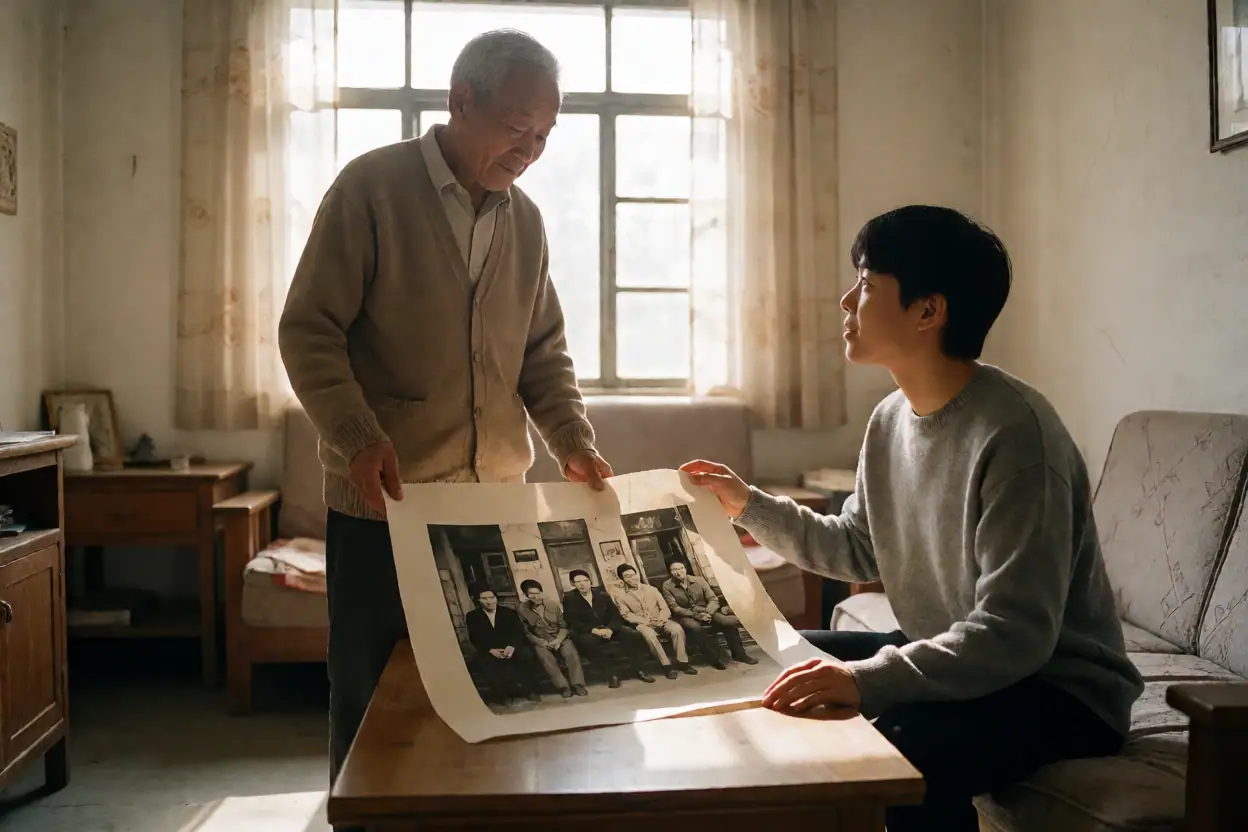
Online genealogical materials are useful for searching for place origins associated with people of the same name, fragments of generational-name sequences, and catalogues of genealogical records. However, even when the same sequence is found, it is still necessary to compare places of residence, migration dates, ancestors’ names, and branch relationships. Surname databases can help clarify the distribution of the Shao surname and its documentation in different regions, while local gazetteers can be used to verify information about village history, changes in administrative organization, ancestral halls, and tombs. Family memoirs can preserve personal experiences and memories of migration, but genealogical research should cross-check these materials item by item against genealogies, inscriptions, and local documents, gradually establishing a traceable lineage rather than inventing missing content merely to complete the generational-name sequence.
Learn More and Verify
- Clues from the Chen clan generational naming system in Bobai and pathways for genealogical ancestral research
- Clues to the generation names of the Xi surname in Anhui and methods for tracing the compound surname Ximen
- Historical clues to the Houmochen surname and directions for tracing family roots
- Migration history of the Bin surname and clues for tracing family roots through genealogical records
Genealogy Knowledge and Methods for Compiling Genealogies · Finding Genealogies and Local Gazetteers · Organize family-root-seeking leads