From “Surnames” to “Personal Names”: Family Changes Behind Forms of Address
“Xing” and “shi” were not always equivalent to today’s surname and given name. They once served to distinguish lineage, branches, status, and place of residence. Later, as social institutions and household-registration terminology changed, they gradually gave rise to the modern structure of a “full name.” Understanding this process can also support more cautious family-root research.
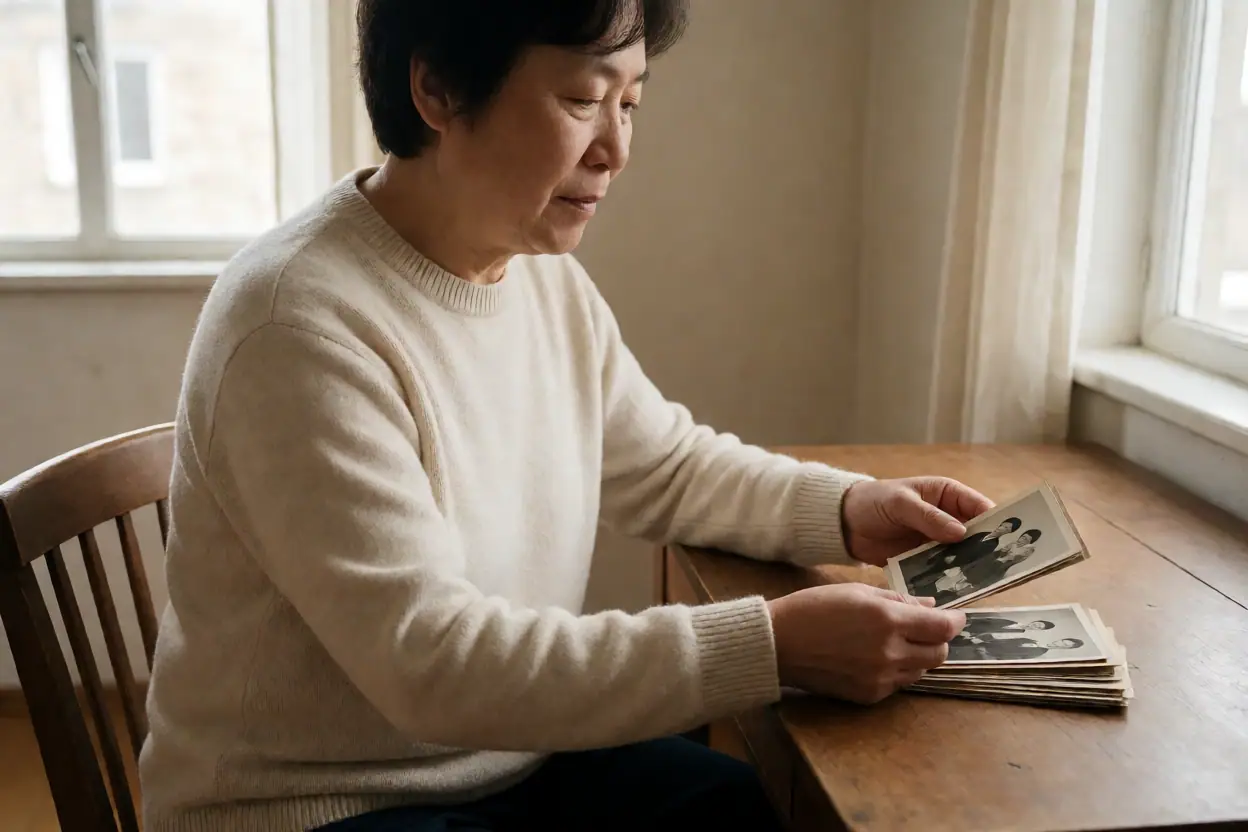
Today, people generally understand a “personal name” as a combination of a surname and a given name. In earlier historical contexts, however, “xing,” “shi,” “ming,” and “zi” each served different functions, and their usage varied with the era, social status, and region. Therefore, it is not appropriate to explain all ancient figures and families simply through the modern naming system.
Traditional texts generally hold that “xing” initially served to distinguish bloodline groups and was often interpreted as a marker of shared clan affiliation or marital relations. “Shi,” by contrast, was more often associated with branches, fiefdoms, official posts, places of residence, or achievements. As populations grew and groups divided, multiple shi could emerge within a single xing group, while some shi could develop new branches through migration, enfeoffment, or institutional changes. Scholarly explanations of the formation of ancient xing and shi remain varied. Ancient surnames containing the female radical can offer a line of inquiry, but a particular institution or social form cannot be established solely from the shape of the characters.
After the patriarchal clan system of the Zhou dynasty was established, the use of xing and shi in aristocratic society became more institutionalized. Ancient people often used xing to distinguish marital relationships and shi to distinguish social rank. This summary helps explain pre-Qin ritual institutions, but actual forms of address were still influenced by a person’s status, the period, and the conventions of the source. The names of vassal states, fiefs, official posts, and ancestors’ personal names and courtesy names could all become the basis for later clan designations. After the Qin and Han dynasties, xing and shi, which had originally reflected differences in status, gradually converged, and fixed hereditary family surnames became increasingly common among ordinary people as well. By the early modern period, personal names, courtesy names, literary names, childhood names, and other forms of address coexisted, and “personal name” became a more suitable expression for everyday registration and social interaction.
From the perspective of family research, a surname is only the starting point for entering a genealogy and cannot, by itself, prove a common ancestry. Taking the surname “Bai” as an example, existing surname sources link its relevant records to Qinghe, Pingyuan, Henan, and other places, and list hall names such as Qinghe Hall. They also indicate that it may encompass multiple origins, as well as local branches formed from place names or official posts. Related distributions can be found in Liaoning, Jilin, Heilongjiang, Hebei, Shandong, and other places. However, geographic proximity, identical hall names, or the same surname is not sufficient to directly establish a common founding ancestor.
A more reliable approach to tracing one’s roots is to cross-reference surname sources with online genealogies, family memoirs, local gazetteers, inscriptions, and migration records. Particular attention should be paid to the first ancestor to migrate to a location, generation names, places of residence, marital relationships, burial information, and the date on which a genealogy was compiled or revised. It is also important to note that the same person may appear under an alternate name, an avoidance name, or differing records. For legendary founding ancestors of a surname, ancient lineages, and large-scale migrations, documentary records, family traditions, and verified evidence should be distinguished from one another, so that a family lineage that can be checked and corroborated can be established step by step.
Learn More and Verify
- Tracing the origins of the Kui clan in Fangshan: family lineage in mountain village memories
- The Origins and Branches of the Yang Surname in Wuwei: From Surname Genealogies to Local Root-Tracing
- Tracing the Origins and Branches of the Qi Family: Clan Continuity Through Historical Migrations
- Shanghang Hakka Genealogy Museum: Connecting Shared Hometown Ties Across the Taiwan Strait Through Genealogical Records
Genealogy Knowledge and Methods for Compiling Genealogies · Finding Genealogies and Local Gazetteers · Organize family-root-seeking leads