Similarities and Differences in Ran Clan Generation Names Across Regions and Clues for Tracing Family Roots
Records of Ran clan generation-name sequences are scattered across Chongqing, Hubei, Sichuan, Hunan, Henan, Shandong, Guangxi, Yunnan, and elsewhere. Some sequences are similar, while others differ markedly. Organizing these naming sequences can provide clues for comparing genealogies, tracing migrations, and interviewing clan members, but sharing a surname, a character, or a similar generation-name sequence alone cannot establish a common ancestry.
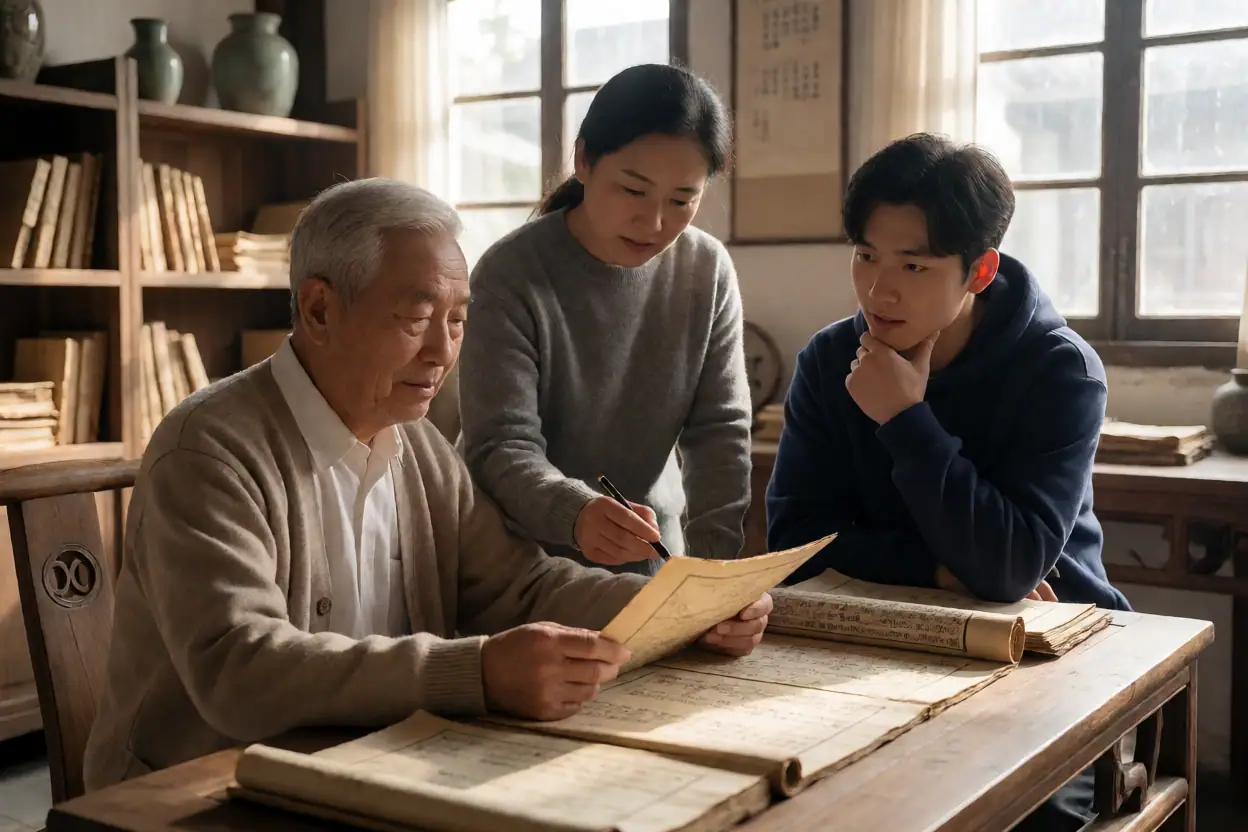
Ran clan families are widely distributed, and the generation-name sequences preserved in different places display distinct regional and branch-level differences. Existing records cover Fengdu, Yunyang, Fuling, and Youyang in Chongqing; Lichuan and Songzi in Hubei; Leshan in Sichuan; Mayang in Hunan; Zhongmu and Zhengzhou in Henan; parts of Shandong; as well as Nandan and Tian'e in Guangxi and Zhaotong and Yongshan in Yunnan. Some of these sequences come from genealogies, while others rely on oral accounts from clan members. Their state of preservation and reliability vary, so the place of record, provider, time of compilation, and medium should be noted separately when organizing them.
Looking at the characters used, several regions in southwest China repeatedly feature similar phrases such as “永裕广正瑞,” “崇隆启懋光,” and “开元衍庆长.” Some character sequences in the records from Youyang, Mayang, Leshan, Tian'e, Zhaotong, Yongshan, and Yunyang are relatively similar, but differences such as “正、贞、真,” “懋、茂、孟,” and “景、敬、进” can also be seen. Such differences may be related to phonetic transcription in dialects, copying errors, revisions made during subsequent compilations, or additions and revisions made independently by different branches. They cannot yet be used to directly merge genealogical lines.
Among the Ran clan generation-name sequences in parts of Henan and Shandong, phrases such as “宏闻贞尚衍,兴毓传继广,昭宪庆凡祥” can be found; one branch in Sichuan has also preserved a similar sequence. Zhongmu in Henan has another newer sequence: “尚德务本,循纪守纲,允克奉行,基业永昌,” while the material recorded in Zhengzhou is different again. The sequences from Fengdu and Fuling in Chongqing and Songzi in Hubei also each have distinctive features, indicating that the Ran clan does not have a single unified generation-name sequence covering all regions and branches.
ZongMai surname materials list Donghai, Xiapi, and Henan as relevant commandery-origin clues, and record Donghai Hall as a hall name. Clues concerning modern and contemporary distribution involve Henan, Shandong, Hebei, Jiangsu, and Anhui. However, commandery origins and hall names are primarily historical and cultural identifiers; people using the same hall name do not necessarily descend from the same ancestor in the recent past. Accounts of the origin of the Ran surname also include different explanations involving multiple lines of origin, place names, official titles, and local branches. Each specific family still needs to be examined through the genealogy of its own branch and verifiable documentary sources.
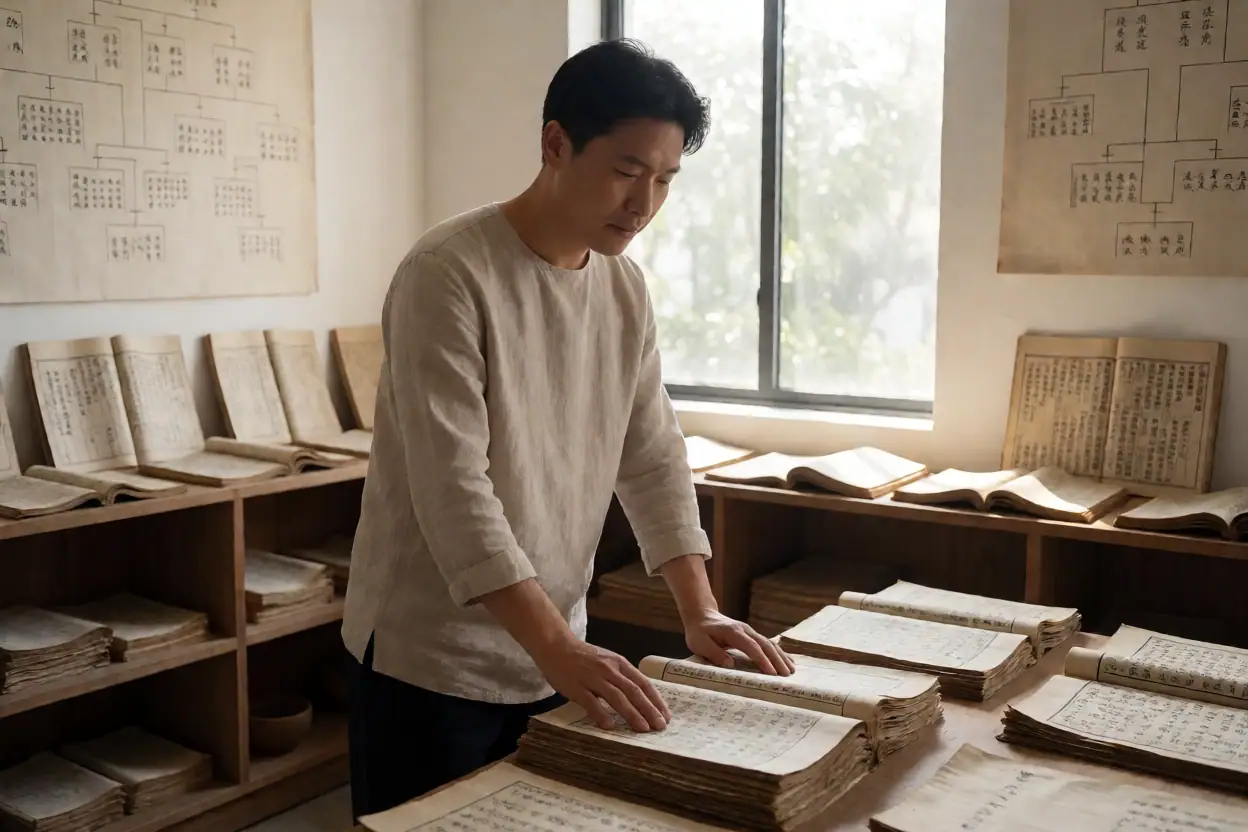
When tracing family roots, you can begin by entering your own name, those of your parents and grandparents, and the names, generation names, spouses, places of residence, and burial information of known ancestors into an online genealogy. Then cross-reference prefaces to old genealogies, lineage tables, ancestral-hall inscriptions, contracts, tombstones, and village historical changes and population-migration records in local gazetteer databases. Family memoirs are suitable for preserving elders' accounts of former residences, migration routes, kinship terms, and experiences compiling genealogies, but oral material should identify the speaker and the time of recording and should be cross-checked against written sources.
Generation names are best used as clues for narrowing the scope of a search, not as the sole proof of blood relationship. Even when sequences are highly similar, an evidentiary chain should be established using records of the founding migrant ancestor, continuous genealogical lines, ancestral villages, marital relationships, and local documents from the same period. Claims that trace a particular branch back to an ancient figure should, in the absence of a continuous genealogy and support from early documents, be preserved as family legends or leads requiring further investigation rather than treated as definitive conclusions.