Clues to Jiangxi Shuai Settlement Areas and Genealogical Research Paths
Existing materials indicate that the Shuai clan is widely distributed in Jiangxi, with related settlements found in Jiujiang, Yichun, Nanchang, Fuzhou, Ji’an, and Shangrao. Records of the number of households, population, and contact information in each locality are provisional and are not yet sufficient to prove that the different villages descend from the same branch. Further verification against genealogies, local gazetteers, and family memories is still required.

Clues concerning the distribution of the Shuai surname in Jiangxi are concentrated mainly in several areas of northern, central, and eastern Jiangxi. Numerous locations have been identified around Jiujiang, including Hongguang Village, Minshan Township, Jiujiang County; Minzhu Village; Laowu; and Guanshan Village, Xinhe Town; as well as Haihui Village, Haihui Town, Lushan District; Jianggong Town, Gongqingcheng; Wenquan Town and Bailu Town, Xingzi County; Duobao Township, Duchang County; and Zhajin Town, Xiushui County. Some villages are known as “Shuai Family,” “Shuai Clan,” or “Shuai Village,” reflecting the long-standing presence of settlements primarily inhabited by people surnamed Shuai. However, identical or similar village names cannot, by themselves, serve as evidence that the clans share a common origin.
There are also several Shuai settlement sites in the Yichun area, including Chitian Town, Songbu Town, Chian Town, and Tanbu in Fengxin County, as well as related records in Wenquan Town, Tonggu County. Clues around Nanchang include Yangzizhou in Qingshanhu District, the Wangcheng area of Xinjian District, Nanchang, Xiangshan Town, and Jiaoling Township, Anyi County. Records from Fuzhou involve Luozhen Township, several villages in Changkai Town, and Zhanwei Town, Dongxiang County; Ji'an includes Yijiang Township, Xingan County, Tancheng Township, Yongfeng County, and Shuibian Town, Xiajiang County; and Shangrao includes Zunqiao Township and Yongping Town, Yanshan County. The records also preserve some population figures, household counts, and contact names, which may serve as starting points for subsequent visits and documentary research.
It should be noted that population figures may change with the time of registration, adjustments to administrative divisions, and changes in statistical criteria, and therefore cannot be taken directly as a measure of the present-day population. The historical development of some place names is complex, and differences may exist among former names, natural village names, and current administrative village names. When researching a specific branch, researchers should first confirm the village’s historical name, the county to which it belonged, and the time of migration, and then compare this information with the progenitor who first migrated, generation names, ancestral halls, and burial sites recorded in genealogies. If multiple locations share a particular hall name, generation name, or migration tradition, this can only indicate a connection worthy of verification; it does not justify immediately merging their genealogical lines.
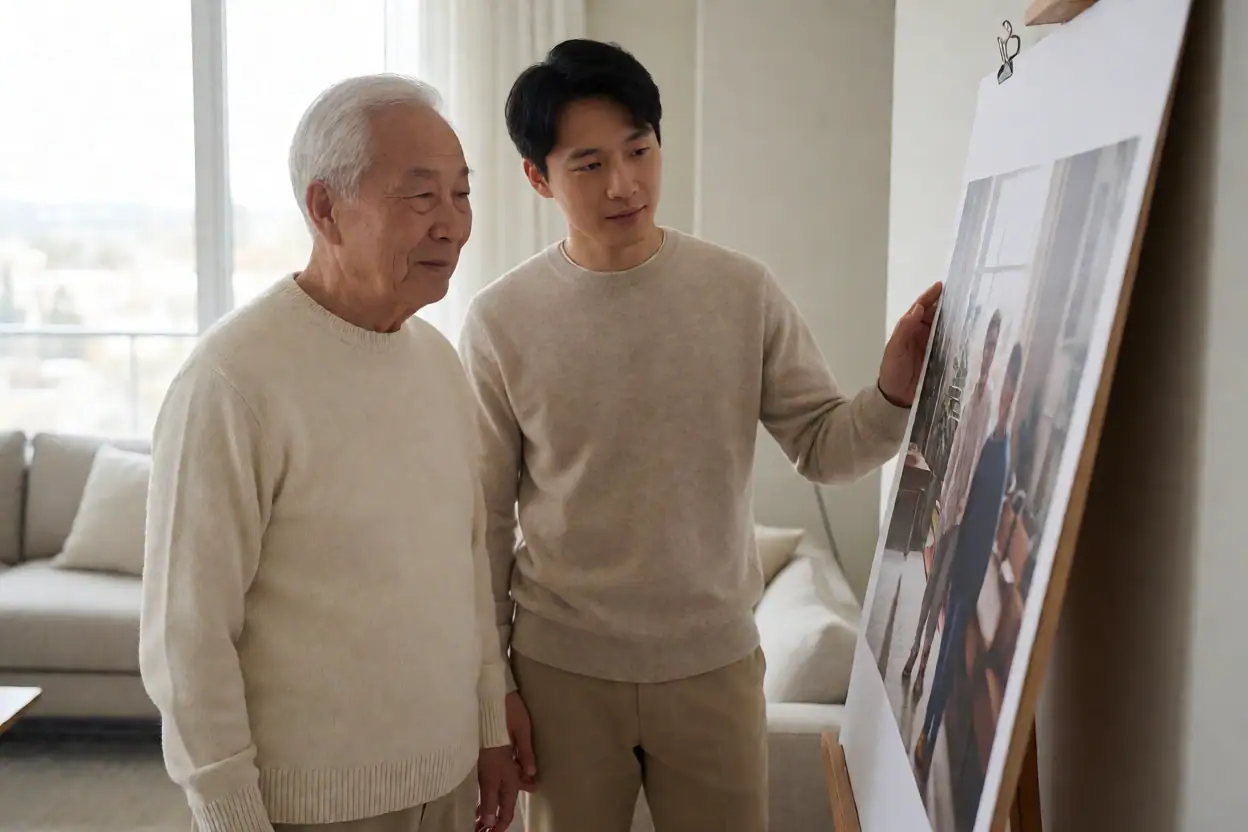
A more reliable approach to tracing one’s roots is to cross-reference claims about lineage origins in surname databases with local gazetteers, prefaces to old genealogies, inscriptions on ancestral halls and steles, and family memoirs. Online genealogies can be used to organize names, generations, and migration points, but copied material in them should, wherever possible, be checked against the original genealogy or local documents. Family memoirs are particularly useful for preserving information about migrations, branch divisions, marriages, and changes of residence in modern and contemporary times, while local gazetteers help confirm changes in village names and the broader regional social context. For the various Shuai settlement sites in Jiangxi, it is generally more reliable to establish each village’s lineage separately first and then look for a common ancestor or a relationship formed through branch migration, rather than drawing direct conclusions from general traditions about the Shuai surname as a whole.
Learn More and Verify
- Clues to the Distribution and Ancestral Origins of the Gong Surname: From Areas of Concentration to Genealogical Verification
- Orthographic Clues and Genealogical Research Paths for the Kongtong Surname
- Clues to Jiang Clan Genealogies in Hebei and Paths for Genealogical Research
- Clues to Xian-surname settlements and pathways for cross-regional ancestral research and verification
Genealogy Knowledge and Methods for Compiling Genealogies · Finding Genealogies and Local Gazetteers · Organize family-root-seeking leads