A Study of Notable Figures of the Wei Clan in Qinlong: From Wei Xiao to Family Roots
Wei Ao was an influential figure in the Qinlong region at the end of the Western Han dynasty and rose to prominence from Longyou. Records concerning other figures and branches of the Wei clan are relatively scattered and require item-by-item examination against official histories, local gazetteers, genealogies, and family memories.
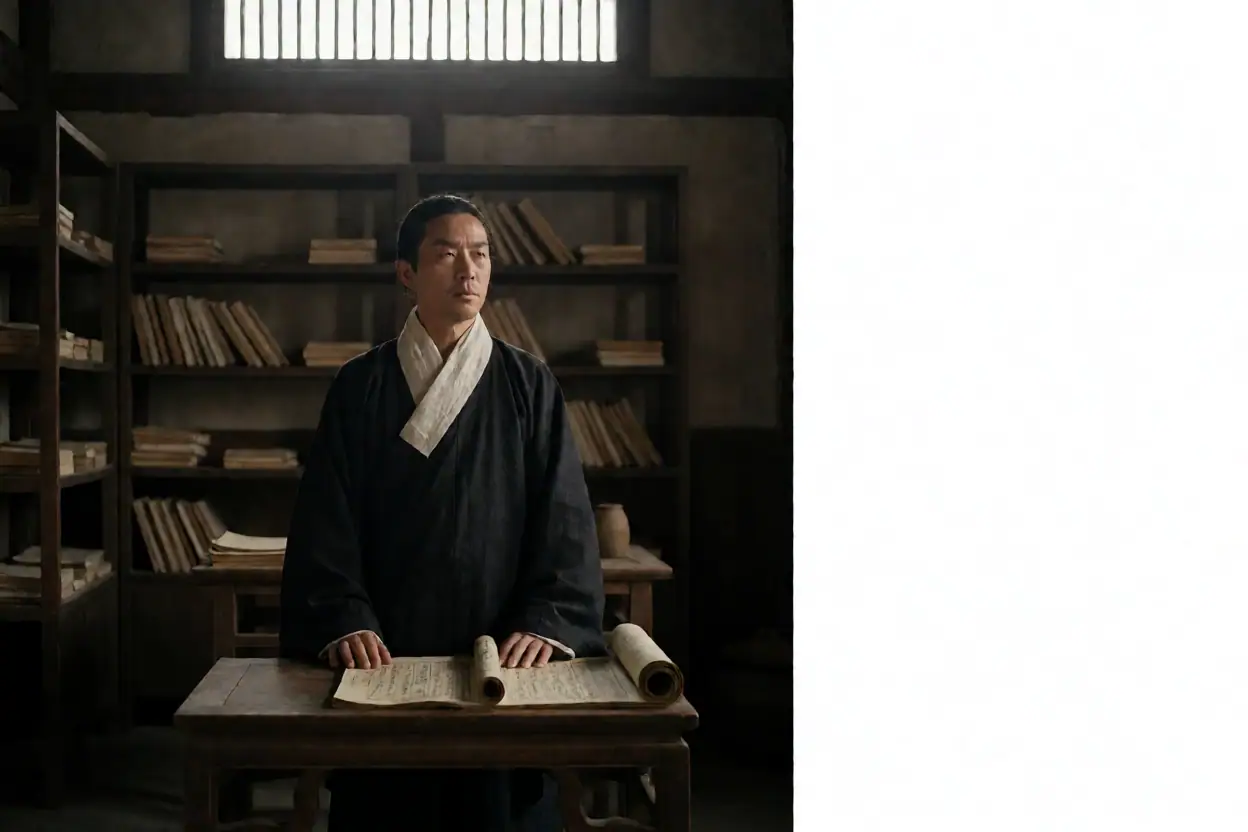
Among historical figures in Qinlong, Wei Xiao is the best known. Traditional historical texts record that his courtesy name was Jimeng, and that he was active from the late Western Han to the early Eastern Han, with his native place generally identified as the area around Chengji in Tianshui. In the turmoil that engulfed the realm during the final years of Wang Mang's rule, Wei Xiao rose with the support of local powerholders and scholar-official groups. Invoking opposition to Wang Mang and support for the Han, he gradually expanded his influence in the Longyou region. His power at one point extended across Longxi, Wudu, Jincheng, Wuwei, Zhangye, Jiuquan, Dunhuang, and other areas, making it a force that could not be overlooked in the political landscape of the northwest at the time.
Wei Xiao was known in his early years for his familiarity with the Confucian classics and his courteous treatment of scholars. Fang Wang was once recruited as his military advisor, while Ma Yuan, Ban Biao, and others were also associated with his group. These figures belonged to the political and cultural network surrounding Wei Xiao and cannot therefore be identified as members of the Wei clan. Wei Cui and Wei Yi appear in relevant accounts and are respectively recorded as relatives of Wei Xiao, but their precise genealogical relationships, changes in residence, and descendants still require cross-verification against more complete biographies, genealogical records, or local documents.
As for the question of which other notable members of the Wei clan lived in the Qinlong region, the existing clues point most clearly to Wei Xiao and figures associated with his family. The Wei surname itself is not common, and people with the same surname mentioned in historical documents may not have come from the same branch. Determining whether a particular Wei clan branch is connected with Wei Xiao of Chengji cannot be based on the shared surname alone; it should also take into account records of the founding migrant ancestor, the ordering of the genealogy, changes in places of residence, tomb inscriptions and steles, ancestral hall names, generational names, and other materials.
The ZongMai surname database can be used to organize information on the geographic distribution, historical designations, and related biographical clues associated with the Wei surname. Online genealogies are suitable for researching founding ancestors, migrations, and genealogical lines, while family memoirs can supplement memories of relocations, branch divisions, and local life in modern and contemporary times. When investigating a Wei clan family-roots case in Qinlong, genealogies should also be read alongside county gazetteers, prefectural gazetteers, official histories, and inscriptions, with attention paid where necessary to changes in place names from ancient to modern times. Only when different sources connect with one another in terms of time, place, and relationships among the people involved can a relatively sound judgment be made about the continuity of a particular branch.