Tracing the Roots of the Murong and Mu Clans in Chaoyang: From Historical Memory to Family Identity
A root-seeking activity for descendants of the Murong and Mu clans held in Chaoyang brought ancestral rites, visits to historical sites, and exchanges on local culture together. The related clues also suggest that the evolution of compound surnames, branch migrations, and present-day recognition among clan relatives still require cautious examination against genealogies and local documents.
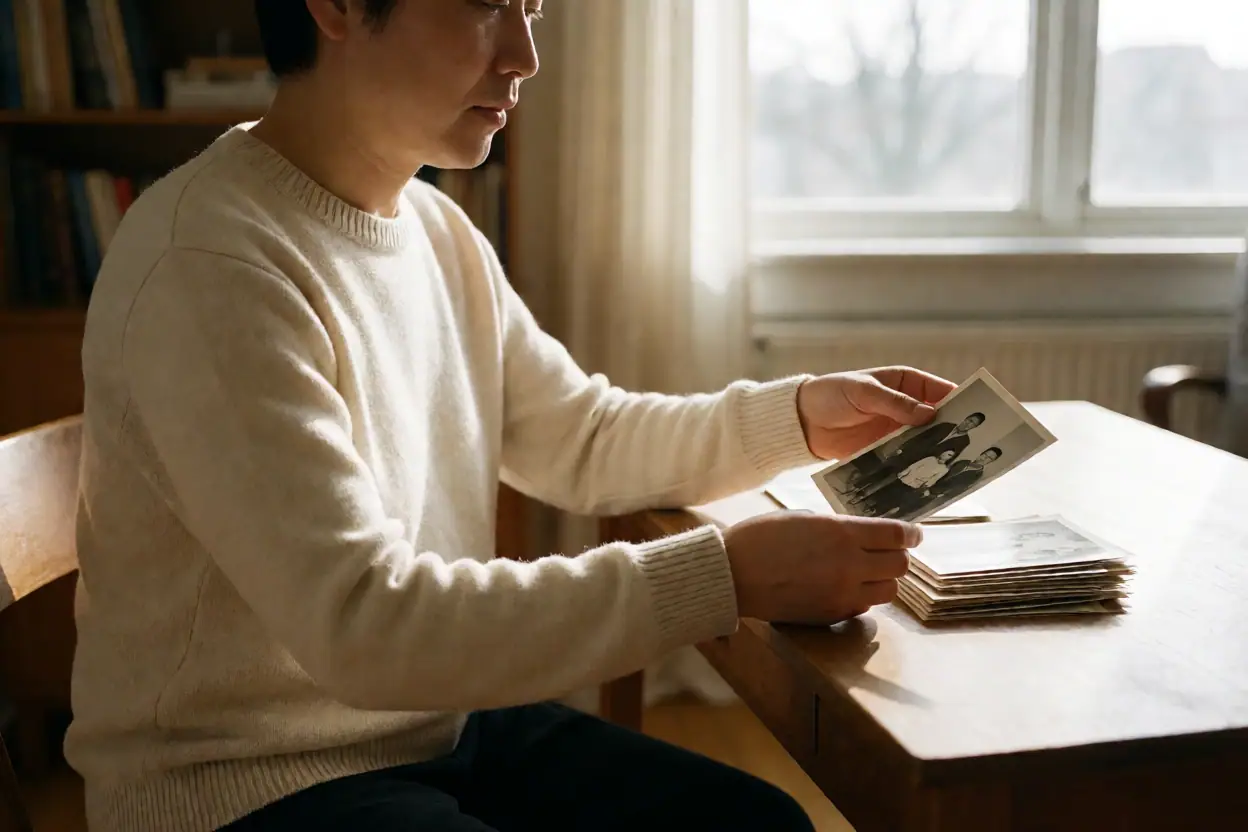
Chaoyang was once an important area of activity for the Three Yan regimes and has therefore long carried historical memories associated with the Murong family. A report on descendants of the Murong and Mu clans tracing their roots in Chaoyang noted that relatives from various regions took part in an ancestor-worship ceremony there and visited Murong Ancient Street, the North Pagoda, the Longgong Site, the southern gate site of the palace city of Longcheng, the Chaoyang Museum, and related sites, before engaging in discussions on the protection of historical culture and local development. For the participants, the trip was not merely a tour of historic sites; it also involved reconnecting with family memories, imaginings of their ancestral homeland, and their sense of identity.
The report quoted some relatives as regarding Chaoyang as a place where their ancestors had lived and expressing a wish to “come back often to take a look.” It also mentioned a young woman from Henan who worked in Guangzhou and had traveled to Chaoyang by bicycle to attend the event. These accounts demonstrate the emotional power of root-seeking activities, but individual experiences and statements made at the event remain the participants’ recollections and records in the report; they cannot directly replace historical evidence such as genealogies, epitaphs, and local gazetteers.
From the perspective of surname evolution, Murong is a compound surname with a distinctive historical background. Relevant surname sources generally associate it with the Xianbei Murong tribe and list Liaodong, Changli, and Henan among its commandery origins or historical areas of activity. However, commandery origins primarily reflect regional prestige in traditional literature and do not mean that all Murong and Mu families today can thereby confirm a common ancestor. The historical simplification of compound surnames into single surnames, ethnic integration, surname changes to avoid taboos, and migration and residential dispersion could all cause the same branch to use different surnames at different stages, and could also result in different lineages sharing the same surname.
It is especially important to distinguish between the two: although the historical evolution of Murong and Mu has been discussed, Mu families today may not all descend from the Murong lineage. Even when people share the Murong surname, it is not possible to determine solely from a surname, ancestral hall name, or oral tradition that they belong to the same branch. To trace a family’s origins further, genealogical lineages, ancestral residences, generational names, burial information, marriage and migration records, and local gazetteer materials should be compared with one another. Online genealogies can be used to organize leads, family memoirs can help preserve oral history, surname databases can provide information on variant characters, the evolution of compound surnames, and their distribution, while local gazetteer databases can help verify the history of villages and the activities of historical figures. For links lacking original documentation, it is advisable to label them as “legend,” “awaiting verification,” or “not yet mutually corroborated,” to avoid turning shared surname memories into definitive conclusions about blood relations.
The significance of this trip to Chaoyang lies first in giving relatives dispersed across different regions an opportunity to communicate and remember together. As for specific ancestral origins, migration routes, and the relationships among branches in different places, these should still be clarified gradually through continued genealogy compilation, consultation of local documents, and family interviews.
Learn More and Verify
- Historical Memories of Jiangnan and Ancestral Research on the Sima Surname Through an Ancient Tomb in Yuhang
- Tracing the Roots of the Shumulu Clan: Historical Memories of Acheng and Lalin
- Tracing the Roots of the Liu Family in Hebei: An Examination of the Legend of Liu Xia Hui and the Family Genealogy
- People of the Bei Surname and Memories of Their Branches: From Historical Figures in the Classics to Family Root-Seeking
Genealogy Knowledge and Methods for Compiling Genealogies · Finding Genealogies and Local Gazetteers · Organize family-root-seeking leads