The Si Surname of Wangyun Village: Ancestral Hall Remains and Migration Clues
Residents with the Si surname in Wangyun Village, Zoucheng, Shandong, are primarily concentrated in Wangyun No. 2 Village, where a Qing-dynasty Si ancestral hall still stands. Existing inscriptions, village histories, and clues from comprehensive genealogies outline an account of the Si surname’s migration from Shanxi into the area bordering Jiangsu and Shandong, with branches settling in southern Shandong and northern Jiangsu, but the specific lineage and origins of the village names require further verification.
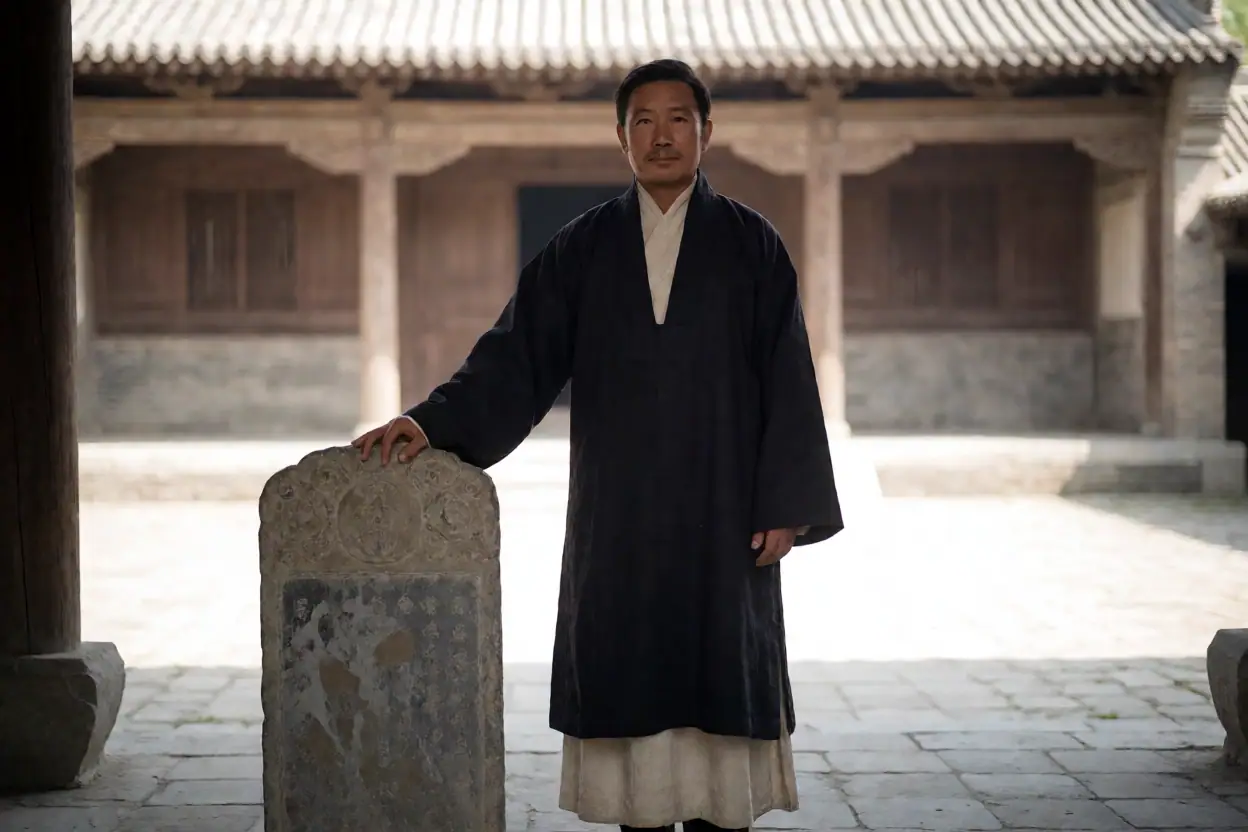
Wangyun Village is located in Shiqiang Town, Zoucheng, Shandong Province, approximately 21 kilometers southwest of downtown Zoucheng. In modern times, the village was divided into areas known as Wangyun Nos. 1 through 4, and it is now home to multiple surnames, including Sun, Gao, and Si. The Si population is estimated at over 900, making it one of the larger surname groups in the area, concentrated mainly in Wangyun No. 2 Village. Since people with the same surname may not necessarily descend from the same lineage branch, the following account of ancestral origins and genealogical lineages should be regarded as clues presented by the materials currently available.
Regarding the village’s historical development, relevant village histories record that the area around Wangyun was originally inhabited by people with the Zhuo, Feng, and Ma surnames, among others. After the late Yuan and early Ming periods, people with the Fan, Qi, Nie, Sun, Gao, Si, and Jin surnames gradually migrated there, and the village gradually developed. The name Wangyun appears in inscriptional materials dating to before the Jin dynasty. Local tradition commonly explains the name as referring to villagers observing the clouds over Yishan to forecast the weather, giving rise to the local saying, “When clouds emerge from Yishan, rain falls enough to fill a basin.” These accounts combine local memory with practical experience; the specific process by which they took shape can still be further compared against inscriptions, local gazetteers, and other documents.
The historical remains of the Si clan in Wangyun are concentrated mainly in the Si ancestral hall. According to an inscription in the hall, it was first built in the 32nd year of the Qianlong reign of the Qing dynasty. It faces south and is three bays wide. Although the surviving structure has suffered damage, its basic layout remains discernible. The hall once housed a portrait of the Si clan’s grand ancestor. The inscription accompanying the portrait honors Si Yukun as the grand ancestor and describes him as a figure from approximately the Dade era of the Yuan dynasty who once served in the Hanlin Academy. It also records that his four sons later moved respectively to the area south of Longshan in Teng County, west of Yishan in Zou County, Nanyang in Weishan, and the area around Feng County, Jiangsu. Since the inscription accompanying the portrait represents a later compilation or retranscription of family memory, its dating, official title, and migration details should still be cross-checked against the original, related inscriptions, and genealogical records.
The relevant account in the Genealogy of the Si Clan of Jiangsu and Shandong traces the Si clan’s migration to the second year of the Hongwu reign of the Ming dynasty, stating that four brothers migrated separately from Shanxi to the border area between Jiangsu and Shandong and to northern Jiangsu. One branch, which settled in Wangyun Village west of Yishan in Zou County, is considered to be connected with Si Wangyun. Existing materials also state that the Si clan in Wangyun has continued through twenty-five generations, with Yukun as the grand ancestor and Si Wangyun as the founding ancestor. Since “Wangyun” is both the name of the village and a personal name in the genealogical account, it is not yet possible to conclude whether the two are connected through naming or merely coincidental in later memory.
Clues from the general genealogy also indicate that some descendants of the Wangyun Si clan attained the statuses of jiansheng, xiangsheng, and gongsheng between the fourteenth and nineteenth generations. Such records reflect the family’s emphasis on academic honors and the transmission of education, but the specific individuals, dates, and relationships among lineage branches require a page-by-page comparison with the original genealogy. When researching local surnames of this kind, surname records, online genealogies, family memoirs, and local gazetteers can be consulted alongside one another, together with ancestral-hall inscriptions, tombstones, and oral accounts from the village, to verify migration points and connections between generations one by one. For those seeking their roots, the most reliable approach is first to establish the ancestral village, generation name, ancestors’ names, and time of migration, and then compare them with different branch genealogies, avoiding the assumption of common ancestry based solely on a surname or tradition.
Learn More and Verify
- The Distribution and Migration Clues of the Xi Surname in Hebei: From Village Memories to Genealogical Research
- Yin Clan Ancestral Hall in Qu County, Sichuan: Memories of Reconstruction and Clues to Migration
- An Examination of the Zhang Clan’s Generation Names and Migration Clues in Zaoyang, Hubei
- Settlement and migration clues of the Xin surname in eastern Yin County
Genealogy Knowledge and Methods for Compiling Genealogies · Finding Genealogies and Local Gazetteers · Organize family-root-seeking leads