Clues to the Migration of the She Clan in Fujian and an Examination of the Pingtan Branch
The distribution and migration of the She clan in Fujian involve Putian, Yongning, Pingtan, and other places. Existing accounts provide several clues concerning founding migrant figures, generational order, and localities, but some genealogical lines still await corroboration through genealogies, local gazetteers, and physical materials.

Fujian occupies an important place in the migration history of the She clan. Existing family accounts indicate that the She clan in Fujian includes both branches that multiplied locally and descendants who continued to migrate to Guangdong, Hong Kong, Macao, Taiwan, and Southeast Asia. However, the concentration of people with the same surname in a region cannot directly prove that the She families in different places came from the same lineage. Determining relationships between branches still requires a comprehensive examination of information such as the founding ancestor of each migration, places of residence, generational names, marriages, and burials.
Regarding the early routes into Fujian, one relatively clear branch in the accounts is associated with She Nengshun. According to tradition, Nengshun served as magistrate of Putian County in the early Yuan dynasty and later lived in Shepu, Putian. Some of his descendants remained in Putian, while others moved onward to Guangdong and elsewhere; one branch later migrated from Guangdong to Gangbian in Yongning, Fujian, where it became an important local She branch. Related accounts also mention that several descendants of this branch later attained honors through the imperial examinations, reflecting the influence of local clans in education, official advancement, and social relations. Because variant readings may exist among the surviving genealogical records, the official positions, order of migration, and continuity of the lineage of these figures should be checked item by item rather than established solely on the basis of a single overview.
Another clue concerning migration into Fujian involves Anyu Gong. Some accounts also link him to Xiebo Gong and describe him as a descendant of Qin Gong. Existing descriptions of the branch's development after Anyu's arrival in Fujian are relatively brief, and continuous, mutually corroborating lineage records are still lacking. Accordingly, whether this branch can be accurately connected with the aforementioned Nengshun branch should still be determined on the basis of original genealogies, tomb inscriptions, ancestral hall inscriptions, and local gazetteers. Hall names, commandery origins, or identical generational names may serve as search clues, but none can independently establish a lineage connection.
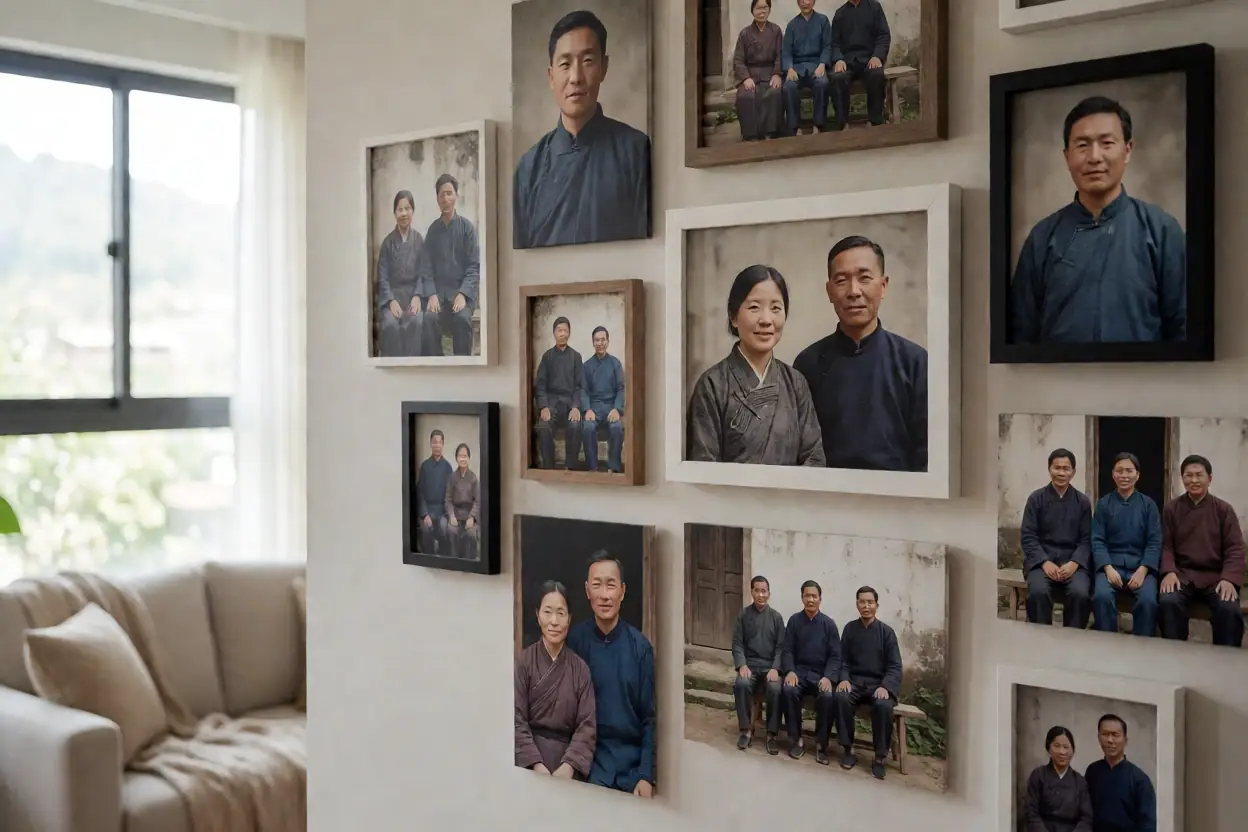
The memories of the She clan of Daping, Zhonglou, Pingtan, reflect another form of ancestral search. The old local genealogy was reportedly lost during a period of upheaval. Later generations used the six-character generational sequence “荣华宝贵孔长” (“Ronghua Baogui Kongchang”) to investigate in southern Fujian and other places, and attempted to compare it with the genealogical records of other clans. Generational names can be helpful in locating descendants of the same branch, but they may change during continuation, avoidance of taboo names, or retranscription, and must still be considered alongside information about ancestral residences, dates of migration, the names of forebears, and burial sites. The origins of Pingtan's residents are complex; migration along the coast, island development, and changes in administrative divisions also make it risky to infer ancestral origins solely from dialect or place of residence.
Further research on the She clan in Fujian can combine surname records, online genealogies, family memoirs, and local gazetteers. Begin by establishing leads based on villages and founding migrants, then collate them against prefaces to genealogies, lineage tables, ancestral-hall property contracts, inscriptions, and epitaphs. Where a lineage cannot be fully connected, different accounts should be retained and the strength of the evidence indicated. For descendants planning to trace their roots, the most valuable starting points are usually old genealogies preserved at home, ancestral tablets, photographs of tombstones, ritual records, and oral accounts from elders, followed by item-by-item comparison with local archives. This approach can preserve the overall outline of the She clan's migration network in Fujian while avoiding the mistake of treating people with the same surname as members of the same lineage.
Learn More and Verify
- Clues to the Migration of the Pu Clan of Dengzhou and an Examination of Figures of the Ming Dynasty
- Clues to the Migration of Descendants of Huode Gong of the Li Clan in Guangxi and an Examination of Their Branches
- Migration Clues and Branch Analysis of the Shangguan Clan in Hunan
- Clues to the Migration of the Si Surname and Genealogical Transmission: From Local Memories to Lineage Examination
Genealogy Knowledge and Methods for Compiling Genealogies · Finding Genealogies and Local Gazetteers · Organize family-root-seeking leads