Clues to the Migration and Analysis of Branches of the Shangguan Clan in Hunan
Local records concerning the Shangguan surname in Hunan mention Xiangtan, Liling, Yiyang, Taoyuan, Shimen, and other places. Some branches have preserved records of their founding migrant ancestors, migration dates, generation-name sequences, and genealogy revisions. Whether Shangguan families in different regions share the same ancestry still requires further verification against genealogical records, local gazetteers, and family evidence.

The lineage of the Shangguan clan in Hunan is primarily documented in local records from Xiangtan, Liling, Yiyang, Taoyuan, and Shimen. Existing materials indicate that the branches in these places differ in their times of migration, places of origin, and founding migrant ancestors. Therefore, it is not possible to determine solely from the surname “Shangguan” that they belong to the same lineage branch.
The Xiangtan branch is traditionally said to trace its distant ancestry to Dongyang Gong, whose former residence was in Wudu, Jinxi County, Fuzhou Prefecture, Jiangxi. Later, Yunxian Gong, whose courtesy name was Tingxiu, moved in the 27th year of the Ming Jiajing era to Sandushi outside Xiangtan County town. Later, some clan members moved to Xianlinchong, Eya Chong, Tongwatang, and other places. Chun Gong of the Fifth Pai settled at Shanshushan during the Qing Kangxi era, and the branch gradually divided into two houses. This branch compiled and revised its genealogy in the 55th year of Kangxi, the 12th year of Jiaqing, the 1st year of Tongzhi, the 26th year of Guangxu, and the 15th year of the Republic of China. During the Tongzhi era, it also built an ancestral hall at Jiangshi, Shanshushan. The generation poem found in the sources is “德仁闻生世,国添顺象之,宗先贻泽远,后嗣绍鸿基.” It may serve as a clue for checking generations in the genealogy, but the original genealogy and its preface should remain authoritative.
Records from other areas indicate different directions of migration. A branch in P川chong, Liling, takes Shiming Gong as its founding migrant ancestor and is traditionally said to have migrated from Shaowu, Fujian, at the end of the Qing Shunzhi era. Clan members were also distributed in Wangjiafang and Guizhou. A branch in Yiyang takes Zhaopu Gong as its founding migrant ancestor and is traditionally said to have migrated from Jiangxi during the Ming Zhengtong era, settling north of Yiyang town. It subsequently formed two major branches and is known to have continued compiling its branch genealogies in the Qing Daoguang era, the 9th year of Guangxu, and the 26th year of the Republic of China. The Mutang branch in Taoyuan takes Shengsheng Gong, Shengde Gong, and Shenghui Gong as its founding migrant ancestors. It is traditionally said to have migrated from Fengcheng County, Jiangxi, in the 2nd year of the Ming Yongle era to Guan家嘴 in Dongduqing Village, Taoyuan County. It later spread to Houchun Village, Lishuyuan, Tudigang, and other places, with Guan家嘴 serving as the location of its ancestral hall. Records concerning the Nanqi branch in Shimen are relatively brief, mentioning only the tradition that it migrated from Jinxi, Jiangxi, during the Qing Qianlong era.
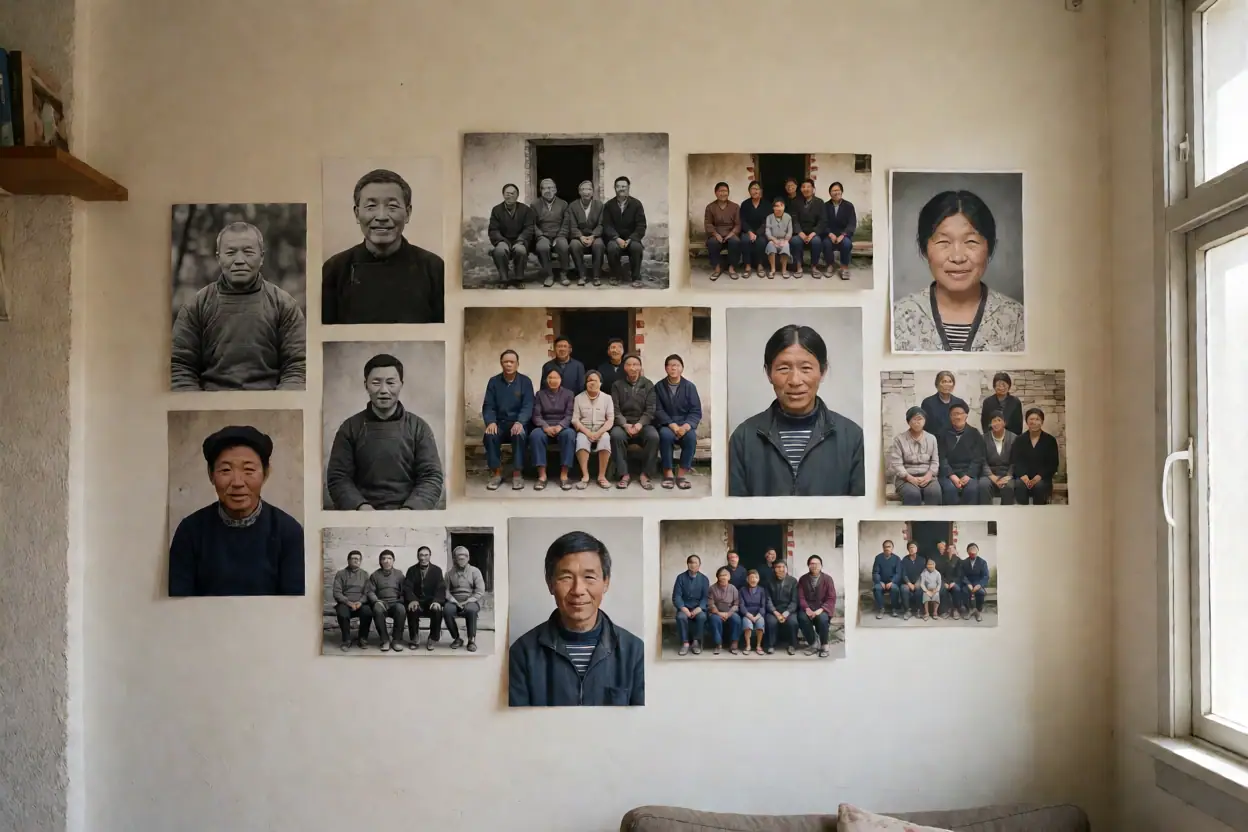
In traditional narratives of surname culture, the Shangguan clan is often associated with Shangguan County in the State of Chu and related official branches. Memories of commanderies and ancestral origins also frequently involve Tianshui, Longxi, Henan, and other places. Such accounts of a surname’s origins can provide a broad frame of reference, but cannot replace proof of a specific family’s genealogy. To determine whether the various branches in Hunan can be traced back to the same ancestor, priority should be given to comparing generation tables, genealogy prefaces, generation poems, ancestral-hall property records, burial information, and migration locations in old genealogies, together with cross-checking local gazetteers, online genealogies, family memoirs, and physical evidence. For families whose genealogical records have been scattered or lost, the search for ancestral roots may begin by establishing the ancestral village, generation names, names of recent ancestors, and marriage and burial information, followed by a gradual search for branch genealogies that can corroborate one another.
Learn More and Verify
- Migration clues and branch analysis in the genealogical records of the Pan clan
- Migration clues of the Zhang surname and an analysis of the Changhe branch lineage
- Clues on the Migration Routes of Two Yuan Lineages in Hunan and an Analysis of Their Genealogical Records
- Migration Clues for the Rong Surname and Genealogical Analysis of the Wutai Branch
Genealogy Knowledge and Methods for Compiling Genealogies · Finding Genealogies and Local Gazetteers · Organize family-root-seeking leads