Clues to the Xie Genealogy of He County and a Path for Verifying Ancestral Origins
Existing materials indicate that the Longpi Xie Continued Genealogy, recompiled in the twelfth year of the Guangxu reign, records the origins and branches of the Xie clan, as well as information about scattered settlements in parts of Jiangxi. However, it is not yet sufficient to prove a direct connection with the Xie clan of He County, Anhui; further verification is needed through the original genealogy, local gazetteers, and family traditions.
In searching for the Xie genealogy of He County, Ma'anshan, Anhui Province, a relatively complete documentary lead is currently available: The Continued Genealogy of the Xie Clan of Longpi, revised in the Qing Guangxu 12th year (1886). Catalogued as an eight-volume work, it contains illustrations, lineage tables, and portraits of individuals. Collection information indicates an association with social-science literature holdings in Shanxi. The title on the book's cover is The Continued Genealogy of the Xie Clan of Longpi, while the title printed in the page margins is The Continued Genealogy of the Xie Clan of Xichang. The two titles may reflect differences in the continuation of the genealogical records, branch transmission, and the use of the compilation.
The lineage origins described in the genealogy trace back to Xie Hong of the Han dynasty as the first-generation founding ancestor, and state that the lineage originated in Xichang. The first migrant ancestor of Ganxi, Xichang, is identified as Xie Hongwen of the Song dynasty, personal name Yunzhen and style name Chongwen, who was said to have moved from Xinli, Ancheng, Shanxi, to Xichang. The first migrant ancestor of the Longpi Xichang Xie branch was Xie Tingmei, from the transition between the Song and Yuan dynasties, whose personal name was Rushan and alternate name Shixi. The genealogy states that he fled the turmoil at the end of the Yuan dynasty and lived in seclusion at Longpi in Shishan, earning a living by teaching. His descendants later divided into five branches. The individuals listed for the five branches include Xie Ruli, Xie Ruyu, Xie Rufu, Xie Ruzuo, and Xie Ruyou; some are also accompanied by personal names, style names, and branch designations.
The genealogy also includes a lineage chart for the Baishui branch of the Xie clan in Luling. Xie Mingzhu, whose style name was Shangxuan, is identified in the genealogy as the eighth-generation descendant of Xie Tingmei; his descendants Chongrong and Chongsong lived outside the North Gate of Luling. The settlement locations listed in the cataloguing information are mainly in Taihe, Ji'an, and other areas of Jiangxi. This indicates that the genealogy has reference value for studying the Xie branches of Xichang, Longpi, and Luling Baishui. However, the existing cataloguing information does not explicitly mention He County, nor does it provide continuous evidence linking the Xie clan of He County to the lineages described above. Therefore, the Xie clan of He County cannot be assumed to have originated from this branch solely because the surname is the same or migration place names appear in the genealogy.

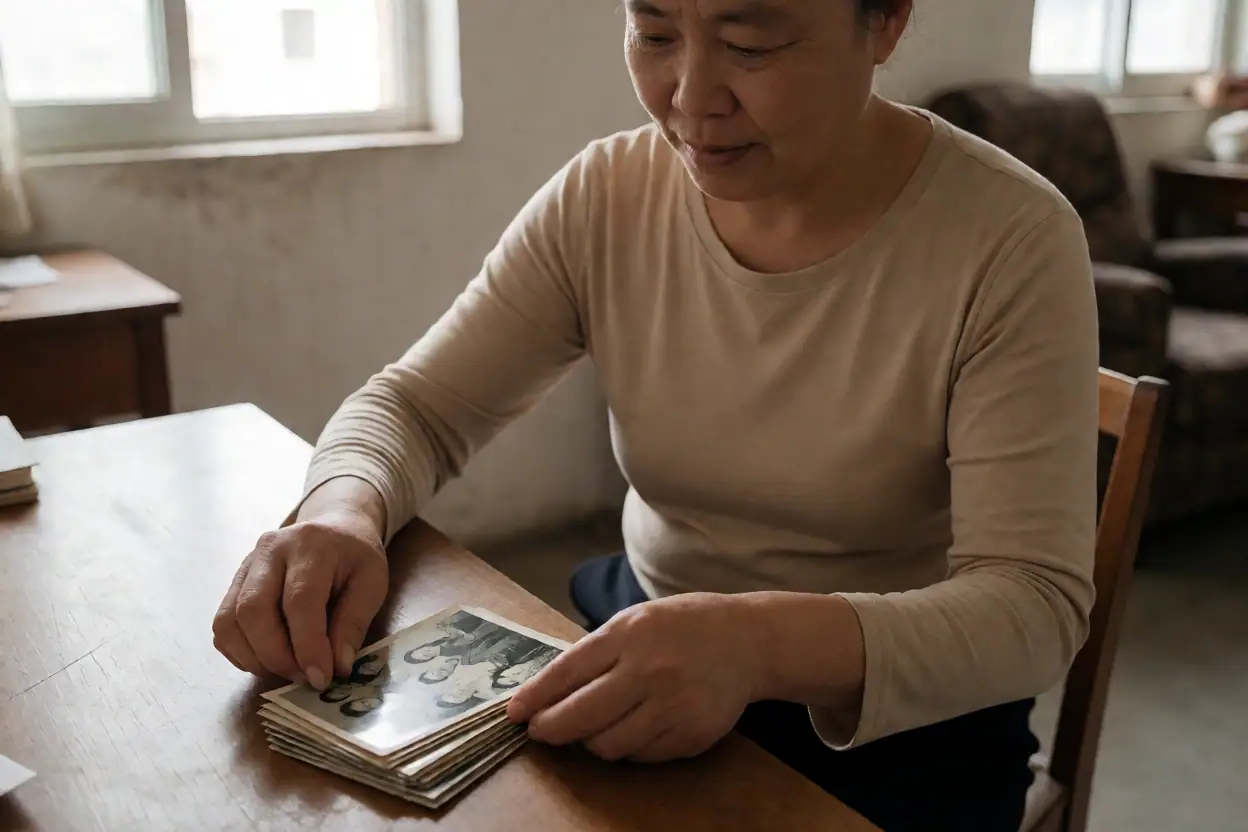
Further ancestral-roots research on the Xie clan of He County should begin with modern and contemporary family information. First, family members can organize preserved genealogy pages, photographs of tombstones, ancestral-hall plaques, ancestral-residence place names, generation-name sequences, and oral memories, with particular attention to the earliest identifiable male ancestor, spouse, children, time of migration, and place of origin. These details can then be compared item by item with personal names, generational relationships, and places of residence in online genealogies, avoiding judgments based solely on an ancestral-hall name or traditions about distant ancestors. If the family has separate or branch genealogies from the late Qing or Republican period, or prefaces and postscripts to genealogy compilations, special attention should be paid to the dates of continuation, the recipients of the genealogies, branch names, and records of relocation.
Local gazetteers should not be overlooked. Local gazetteers, township and town chronicles, village chronicles, ancestral-hall inscriptions, and burial records from He County and the areas under its jurisdiction may contain records of Xie clan settlements, notable officeholders, accounts of exemplary clan conduct, or clues about migration. Family memoirs can supplement details less often covered in genealogies, including marriages, occupations, household divisions, and relocations, but oral accounts still need to be corroborated against documents, inscriptions, and kinship relationships. Only if an intervening sequence of generations linking to Xie Tingmei, the five branches, or the Luling Baishui branch can be found will it be possible to gradually discuss the affiliation of the He County branch.
Learn More and Verify
- Clues to Jiang Clan Genealogies in Hebei and Paths for Genealogical Research
- Clues to the Feng Genealogy of Xing County and an Analysis of Ancestral Origins
- Clues from the Chen clan generational naming system in Bobai and pathways for genealogical ancestral research
- How to Pronounce the Ge Surname: Distribution Clues and Ancestral Research Methods
Genealogy Knowledge and Methods for Compiling Genealogies · Finding Genealogies and Local Gazetteers · Organize family-root-seeking leads