Clues from the Xing County Feng Genealogy and an Analysis of Ancestral Origins
Existing materials only identify one genealogy, the *First Jointly Revised Genealogy of the Feng Lineages of Gan and Min*, covering Ninghua in Fujian, Xingning in Guangdong, and parts of Jiangxi. They are not yet sufficient to prove a direct clan relationship with the Feng lineage of Xing County, Lüliang, Shanxi. Tracing ancestral roots still requires a step-by-step comparison of genealogies, local gazetteers, family recollections, gravestones, and other materials.
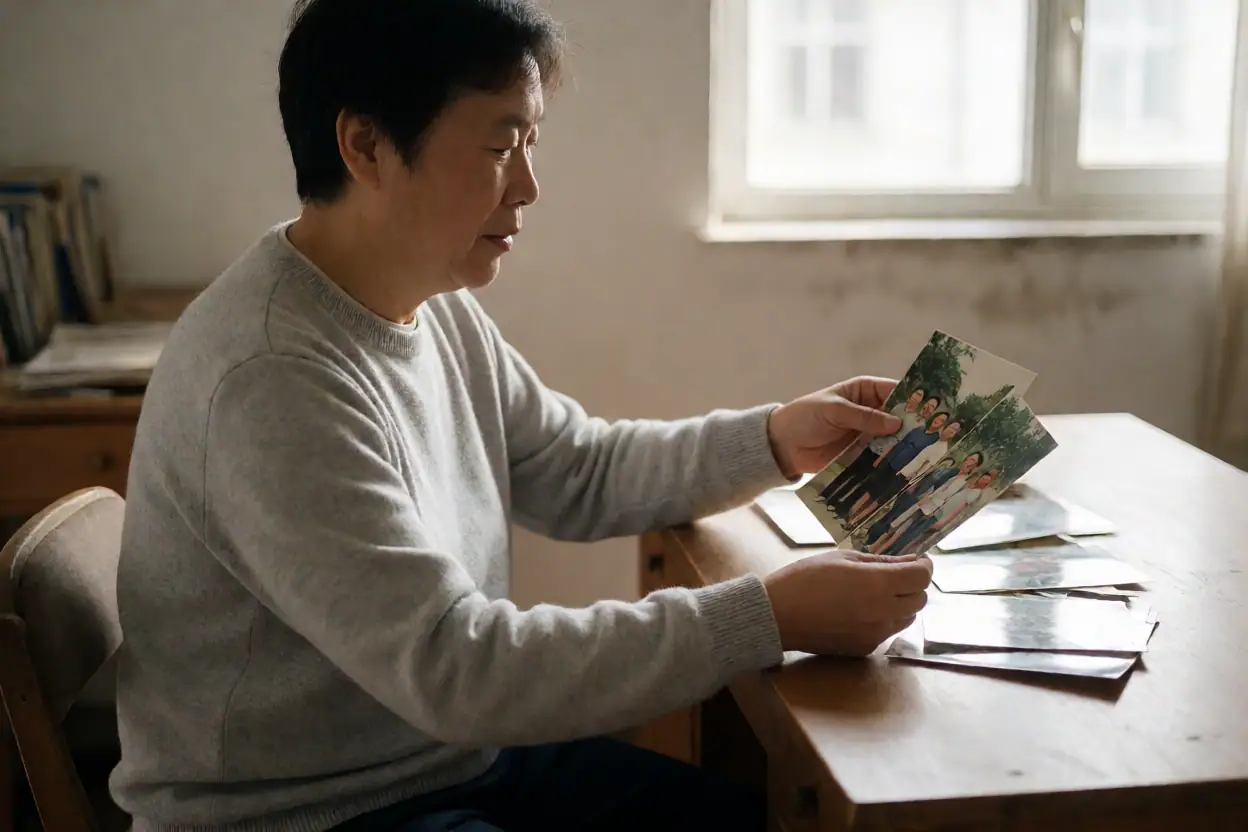
Searches concerning the Feng genealogy of Xing County, Lüliang, Shanxi Province, have so far produced relatively limited confirmed leads. The existing bibliographic records include the *First Jointly Revised Genealogy of the Feng Lineages of Gan and Min*. According to the records, it was compiled by Chongde Hall in 1990 and consists of 16 volumes. It includes illustrations and lineage tables, but holdings information indicates that it is not yet possible to determine whether the set is complete. The regions described in the work mainly include Ninghua in Fujian, Xingning in Guangdong, and Yudu, Guangchang, and other areas of Jiangxi.
The migration patterns recorded in this genealogy are concentrated across Fujian, Guangdong, and Jiangxi. The genealogy lists Feng Bi Gong, whose personal name was Gao, as a distant ancestor, and records figures such as Feng Sixty-First Lang, Feng Sixty-Second Lang, and Feng Sixty-Fifth Lang as founding figures in the Xingning area. However, the existing excerpts contain no clear information on a branch in Shanxi, Lüliang, or Xing County, nor do they provide a complete lineage connecting these figures with the Feng lineage of Xing County. Therefore, it is not possible to conclude that people from the two places belong to the same lineage branch based solely on the surname Feng or the name of a particular distant ancestor.
The specific origins of the Feng lineage in Xing County should still be verified starting with local materials. Begin by organizing any genealogical records, ancestral spirit tablets, photographs of gravestones, ancestral-home place names, generation-name sequences, and oral recollections preserved by the family. Particular attention should be paid to the earliest identifiable ancestors, including their names, spouses, children, dates of migration, and places of origin. If the family has traditions such as “we migrated from a certain place,” “a particular ancestral hall name,” or “a particular branch,” each should be separately labeled as recorded in a genealogy, inscription, oral account from an elder, or later descendant’s inference, so that different types of evidence are not conflated.
During the comparison process, surname databases can be used to research the origins, ancestral hall names, and historical distribution of the Feng surname. Online genealogies can then be searched for ancestors with the same names, generation names, and marital relationships. Family memoirs are useful for supplementing information on migrations, branch divisions, and changes in residence during the modern period, while local gazetteers can help verify changes in village history and administrative divisions, as well as records of ancestral halls and notable figures. If genealogies from Ninghua, Xingning, or elsewhere are found to share generation names, continuous lineages, or clear migration records with the Xing County family, the original genealogy’s facsimile pages, preface, notes on compilation, and branch tables should also be examined.
The most prudent conclusion at this stage is that the existing clues establish the existence of a jointly revised Feng genealogy covering Fujian, Guangdong, and Jiangxi, but have not yet produced direct genealogical evidence for the Feng lineage of Xing County. Further ancestral research should begin with local family materials, verifying names and dates generation by generation, and then cross-checking them against online genealogies, local gazetteers, and related genealogical records. Judgments about ancestral hall names, founding ancestors, and migration locations should likewise be deferred until original records have been obtained.
Learn More and Verify
- Clues to Jiang Clan Genealogies in Hebei and Paths for Genealogical Research
- Clues from the Zhejiang Yu Clan Genealogy: Organizing Genealogical Records from Xiaoshan and Pujiang
- How to Pronounce the Ge Surname: Distribution Clues and Ancestral Research Methods
- Chronological Information in the First Volume of the Shao Clan Genealogy and Its Value for Tracing Roots
Genealogy Knowledge and Methods for Compiling Genealogies · Finding Genealogies and Local Gazetteers · Organize family-root-seeking leads