Records of Bu Surname Population Distribution and Pathways for Ancestral-Origin Verification
Existing records indicate that members of the Bu clan live scattered across Jiangsu, Shandong, Hebei, Henan, Zhejiang, Liaoning, Hubei, Ningxia, Xinjiang, Jilin, Sichuan, and Beijing. Because some place-name changes, administrative affiliations, and migration accounts still require verification, research into their origins should examine family genealogies, local gazetteers, inscriptions, and household-registration records item by item.

Although the Bu surname is not among the most common surnames by population, existing surname records show that its area of residence is relatively broad, with relevant records found in parts of East, North, Northeast, Northwest and Southwest China. Place names with relatively concentrated records include Liuhe and Danyang in Nanjing, Suzhou, Zhenjiang, Yangzhou and Xuzhou in Jiangsu; Huzhou, Haiyan in Jiaxing, Shaoxing and Shengzhou in Zhejiang; Yanling in Xuchang, Luoyang and Xinxiang in Henan; and Tai'an, Laiyang, Jining, Weifang, Zibo, Liaocheng, Qufu, Yantai and Binzhou in Shandong. Shijiazhuang, Chengde, Handan, Cangzhou, Baoding and surrounding areas in Hebei also contain information on Bu surname residents.
In Northeast China, records of Bu surname distribution are likewise found in Shenyang, Jianping in Chaoyang, Fuxin, Panjin, Jinzhou and Jilin City; in Northwest China, in Yinchuan, Zhongwei, Haiyuan, Ürümqi, Aksu and Changji; and in Wuhan and Yicheng in Hubei, Yanqing and Daxing in Beijing, and Guangyuan and Zhaohua in Sichuan. Such lists mainly indicate that members of the surname lived in or were registered in these places during a particular period. They cannot directly prove that all Bu families in these areas descended from a single ancestor, nor are they sufficient to establish a continuous lineage.
Some Bu families in the southern suburbs of Zhenjiang, Jiangsu, are recorded as having migrated from Danyang. This account merits further investigation, but it still requires mutual corroboration from local genealogies, tomb inscriptions, ancestral-hall inscriptions, contract documents and local gazetteers. If a genealogy preserves the name of the founding ancestor of the migration, the period of migration, the village of origin, generational characters or kinship relationships, these details can first be organized into an online genealogy and then compared generation by generation with the relevant branches in Danyang and Zhenjiang. Shared surnames, nearby locations or identical generational characters alone generally cannot confirm kinship.
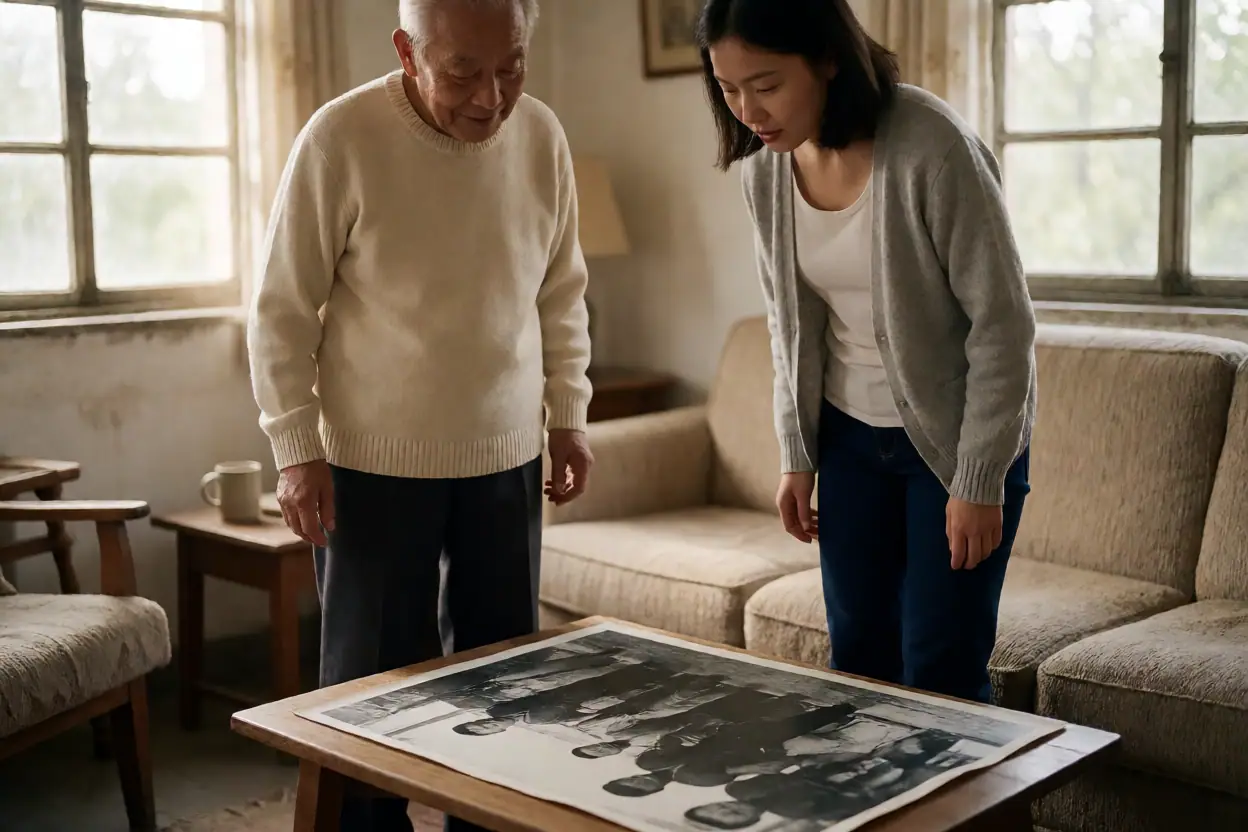
When tracing the ancestral roots of the Bu surname, begin by working backward from the current place of residence. Record ancestors' names, places of birth, spouses, sibling relationships, occupations and migration histories, and organize the oral accounts of older family members into a family memoir. Oral accounts should identify the speaker, the date of recording and any uncertainties, and should then be checked against entries on people, villages, administrative changes, migration and ancestral halls in local-gazetteer databases. When old county names, county-to-district changes or shifts in administrative affiliation are encountered, they should also be converted to the place names used during the relevant historical period, to avoid applying modern administrative divisions directly to earlier migrations.
Surname forms must also be distinguished rigorously. The Bu surname (步) and the Bu surname (布) have similar written forms and pronunciations, but they are different surname identifiers and must not be combined merely because their regions are adjacent or their pronunciations are the same. Information in ZongMai surname resources concerning the Bu surname (布), Qinghe Hall, and the commanderies of Qinghe, Pingyuan and Henan should not be directly used to explain the hall name or origins of the Bu surname (步). The specific hall name, founding ancestor and branch affiliation of a Bu (步) lineage should be based on the genealogy of that branch and verifiable sources. Cross-referencing surname resources, genealogies, local gazetteers and family memories can gradually narrow the scope of investigation, but any final determination should still rest on continuous lineage evidence supported by mutual corroboration.
Learn More and Verify
- Wei Surname Population Distribution and Analysis of Clues for Tracing One’s Roots
- Biographical Materials on People with the Hu (湖) Surname and Clues for Tracing Ancestral Roots: From Historical Records to Family Heritage
- Clues to the Distribution and Ancestral Origins of the Gong Surname: From Areas of Concentration to Genealogical Verification
- Clues in the Xie Family Genealogy of He County and a Verification Path for Tracing Ancestry
Genealogy Knowledge and Methods for Compiling Genealogies · Finding Genealogies and Local Gazetteers · Organize family-root-seeking leads