Hainan Zhu Genealogical Records: Tracing Ancestral Roots Through a Single Genealogy Book
Available clues indicate that the Hainan Zhu clan genealogy comprises four volumes plus a first volume; the relevant image album is labeled Book 5, with forty-four pages in total. The available materials do not yet clearly identify the compilation date, the first ancestor to migrate to Hainan, or the complete lineage. The genealogy pages should be cross-checked with local gazetteers and family memories.
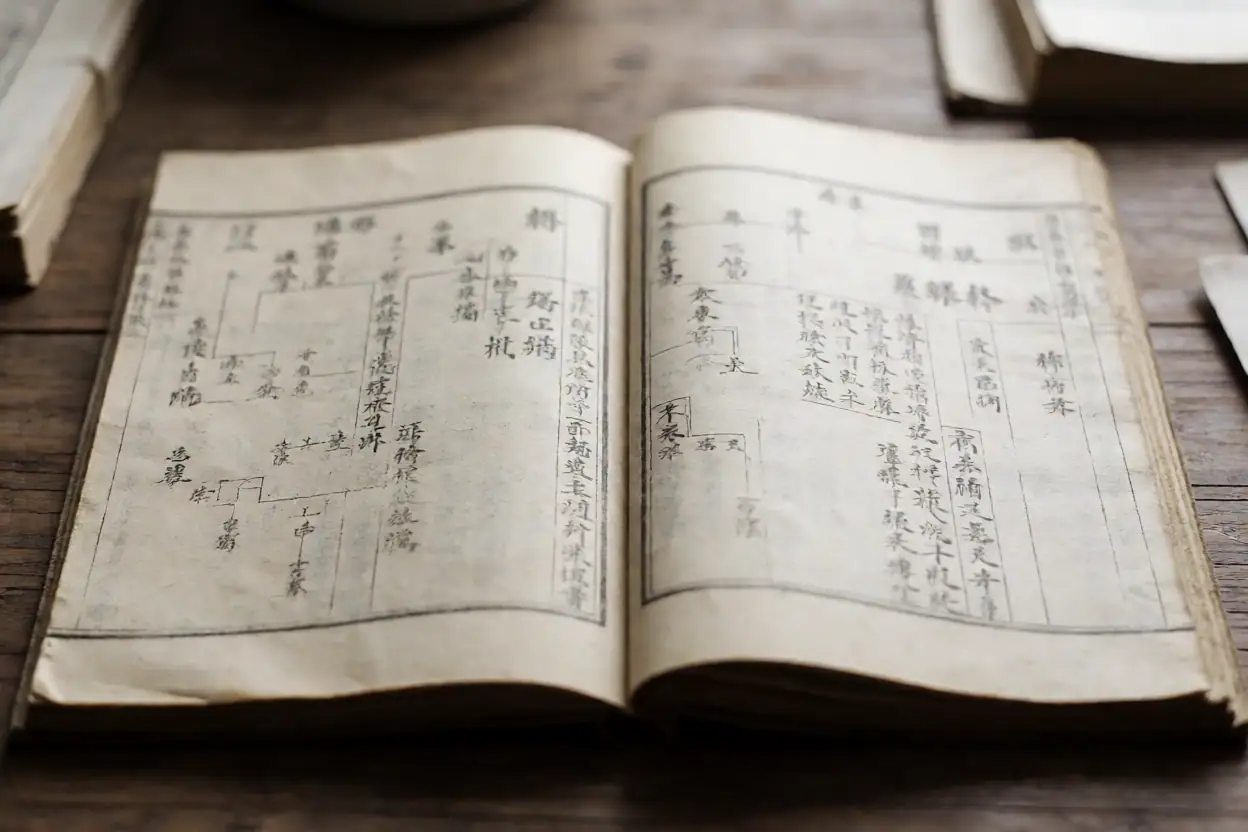
A single genealogy book often preserves a family’s forms of address, migrations, marriages, generation names, and ritual memories at the same time. Available materials indicate that the Hainan Zhu clan genealogy consists of four volumes plus a first volume. The image album examined is labeled Book 5 and contains forty-four pages. This volume information can help readers locate the document, but the title and page count alone are not enough to determine the compilation date of the complete genealogy, the place where it was printed, the person who oversaw its compilation, or the specific branch to which it relates.
The Zhu surname does not have a single origin in historical records or in its present-day distribution, and people with the same surname do not necessarily descend from the same ancestor. To understand the formation of the Hainan branch, it is still necessary to determine whether the genealogy identifies the first ancestor to migrate there, the family’s place of origin, the reason for the migration, the founding settlement, or any ancestral hall or tomb records. If the genealogy pages contain a hall name, a commandery designation, or generation names, it should first be established which branch and locality these details belong to. They should not be linked directly to Zhu branches in other regions merely because the wording is the same. In particular, hall names and generation names were sometimes used by multiple branches, so their evidentiary value must be assessed together with the lineage and places of residence.
When tracing ancestral roots, the most valuable materials are usually not isolated origin legends but continuous records of names, spouses, children, places of migration, and burial sites. Researchers can compare the names in the genealogy images item by item with online genealogy records, and then consult family memoirs, inscriptions on old residences, epitaphs, deeds, and materials on the historical development of villages and towns. Local gazetteers can provide background on changes in administrative divisions, the establishment of villages, surname concentrations, and the activities of notable people, helping to explain changes in place names between the past and the present. However, records of the same surname in local gazetteers still need to be corroborated by the specific lineage.

The available surname database also has a separate entry for the Hai surname, containing information on Haichun, Xue Commandery, and distribution across several regions. This entry is not the same surname material as the Hainan Zhu clan genealogy. It cannot be used to infer that the Zhu and Hai clans share a common ancestry, nor can its hall names, commandery designations, or migration clues be applied to research on the Zhu clan. If the genealogy’s cover, prefaces and postscripts, editorial notes, contents, lineage tables, and key genealogy pages can later be added, it will be possible to further establish the document’s date, its compilation history, and the relationships among the Hainan branches, while examining oral memories and written records as part of the same chain of evidence.