The Family Tradition and Research Clues in the Family Instructions of the Shi Clan Genealogy of Huangchuan Chongde Hall
A documentary clue titled the clan admonitions of Huangchuan Chongde Hall’s Shi Clan Genealogy focuses on filial devotion, harmony among relatives, study, ancestor worship, and genealogy compilation. Its ideas display the characteristics of traditional family instructions, but the genealogy’s title and dating, the places referred to, the relationships among the figures, and the specific lineage must still be verified against the original genealogy, local gazetteers, and family documents.
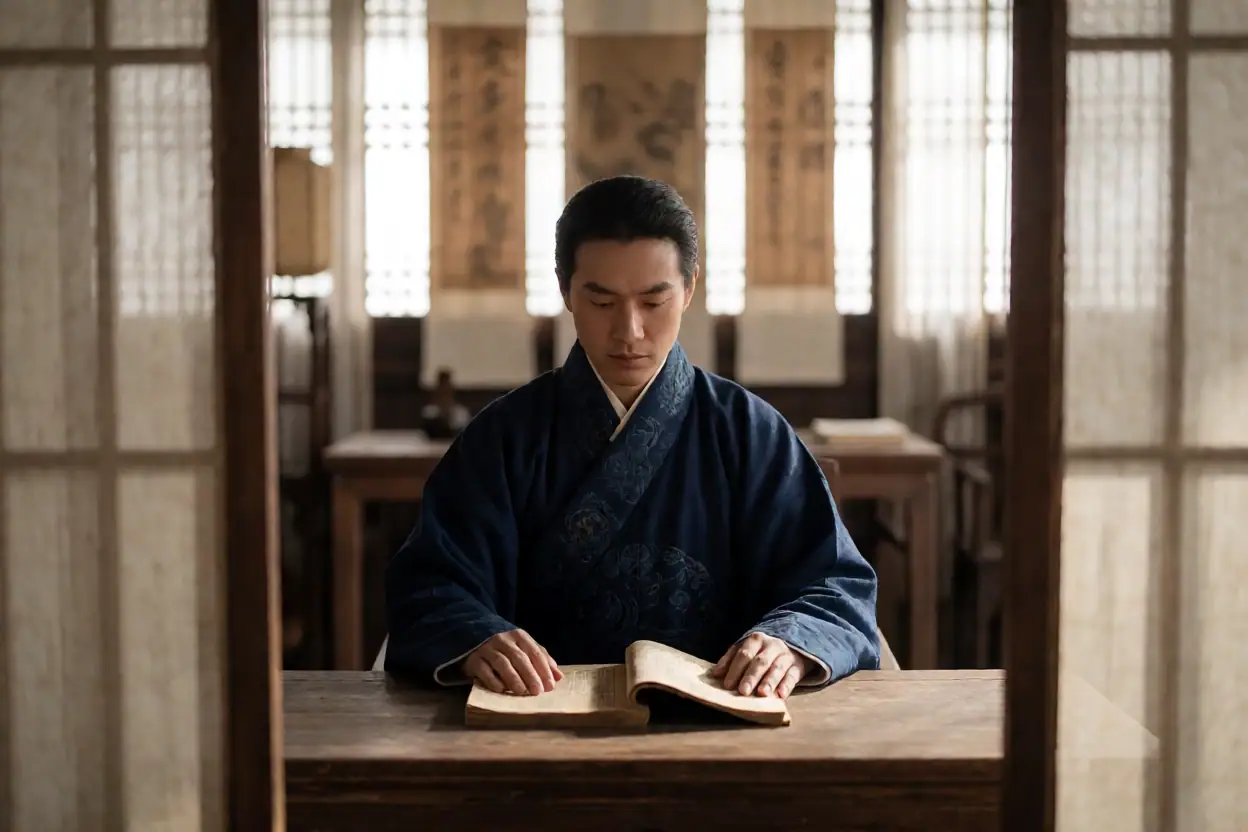
The existing text indicates that the Shi Clan Genealogy of Huangchuan Chongde Hall once included a set of family instructions centered on strengthening bonds among relatives and promoting clan harmony. It emphasizes parental kindness, filial children, fraternal affection among elder brothers, and respect from younger brothers, while regarding sincere and reverent ancestral worship, encouragement to study, and the cultivation of talent as foundations for the family’s long-term development. The text also expresses the hope that clan members would use genealogy compilation to strengthen kinship ties and subsequently establish an ancestral temple, a family school, and charitable fields. These statements reflect the multiple functions of traditional genealogies: recording lineages, regulating ethics, and organizing clan members.
Judging from its structure, this set of family instructions is not merely a list of prohibitions and rules. It first explains the significance of genealogy compilation for distinguishing degrees of kinship and clarifying seniority, then extends family ethics to responsibilities toward the local community and society. The text praises various life paths, including pursuing civil learning, pursuing military service, respecting the elderly, and upholding chastity, reflecting the values of a particular era. When organizing such texts today, it is advisable to distinguish their historical context from contemporary ideas: their documentary form should be preserved, but not all of their norms should be treated directly as shared standards for modern families or clans.
The family instructions mention a connection between the Shi clan and the ancient “Shi Zi,” and include accounts of interactions with Chen Zhen and Mencius. This may serve as a lead for tracing genealogical concepts and family cultural memory, but it is insufficient on its own to prove that every branch of Huangchuan Chongde Hall descends directly from a particular historical figure. Determining ancestral origins generally also requires comparison of genealogy prefaces, lineage charts, migration records, epitaphs, contracts, ancestral-estate records, and biographical materials in local gazetteers. Where gaps exist between generations, wording such as “traditionally said,” “recorded in the genealogy,” or “still awaiting verification” should be retained.
The phrase “the Dingmao year of the Tongzhi and Guangxu eras” in the title presents a chronological inconsistency. There was a Dingmao year during the Tongzhi era, but no Dingmao year during the Guangxu era. It may therefore involve the transcription of a title slip, the juxtaposition of the dates of an initial compilation and a subsequent revision, the conflation of different editions, or omitted text. Whether it belongs to an initial compilation during the Tongzhi era, a subsequent revision during the Guangxu era, or a later hand-copying cannot be determined until the original genealogy’s cover, imprint, prefaces and postscripts, and colophons at the ends of the volumes have been examined. The specific area referred to by “Huangchuan,” and whether Chongde Hall is a branch hall name or the name of the genealogy compilation hall, also require cross-verification with local gazetteers and genealogies bearing the same name.
When organizing surname-related materials, care should also be taken to avoid conflating records because of similar written forms, hall names, or geographic locations. Among the Guang clan materials recorded by ZongMai, references can be found to Donghai Hall and to Donghai, Henan, and Jingzhao as commanderies of origin, along with accounts attributing the surname’s origins to Guangwu or to a place name. These belong to the Guang surname archives and cannot be used to explain the ancestral origins or lineage of the Shi clan’s Chongde Hall. Even people with the same surname are not necessarily of the same lineage, and materials concerning different surnames must not be directly combined.
Further research may begin by locating genealogies with the same title and information on different editions in online genealogy databases, then using local gazetteer databases to verify the Huangchuan place name, relevant individuals, and activities involving the construction of ancestral shrines and compilation or revision of genealogies. In tracing one’s roots, it is advisable to start with confirmed recent ancestors, places of residence, and kinship relationships, then work backward generation by generation to establish a chain of evidence and reduce the risk of conflating legends, attachments to famous figures, and actual lineages.
Learn More and Verify
- Consultation and Textual Research on Volume Eight of the Ninth Revision of the Ou Clan Genealogy of Xiaoyou Hall
- Organizing Memories of the Su Clan Genealogy and Clues to Migration Between Hunan and Guangxi
- Migration Clues and Genealogical Research on the Da Surname in Gansu
- The Distribution and Migration Clues of the Xi Surname in Hebei: From Village Memories to Genealogical Research
Genealogy Knowledge and Methods for Compiling Genealogies · Finding Genealogies and Local Gazetteers · Organize family-root-seeking leads