Clues to the Origins of the Shao Surname and an Analysis of the Legends Surrounding the Duke of Shao
Regarding the ancestors of the Shao surname, traditional surname literature often links them to Ji Shi, the Duke of Shao of the Western Zhou. However, the historical evolution of the characters 召 and 邵, the division of branches, and genealogical lines in different regions still require item-by-item verification against clan genealogies, local gazetteers, and family memories.

The identity of the Shao surname’s ancestors cannot be determined solely on the basis of a single legend or the distribution of people bearing the same surname. Among existing accounts of surname origins, one commonly cited clue links the Shao surname to the Duke of Shao of the Western Zhou. The Duke of Shao was named Shi. Traditional records identify him as belonging to the Ji clan and as closely connected with the Zhou royal house. He assisted King Wu of Zhou and held important offices during the reign of King Cheng of Zhou. Ancient texts also offer differing accounts of his identity, including the claim that he was a son of King Wen of Zhou. It is therefore preferable to describe him as an important minister of the Western Zhou royal house rather than treat every detail as an entirely undisputed fact.
The most representative story associated with the Duke of Shao is that of “the enduring affection left beneath the sweet pear tree.” According to tradition, while traveling through villages and handling administrative affairs, he once rested beneath a sweet pear tree. Later generations, out of remembrance for his governance, recorded related events in “The Sweet Pear Tree” in the “Shao Nan” section of the Book of Songs. This allusion was later often used to praise upright and capable officials, and it also made the Duke of Shao an important historical figure in some genealogies of the Zhao and Shao surnames. However, the veneration of a historical figure by later generations is not the same question as whether every branch of a particular surname directly descends from that figure.
Regarding the relationship between 召 and 邵, traditional books on surnames contain the view that they “were originally one surname and later divided.” According to related accounts, descendants of the Duke of Shao once adopted the name of their fief or appanage as a surname, forming the Zhao surname. Some members who lived in the Central Plains later gradually came to use 邵 as their surname due to factors such as changes in written forms, regional custom, or the avoidance of taboo names. This explanation accounts for one important traditional view of the origins and development of the Shao surname, but it cannot prove that all Shao families today belong to a single lineage. Shao families in different regions may have different founding ancestors in their places of settlement, migration routes, and genealogical transmissions. They may also reflect complex circumstances such as surname changes, restoration of former surnames, the sinicization of ethnic minorities, or the merging of family genealogies.
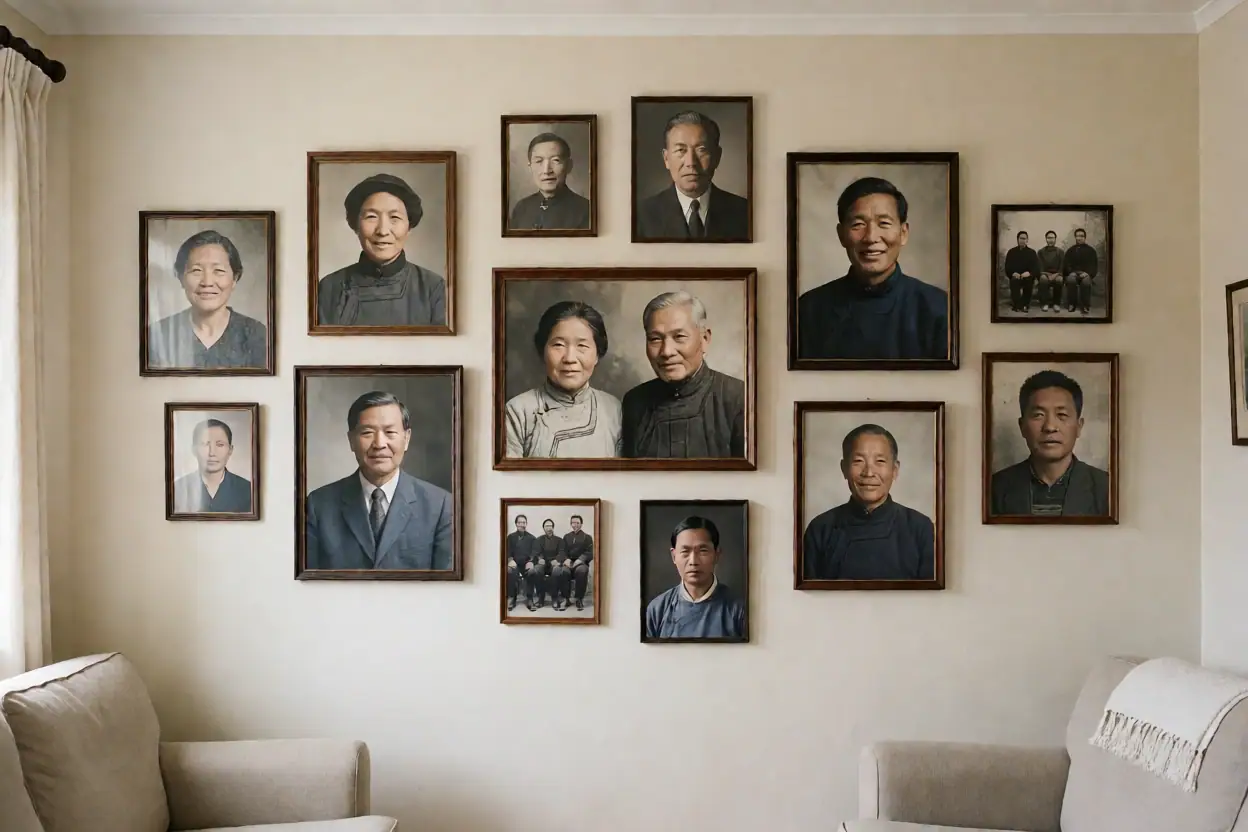
To determine whether a particular Shao branch has a verifiable genealogical connection to the Duke of Shao, priority should be given to the prefaces of the branch genealogy, records of genealogical origins, accounts of the founding ancestor in the place of settlement, generation names, and inscriptions on ancestral hall steles. The dates, place names, and official positions recorded in these materials should then be compared with local gazetteers, official histories, and epitaphs. Online genealogies can help organize relationships among individuals and points along migration routes, while family memoirs often preserve orally transmitted place names, ancestral residences, and branch-allocation information. However, oral accounts still need to be verified item by item against documentary sources. If the same ancestral hall name appears in genealogical records, it can serve only as a clue for further research and cannot by itself prove membership in the same lineage.
In the process of tracing one’s roots, attention should also be paid to the differences among the “founding ancestor of the surname,” the “first-generation ancestor,” and the “founding ancestor in the place of settlement.” The founding ancestor of the surname usually refers to an early figure in legends or documentary accounts concerning the formation of a surname. The first-generation ancestor may be the starting point of a lineage recognized by a particular genealogy. The founding ancestor in the place of settlement generally refers to the ancestor who moved to the family’s present locality and established a branch there. When researching a specific family, one can begin with surviving genealogy volumes, former names of ancestral places, ancestral hall plaques, inscriptions on tombs and steles, and local gazetteer databases, gradually building an evidentiary chain. Based on the traditional accounts currently available, Ji Shi, the Duke of Shao, may be regarded as an important clue in research into the origins and development of the Shao surname. Whether he was the direct ancestor of a particular Shao family, however, must still be determined from reliable documents and local materials belonging to that branch.
Learn More and Verify
- Clues to Generation Names and Branch Analysis for the Shandong Huai Surname
- An examination of the origin legend and migration history of the Qu surname
- Historical Clues Behind the Legend of the Father-and-Son County Magistrates of the Tan Clan at Huaiyang Cave
- The Origins and Development of the Mingguang Yue Family: Clues to Migration and Surname Changes in an Ancestral Shrine Record
Genealogy Knowledge and Methods for Compiling Genealogies · Finding Genealogies and Local Gazetteers · Organize family-root-seeking leads