An Examination of the Qu Surname’s Origin Legend and Migration Lineages
Qu family narratives commonly honor Qu Boyu, the esteemed minister of the State of Wei during the Spring and Autumn period, as their ancestor, and transmit accounts that the surname’s written form was changed to avoid persecution during the Eastern Han, followed by later migrations to Jiangshan and Guixi. These traditions still require item-by-item verification against ancient texts, local gazetteers, and the genealogies of individual branches, and should not be used to conclude that all people bearing the Qu surname descend from a single lineage.
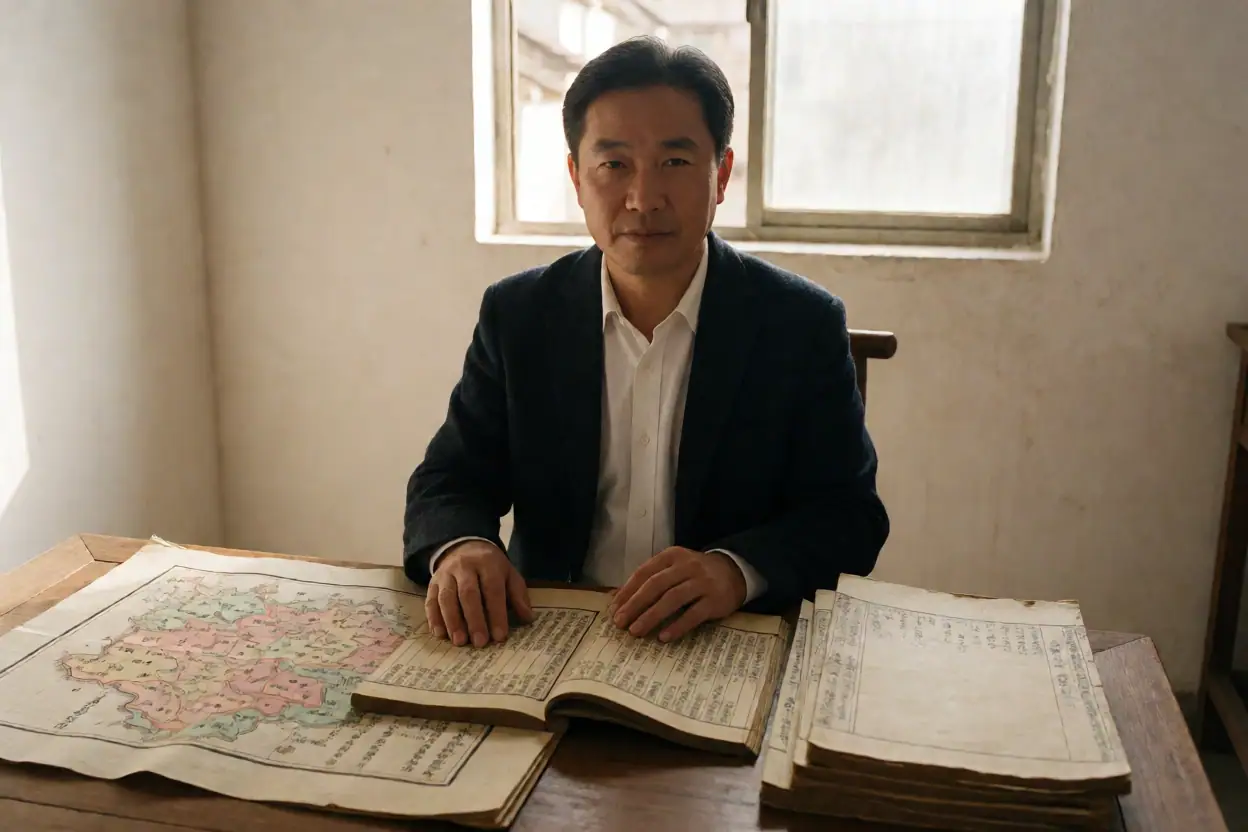
The Qu (璩) surname is relatively uncommon, and accounts of its origins are often associated with the Qu (蘧) surname and Qu Boyu, a minister of the State of Wei during the Spring and Autumn period. Qu Boyu was renowned for his virtue, and ancient texts contain accounts of his benevolence and his service in assisting Wei. Accordingly, some Qu clan genealogies and family oral traditions honor him as a remote ancestor or founding ancestor of the surname. However, the later veneration of a historical figure by a family and the ability to establish a continuous genealogy linking that figure to his descendants are two different matters. Confirming the relationship between a specific branch and Qu Boyu still requires genealogical prefaces, lineage records, and corroborating evidence with clear chronological connections.
A widely circulated account of the change from “蘧” to “璩” holds that, during the Eastern Han, members of the Qu (蘧) clan changed the written form of their surname to avoid calamity after members of the family encountered misfortune. Some accounts mention the Palace Attendant Qu Zheng, but the information currently available is insufficient to fully establish the date of the event, the identities of the people involved, or the scope of the surname change. This may be treated as a traditional clue in the formation of the Qu (璩) surname, but should not be regarded directly as conclusive evidence that all members of the Qu (璩) clan changed their surname together. Variants in ancient surnames, name taboos, the avoidance of upheaval, and changes in writing practices were highly complex; it should also be considered whether “蘧” and “璩” underwent separate evolutionary processes in different regions.
Some genealogies also record that related clan members later moved to Jiangshan in Zhejiang and that, during the Southern Tang, Qu Yuan held office, received a title, and settled in Guixi. Some later branches accordingly honor Qu Yuan as an important founding figure and regard Guixi as a key node in the family’s subsequent expansion. If the texts concerning titles of investiture, imperial decrees, or iron certificates mentioned in the genealogies can be verified through original documents, old manuscript copies, records of successive genealogical revisions, and information about their collection and transmission, further examination of their wording, format, and dates can be undertaken. Until the evidence forms a complete chain of support, Qu Yuan’s official position, title, migration history, and genealogical relationship to Qu families in various places should all be described cautiously as matters of genealogical tradition.

Common commandery-origin clues associated with the Qu clan include Yuzhang. Guixi’s administrative affiliation changed during different historical periods. Associating it with the Yuzhang commandery tradition may reflect the family’s efforts to trace its ancestral settlement area and cultural identity, but a commandery tradition is not equivalent to an actual place of registration and cannot by itself establish a blood relationship. Other information includes the hall name Junzi Hall, which may be related to the virtuous image of Qu Boyu. For any particular branch, the relevant branch genealogy, ancestral-hall inscriptions, and local documents should still be treated as authoritative.
In tracing the roots of the Qu surname, one may begin with surviving family genealogies, spirit-tablet registers, tomb inscriptions, contracts, and family memoirs. Record the known names, generation names, spouses, places of residence, and migration dates of ancestors, then use online genealogies to compare records from the same area and consult local gazetteers for records concerning notable figures, examinations and recommendations, official posts, household registers, and ancestral rites. When encountering people with the same name, identical hall names, or similar migration routes, compare the dates of genealogical revisions and the intervals between generations, avoiding the consolidation of branches based solely on the same surname. Qu families in different regions may share cultural memories, but they may also have different origins. Only by cross-checking multiple types of sources against one another can the actual lineages of the various branches gradually be clarified.