Qiaojia, Yunnan: The Ran Family’s Qingming Tomb-Sweeping Ceremony and Compilation of Family Memories
Existing records indicate that on the eve of Qingming in 2021, some Ran family relatives in Dagou Village, Baihetan Town, Qiaojia County, Yunnan, held a tomb-sweeping ceremony and reviewed the earlier restoration of graves, erection of commemorative steles, and continuation of family traditions. The relationships among the individuals concerned and their branch affiliations still require further verification against genealogies, stele inscriptions, and local documents.
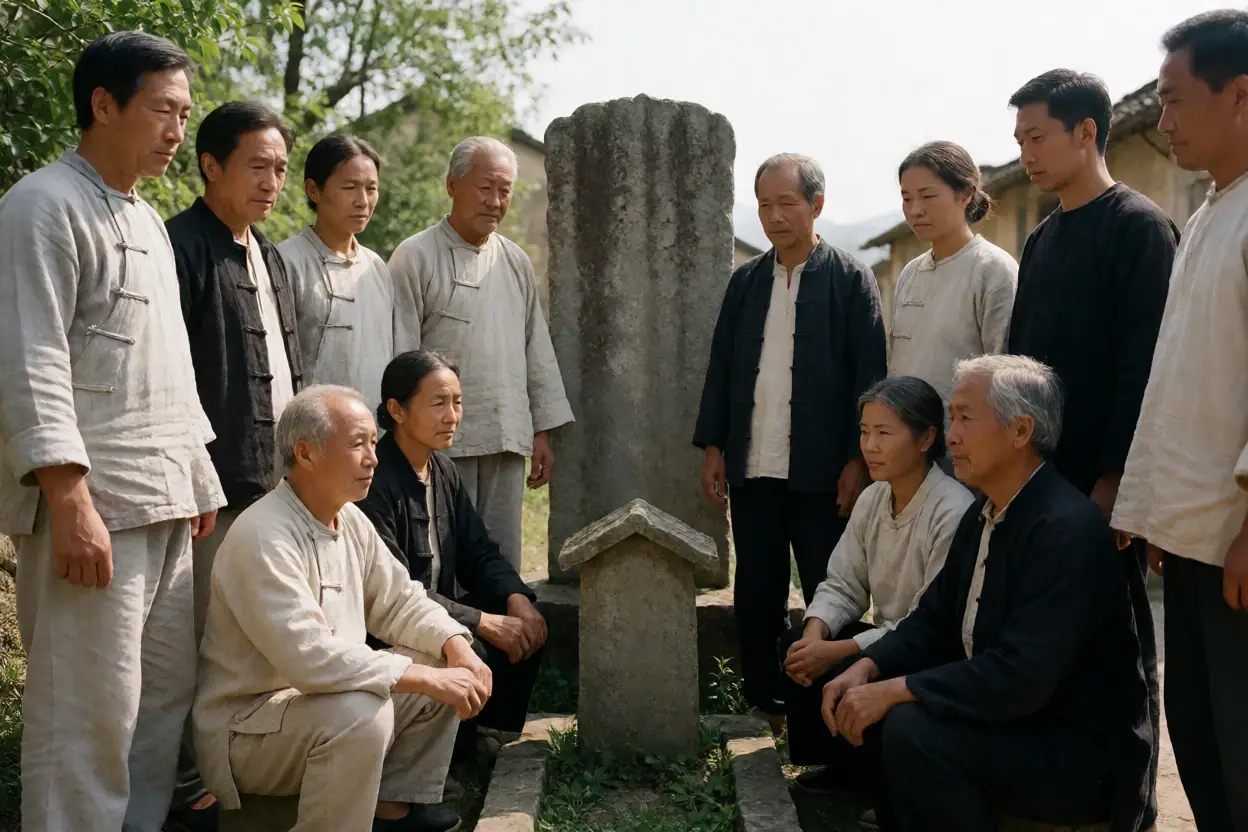
Qingming tomb sweeping is both a traditional ritual of honoring one’s ancestors and an important occasion for preserving family memories. According to existing activity records, on April 3, 2021, more than 80 Ran family relatives gathered in Dagou Village, Baihetan Town, Qiaojia County, Yunnan Province, to sweep the tombs of Ran Sizhong and Ran Tiancai. The participants were recorded as descendants of Ran Sizhong, but this description of their identity primarily reflects local family identification. To establish a rigorous lineage, it would still be necessary to corroborate it with genealogies, tombstones, household registration records, and other historical materials.
The records also mention that some Ran family relatives along the Jinsha River jointly contributed funds and labor to restore the relevant graves in Tangjiaping Community, Dagou Village, in 2020, and erected a commemorative stele. Because of public health prevention and control arrangements at the time, the related activities were carried out in stages: the initial stage focused primarily on restoring the graves, and a smaller gathering was organized at Qingming the following year. This shows that the tomb-sweeping ceremony involved not only ritual activities but also the restoration of ancestral graves, maintaining ties among relatives, and organizing shared memories.
The family traditions emphasized in the activity included managing the household through diligence and frugality, passing down the family tradition through farming and learning, living in harmony with neighbors, respecting the elderly and caring for the young, solidarity and mutual assistance, and self-reliance and striving for progress. These can serve as important themes in a family memoir, but when compiling the material, it is advisable to distinguish between firsthand accounts, oral recollections by elders, and summaries by later generations. The names of participants, family branches, the process of restoring the graves, the contents of the stele inscriptions, and captions for old photographs can all be entered chronologically into an online genealogy, with the narrator, time of recording, and verifiable supporting evidence noted, to avoid confusion arising as oral materials are passed on.
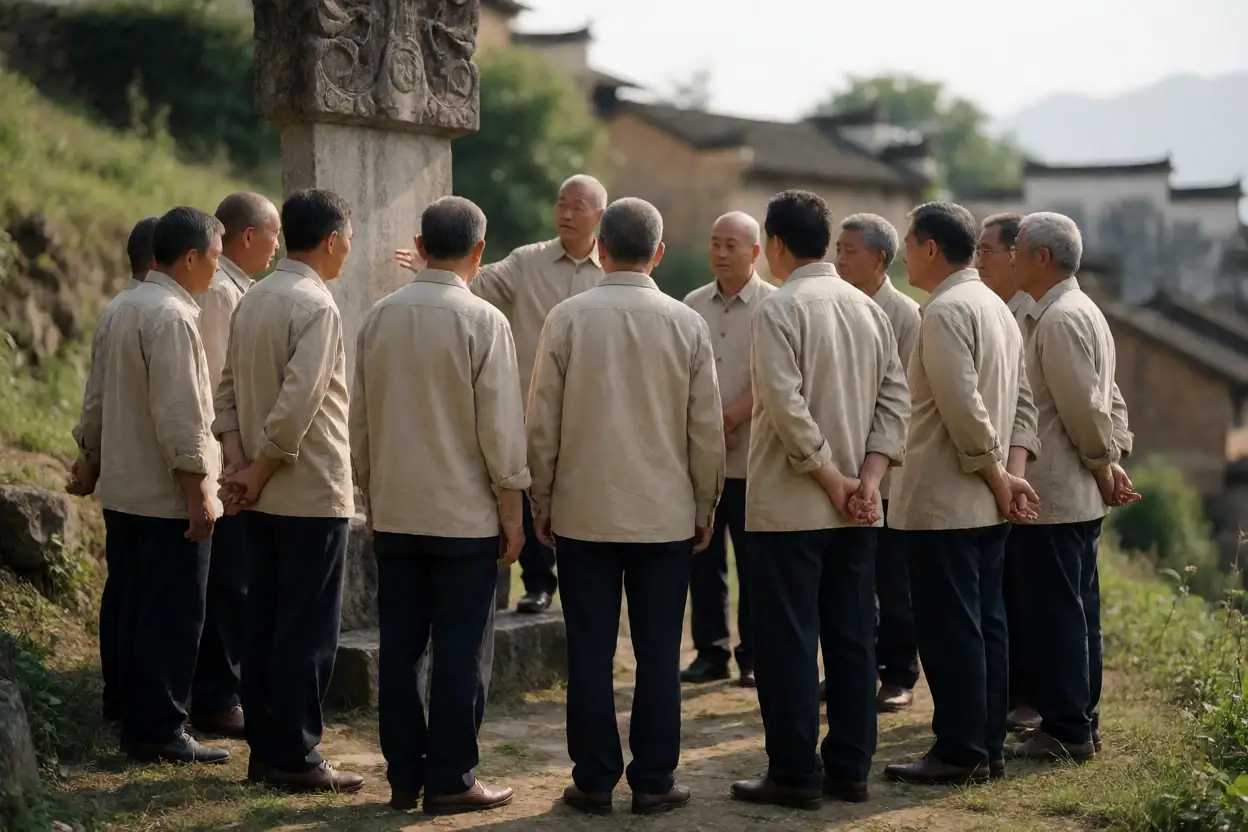
Surname records indicate that the Ran surname has historically had multiple origins and different local branches. Commonly recorded clan-hall names include “Donghai Hall,” while records of ancestral commanderies refer to Donghai, Xiapi, Henan, and other places. Today, people with the Ran surname are also distributed across Henan, Shandong, Hebei, Jiangsu, Anhui, and many parts of Southwest China. However, clan-hall names, ancestral commanderies, and surname distribution can provide only research leads; they cannot directly prove that the Ran family of Dagou Village, Qiaojia, belongs to the same lineage as Ran families in other regions. Even where the surname or clan-hall name is the same, or the generation names are similar, the dates of migration, the founding migrant ancestor, and the continuous lineage should be verified with care.
For further ancestral research, one can begin with surviving genealogies of the branch, rubbings of tombstone inscriptions, tomb-sweeping registers, marriage and funeral documents, and interviews with elders, then consult relevant local gazetteers, village-history materials, and historical household registration records for Qiaojia County and Baihetan Town. If an early place of residence or direction of migration can be confirmed, the findings can also be compared horizontally with Ran genealogies from neighboring areas. Only when the names, family relationships, generation names, dates, and place names form mutually supporting chains of evidence is it appropriate to elaborate further on ancestral identities, migration routes, and branch affiliations.