The Lu Clan Ancestral Cemetery and Ancestral Hall in Dingxing: A Piece of Local Family Memory
Memories of the Lu clan's ancestral cemetery, ancestral hall, and various separate burial sites have been passed down in the Xijiang area of Dingxing. These accounts touch on the family's continuity since the Ming dynasty, changes in burial grounds, and cultural heritage preservation, while also reminding later generations to cross-check inscriptions, genealogies, and local archives and to distinguish branch relationships with care.
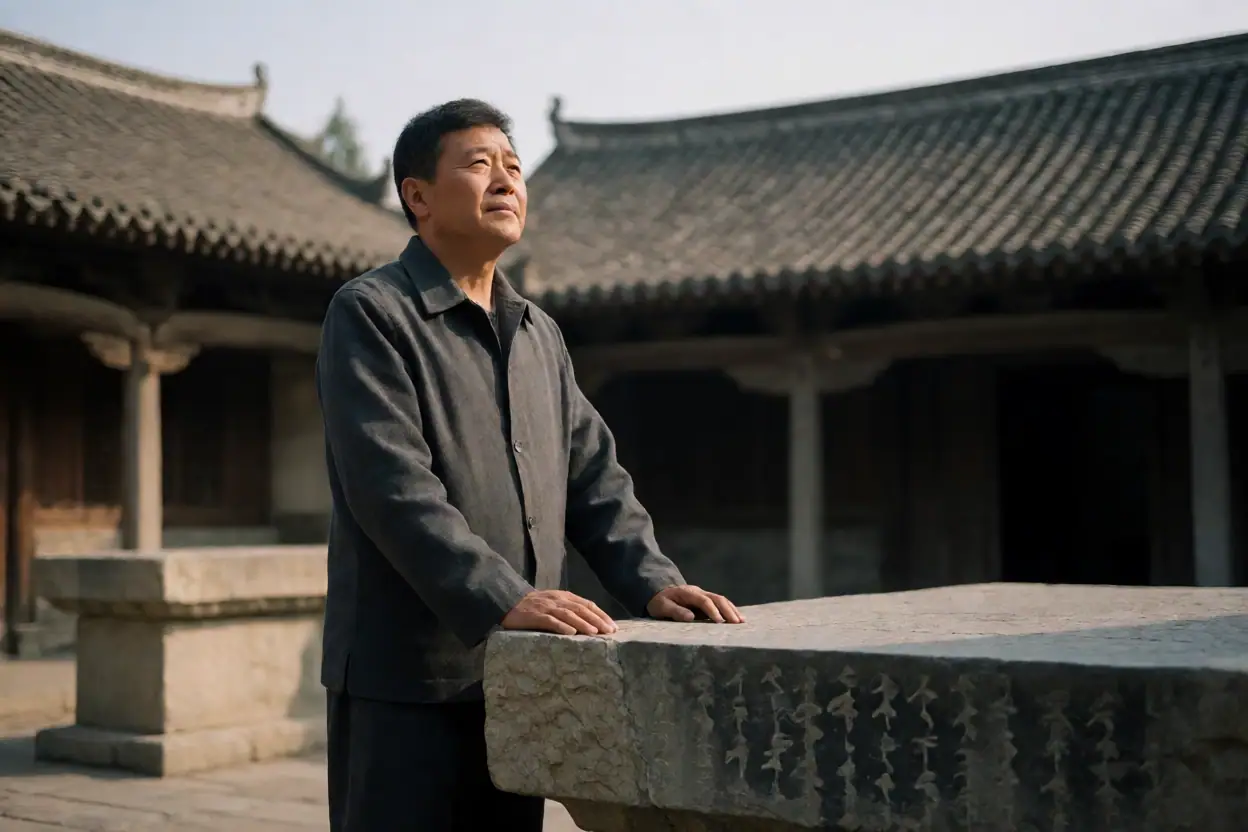
In Xijiang Village, Dingxing, Hebei, the Lu clan ancestral cemetery and its related ancestral halls have long preserved local memories of family migration, ancestral rites, and rural society. Existing accounts state that the Lu clan burial grounds were not confined to a single location, but were distributed across Xijiang, Tianhou, Datian, Qinglonggang north of Dingxing city, and several villages in the Anzhou area. The ancestral cemetery in Xijiang Village is commonly called “Lu Family Tombs,” but the precise genealogical relationships among the various burial grounds still require item-by-item examination using tombstones, genealogies, and local documents.
According to relevant accounts, the ancestral cemetery in Xijiang Village was established around the Yongle period of the Ming dynasty. It originally covered a relatively large area and included trees, a spirit way, and inscriptions; the eastern and western sections contained the burials of clan members from different periods. The accounts also mention that the cemetery once contained a considerable number of tombstones and epitaphs, some of whose inscriptions are said to have been written or composed by officials during the Ming and Qing periods. However, these figures, the content of the inscriptions, and the specific relationships among the individuals cannot be confirmed solely through oral accounts or retellings. Ideally, they should be cross-checked against rubbings of surviving steles, old photographs, county gazetteers, cultural-relic registration records, and original genealogies.
Regarding changes to the cemetery in modern times, local memories indicate that the ancestral cemetery was severely damaged in the 1960s, with some of its land converted into orchards or farmland and much of its original vegetation, burials, and inscriptions lost. Subsequently, clan members took part in repairing the surviving remains and replanting trees. In 2002, the relevant authorities also placed the Lu clan family cemetery, ancestral hall, and related sites within a protected area. What is visible at the site today is largely a layered combination of historical remains, traces of reconstruction, and local memories, and cannot simply be regarded as the complete original state of a Ming- or Qing-period cemetery.
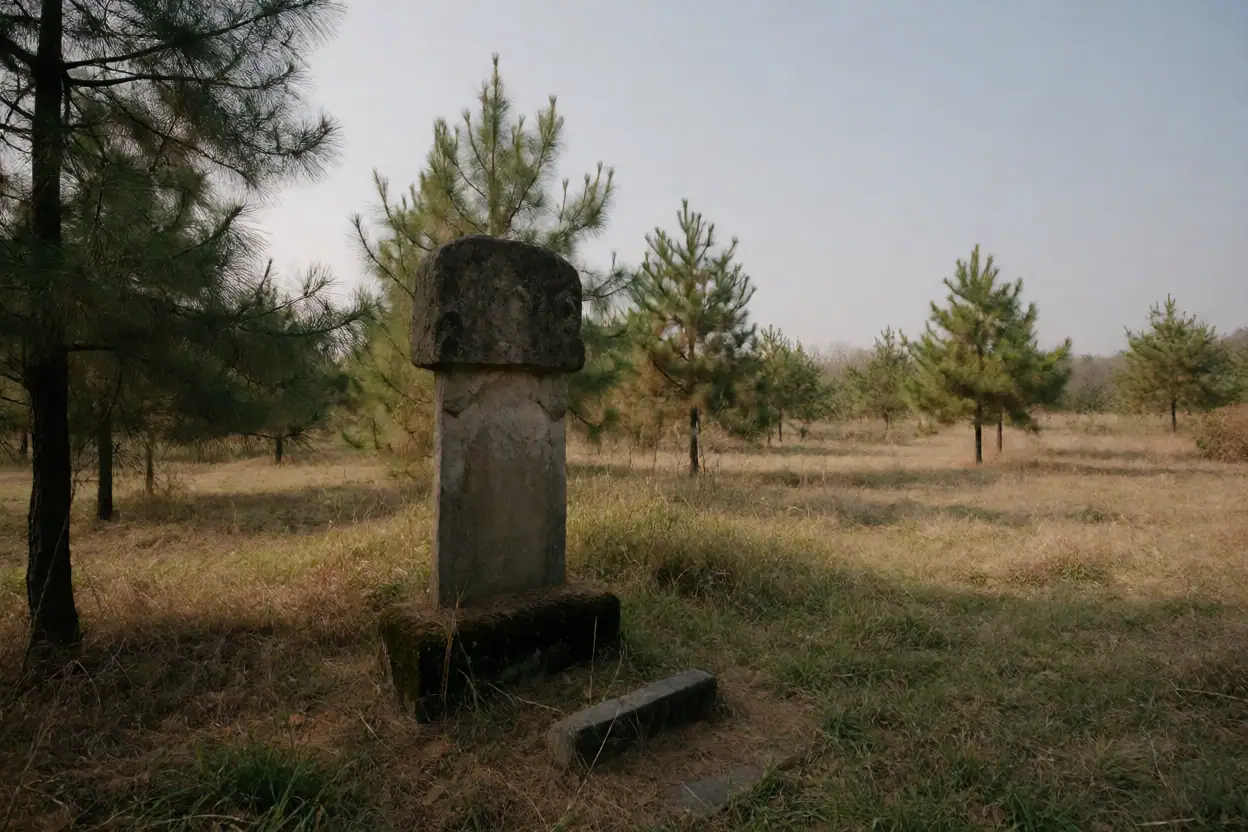
Lu clan surname materials include the hall name “Fufeng Hall,” as well as Fufeng, Julu, Henan, and other ancestral-place or branch clues. Their distribution extends across Hebei, Henan, Shandong, Shaanxi, Jiangsu, and other regions. Hall names, ancestral places of origin, and places of residence can provide directions for research, but cannot by themselves prove that Lu families in different regions descended from the same lineage. People sharing the same surname may come from different lines of origin, while a single branch may have multiple ancestral cemeteries as a result of migration, reburial, or the division of household branches. When dealing with names such as Lu Rong, Lu Quan, and Lu Taiji and their generational order, the original genealogy, epitaphs, and documents from the same period should be used as the basis, rather than presenting family legends directly as a certain genealogy.
To continue organizing this history, one could first create a correspondence index for tombstones, ancestral halls, genealogies, and oral materials, recording the date, location, state of preservation, and custodian or transmitter of each item. Online genealogies and family memoirs could then be used to gather leads from clan members living in different places, while genealogical research materials and local gazetteer databases could help verify administrative changes, village names, and information on cemetery protection. This would both preserve the local memory of the Lu clan in Xijiang and provide a relatively reliable foundation for distinguishing different branches, reconstructing migration routes, and protecting the surviving sites.