Tracing the Mu Surname in Tongxiang: Village Memory and Historical Clues
Mujiajiao in Liming Village, Dama Town, Tongxiang, is named after the Mu surname. Local memory, records of Southern Song figures, and legends of a Mongol minister offer multiple possible clues, but sharing a surname does not necessarily mean belonging to the same lineage. The true genealogy still requires cross-verification among genealogies, local gazetteers, and family documents.
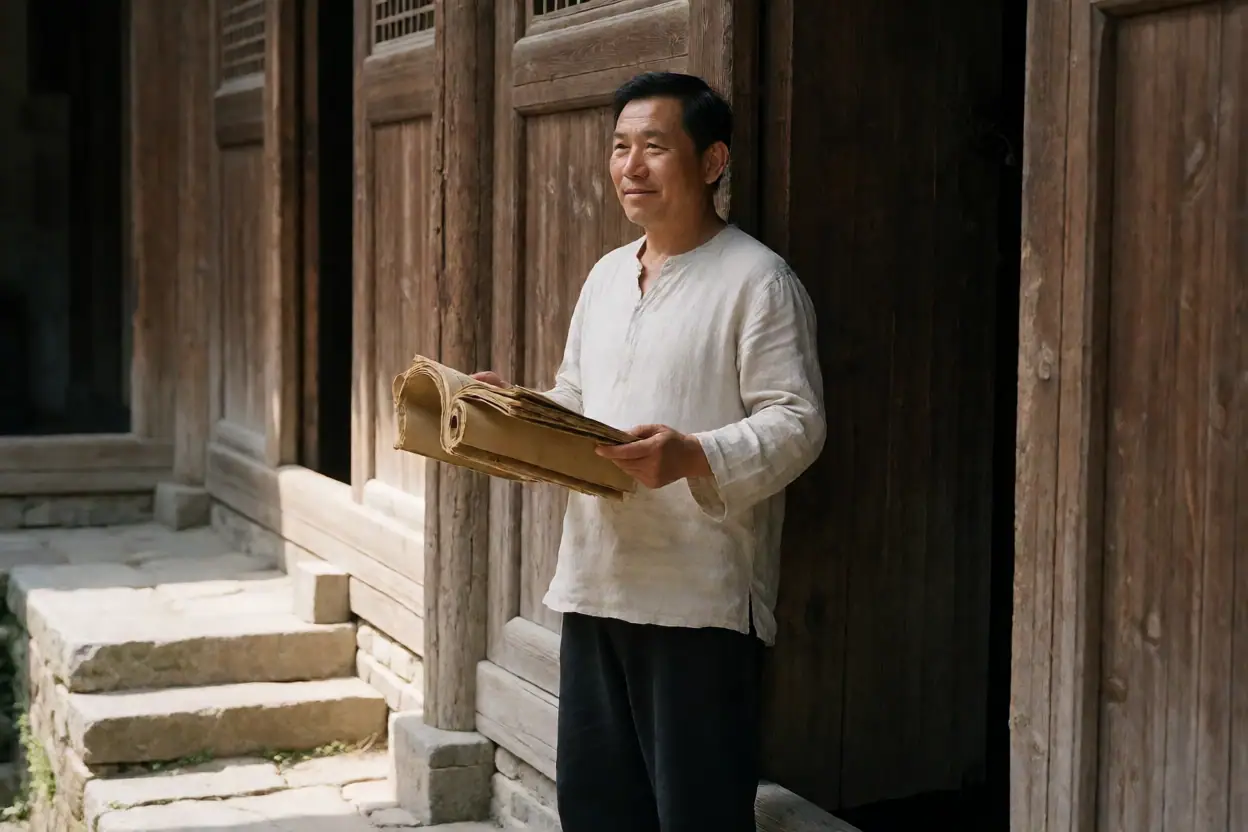
In Liming Village, Dama Town, western Tongxiang, there is a hamlet called Mujiajiao. Place names based on surnames often preserve memories of long-term settlement and can provide an entry point for local ancestral research. However, the village name can show that a particular surname once had an influence in the area; it cannot, on its own, prove a direct genealogical connection between today’s residents and any historical figure.
The Mu surname is uncommon among traditional Chinese surnames, yet several notable figures bearing it appear in historical records. Mu Xuanxu of the Western Jin dynasty was known for his Rhapsody on the Sea, which was included in the Wen Xuan and had considerable influence in later generations. Mu Daiwen of the Southern Song, a native of Wenzhou, once attained the top rank in the imperial examinations. Local gazetteers also record that Mu Ying, courtesy name Jizhi, was originally from Jinan; he crossed the Huai River to escape turmoil, passed the imperial examination in Yangzhou in the second year of the Jianyan era of the Southern Song, and later lived in Chongde, eventually attaining the official rank of Grand Master for Court Deliberations. These records can help us understand the historical distribution of figures bearing the Mu surname, but they cannot directly prove that any of them was the founding ancestor who first migrated to Mujiajiao in Tongxiang.
Regarding the origins of the Mu surname, one traditional surname source holds that it is connected with a branch of Duanmu Ci from the Spring and Autumn period. The surnames Duanmu, Mu, Mu, Gong, and Ci may be regarded as different branches descended from related lines. Other materials link some people bearing the Mu surname to Mu Huali, a prominent minister of the early Yuan dynasty, suggesting that his descendants may have formed branches bearing the Mu surname because of naming taboos, surname changes, or other reasons. The two explanations involve different periods, ethnic backgrounds, and lines of transmission. Moreover, surname changes in ancient times were complex, so shared surnames alone cannot justify treating them as one lineage.

Regarding the transmission of the Mu family in Mujiajiao, Dama, local elders once preserved a family tradition referring to them as having a “Tartar surname.” In local oral accounts, “Tartars” may broadly refer to northern groups who migrated to the area from the Yuan dynasty onward. Their precise identity requires further examination against the original wording of genealogies, tombstones, ancestral hall records, marriage documents, and local gazetteers. Even if this memory does have a historical basis, it would indicate only that the family preserved a tradition of migration; it is still insufficient to confirm a connection with the descendants of Mu Huali.
Further research into the Mu family of Mujiajiao can begin with surviving genealogies, prefaces to genealogies, generation names, sacrificial records, and family memoirs, followed by a point-by-point comparison of place names in the genealogy with records in older gazetteers of Chongde and the Jiaxing area. Online genealogies can help organize relationships and migration points, while local gazetteer databases can be used to compare village histories, individuals who passed the imperial examinations, and information on clan settlements. Ancestral research should also give careful attention to variant characters, surname changes, adoption, and breaks in genealogical records caused by relocation. Only when documents from different periods can be connected with one another and corroborated by local family memory can the relevant inferences gradually approach a reliable conclusion.