An Analysis of the Genealogy and Historical Memory of Notable Qiu Figures
Qiu figures appear in the history of Daoism, traditions of divination and related arts, local writings, and contemporary academic records. Organizing these names requires attention both to their contributions and to the distinctions among legends, local accounts, and genealogical lineages that can be corroborated with one another, avoiding the hasty assumption that people sharing a surname belong to the same clan.
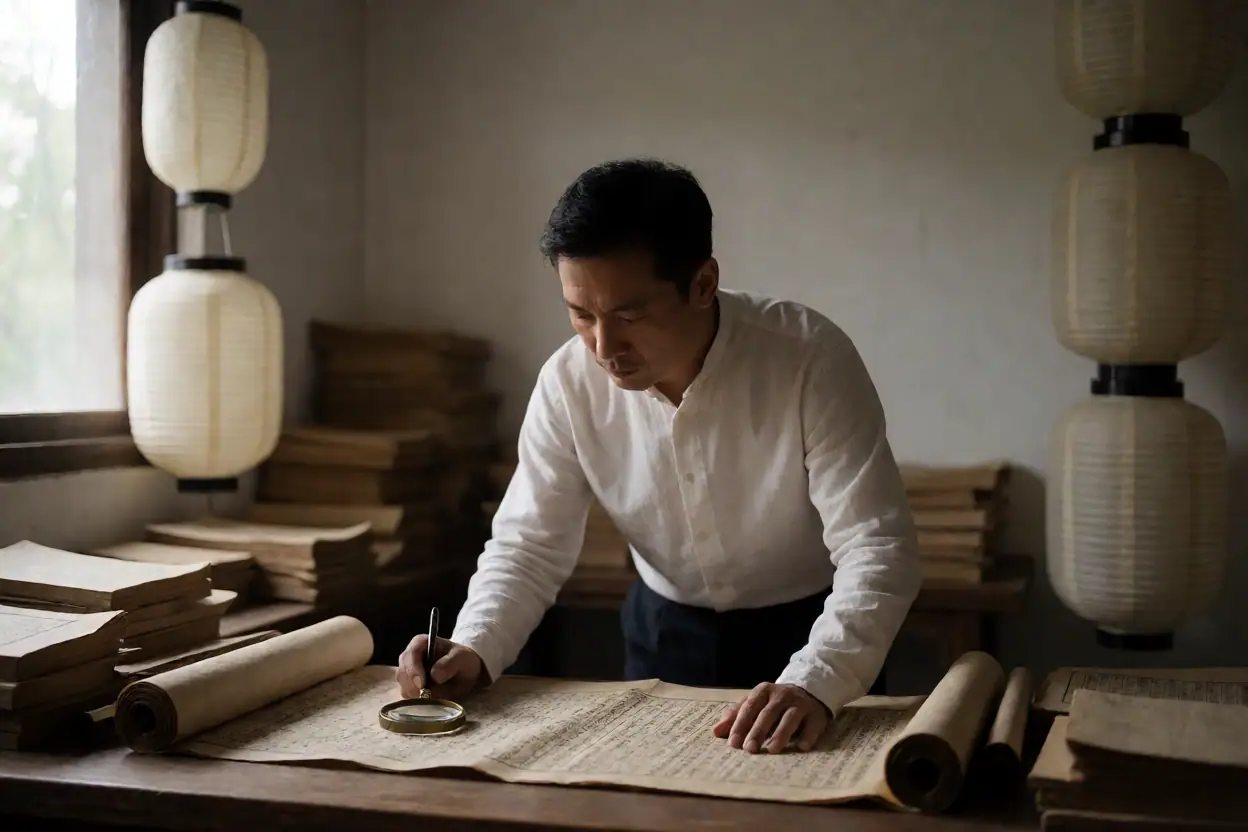
Records of historical figures with the Qiu surname are often scattered across official histories, local gazetteers, clan genealogies, biographies, and folk memories. Existing leads concern figures such as Qiu Chuji, Qiu Yanh’an, and Qiu Mu, and also list modern and contemporary names such as Qiu Chengtong and Qiu Zhonghui. These figures lived in different periods, were active in different regions, and appear in different types of sources. Their sharing the surname “Qiu” alone is not sufficient to infer that they had a common ancestor or belonged to the same branch.
Qiu Chuji, courtesy name Tongmi and sobriquet Changchunzi, is recorded as a native of Qixia during the Jin–Yuan period. Born in 1148 and deceased in 1227, he was one of the important figures of Quanzhen Daoism and, together with Ma Danyang, Tan Chuduan, Wang Yuyang, Liu Chuxuan, Hao Datong, and Sun Bu’er, was known as the “Seven Perfected of the North.” Related accounts state that he experienced hardship in his early years, went to Mount Kunyu to practice cultivation in his youth, and later became a disciple of Wang Chongyang. Qiu Chuji is well known in the history of Daoist development and the social and cultural history of the Jin–Yuan period. However, details concerning his family lineage, early life, and local legends should still be checked separately against Daoist texts, Qixia local gazetteers, and relevant clan genealogies.
The story of Qiu Yanh’an is found mainly in local gazetteers and accounts from traditions of divination and related arts. The materials state that his courtesy name was Yizhi, that he was a native of Wenxi during the Tang dynasty, and that he was connected with the descendants of Guanqiu Jian. They also record that he was skilled in the study of yin-yang and geography and authored several related works. However, such accounts bear clear marks of legend and later compilation, and the existing materials do not provide complete evidence sufficient to establish his dates of birth and death. Whether he was in fact a descendant of a particular historical figure, as well as the titles of the books attributed to him and the details of his official career, must also be examined through comparison of different versions of local gazetteers, bibliographic materials, and transmitted texts; they cannot be directly treated as settled facts of family history.
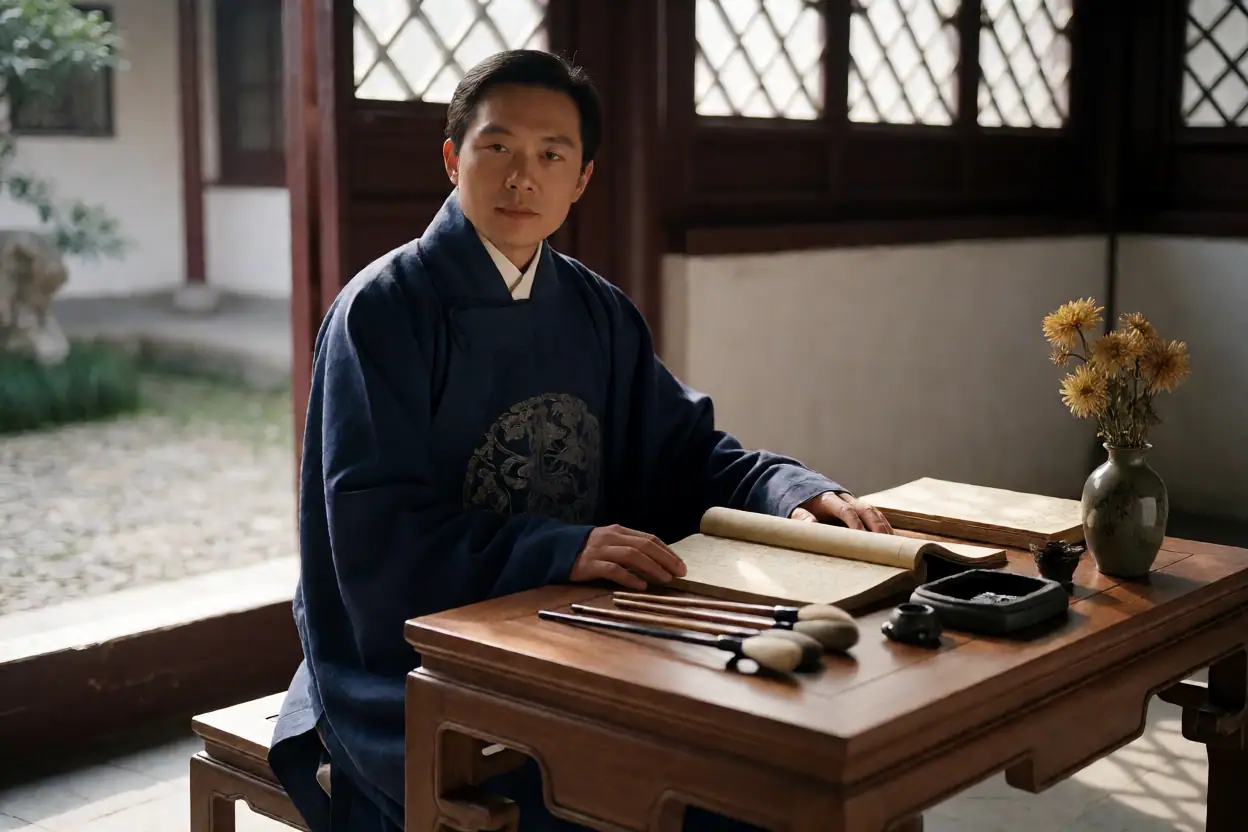
The account of how Qiu Mu acquired the surname belongs to the legends concerning the origins of surnames. Related claims connect Yingqiu, the State of Qi, and the descendants of Jiang Taigong, and hold that the surnames Qiu and Qiu, written 邱, have a historical connection. The relationships among variant surname forms, changes made to avoid taboo characters, and regional branches often vary by period and source. Even if a particular clan genealogy venerates a specific figure as its founding ancestor, this only indicates the form of identification adopted by the branch recorded in that genealogy; it cannot be used to encompass all groups bearing the Qiu or 邱 surname.
For modern and contemporary figures such as Qiu Chengtong and Qiu Zhonghui, the existing leads can only confirm that they are included in relevant records of notable figures. Their specific native places, family backgrounds, educational histories, and relationships with any particular Qiu branch should still be researched separately through biographies, local gazetteers, and public archives. When tracing family roots, one may first use surname databases to understand the possibility of multiple origins, then compare generation names, places of migration, the first ancestor to migrate to a given place, and ancestral-hall records in online genealogies. Family memoirs can supplement the history of modern life, while local gazetteers can help verify changes in place names and the activities of historical figures. When lineages are broken or hall names are repeated, uncertainties should be retained and the evidence cross-checked against original genealogies, inscriptions, epitaphs, and multiple independent records.