“The Mu Family Official Genealogy” Returns to Mu Residence: The Circulation and Critical Examination of a Genealogical Register
A copy of “The Mu Family Official Genealogy” was once kept at Xitan Temple on Jizu Mountain in Binchuan and was later returned to the Mu Residence in Lijiang at a related ceremony. The genealogical register connects the Mu tusi, Jizu Mountain culture, and local interactions, while also reminding later generations to examine historical branches separately from the distribution of people sharing the Mu surname today.
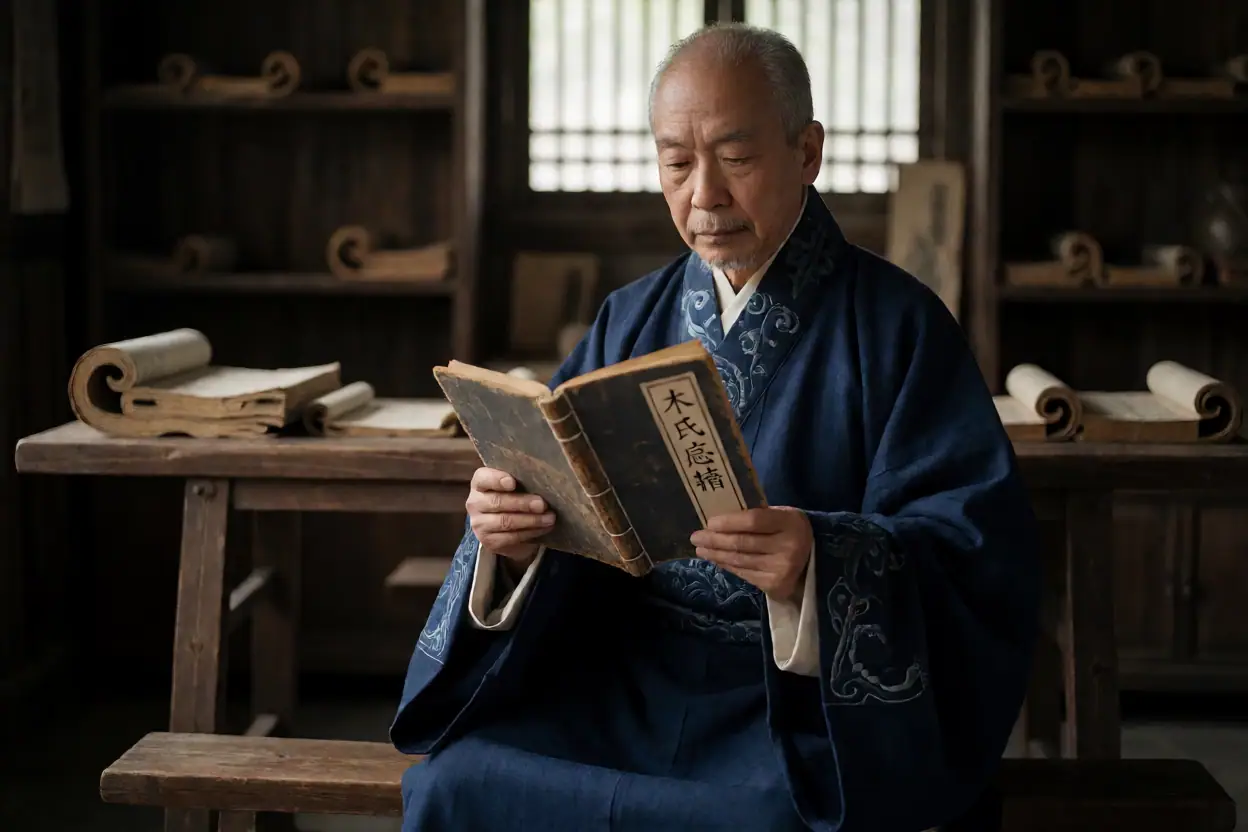
The destination of a clan genealogy often involves more than a change in the location where a document is preserved; it is also linked to local history, family memory, and cultural exchange. According to relevant sources, the copy of “The Mu Family Official Genealogy” was originally kept as a treasured item at Xitan Temple on Jizu Mountain in Binchuan County, Dali Prefecture. It was later transferred to the Mu Residence by representatives of Binchuan County during a return ceremony held at the Mu Residence Museum in Lijiang Old Town, continuing the cultural connection between the two places. During the ceremony, the two sides also exchanged local cultural publications, demonstrating the public cultural significance of organizing, preserving, and researching genealogical registers.
In terms of its contents, “The Mu Family Official Genealogy” is described as a historical record of the clan lineage associated with the Mu tusi of Lijiang during the Ming and Qing periods. From the Yuan and Ming dynasties through the early Qing dynasty, the Mu family held the hereditary position of local magistrate of Lijiang, leaving extensive records in the local history of southwestern China. The interactions between Mu Zeng of the Ming dynasty and Jizu Mountain have attracted particular attention: according to relevant accounts, the Mu family provided financial support for Buddhist buildings and the organization of local documents on Jizu Mountain, and had a finely produced copy made of the genealogical register originally kept at the Mu Residence for presentation at Xitan Temple. It was this copy’s history of preservation that extended the genealogical record from an internal family document into an important source for the study of local history.
During the Spring Festival period of 1943, scholars including Fei Xiaotong traveled to Jizu Mountain, and linguist Luo Changpei examined the genealogical register held at Xitan Temple and produced related research writings. This scholarly record brought “The Mu Family Official Genealogy” into the field of modern academic study and prompted greater attention to the register’s versions, contents, and transmission. However, existing accounts focus mainly on the copy and its cultural influence. The specific differences between the original and the copy, the complete number of fascicles, the date of compilation, and changes in preservation still require further verification against the physical materials, colophons, collection catalogues, and local gazetteers.
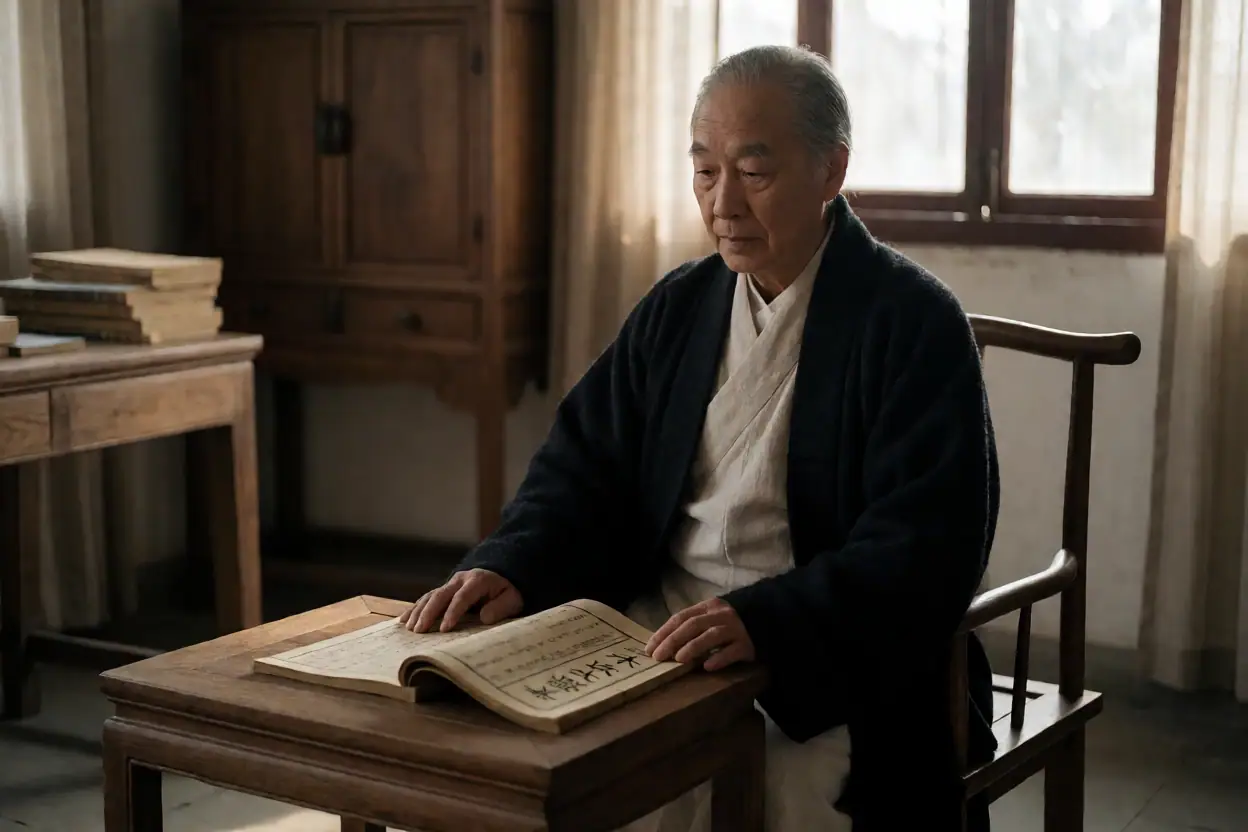
For people tracing their Mu-surname roots today, this case likewise requires a clear awareness of the boundaries of the evidence. The Mu surname is distributed in Songjiang, Shanghai; Wuqing, Tianjin; Jize and Xinji, Hebei; Dongping and Pingyi, Shandong; Qingyuan, Liaoning; Taiyuan, Shanxi; Hancheng, Shaanxi; Chenghai, Guangdong; and Lushui, Hekou, Qiubei, and other places in Yunnan. However, geographical distribution can serve only as a lead for further research and cannot directly prove that Mu-surname families in different places share a single origin. The lineage of the Lijiang Mu tusi belongs to a specific historical branch, and it cannot therefore be inferred that all Mu-surname families have a direct-line relationship with it.
To continue investigating a particular family’s connection with the relevant branch, one may first organize information on ancestral places of origin, migration points, ancestors’ names, generational characters, burials, and ancestral halls, and then cross-check it against records in online genealogies, surname materials, family memoirs, and local gazetteers. For courtesy names, founding ancestors, and links between generations, priority should be given to materials with clear information on fascicle numbers, editions, and collections, while legends, oral accounts, and verified records should be labeled separately. This approach makes it possible to understand the historical value of “The Mu Family Official Genealogy” while avoiding excessive inferences based on a shared surname, place, or similar generational characters.