A Custody Dispute Arising from a Twelve-Volume Set of the Du Genealogy
A Xinhai-year edition of the Du Genealogy entered litigation over custody rights. Existing records show that the court dismissed the request for its return on the grounds that the requesting party’s evidence was insufficient, but did not thereby confirm the claimant’s status as a descendant of Du Fu, the completeness of the lineage, or the genealogy’s ultimate ownership.
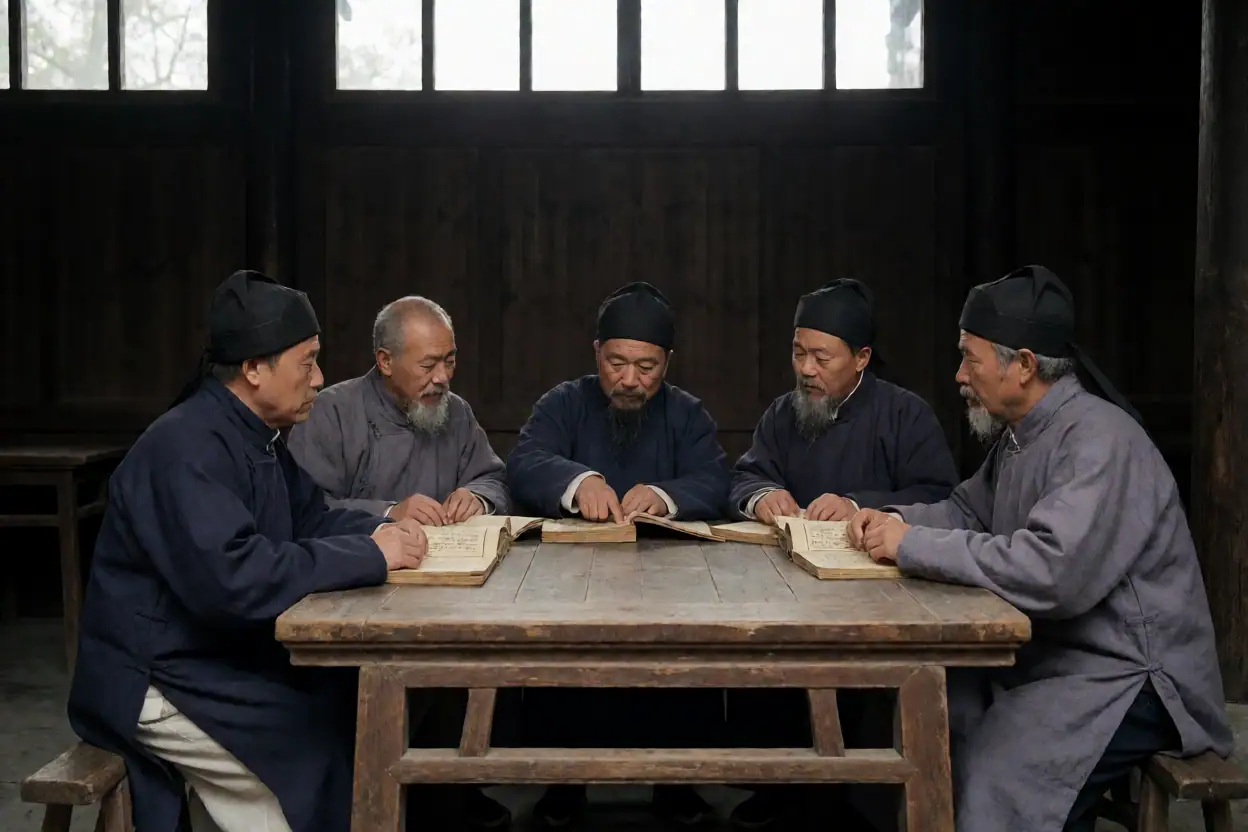
A genealogy carries family memories, but may also constitute property with tangible value and emotional significance. When customary custody arrangements, inheritance provisions, and the need for shared use come into conflict, determining who should hold a genealogy often cannot be based solely on seniority, orally transmitted family rules, or the need to revise the genealogy.
Existing accounts of the case state that the genealogy in question was an Xinhai-year edition of the Du Genealogy, comprising twelve volumes in total, originally kept by a Du family in Changzhou, Jiangsu. Three family members claimed that their elders had required that the genealogy not be lent outside the family and that revisions be carried out at the ancestral home in Changzhou; after the eldest brother took the genealogy to Shanghai and did not return it, they sought its return from his family because family members planned to continue revising the genealogy. The other side maintained that, in accordance with tradition, the elders had entrusted the genealogy to the eldest son for safekeeping, and had later passed it to the next generation through a will, rather than lending it temporarily.
Related records also mention that the will stated that the twelve volumes of the genealogy were to be kept by the eldest son, not passed outside the family, and that each Du household was permitted to use handwritten copies, among other provisions. After hearing the case, the court held that the evidence submitted by the party seeking return was insufficient to prove that the family had made a clear agreement regarding the custodian, and therefore dismissed the claim. This ruling primarily addressed the specific request and evidentiary circumstances of the parties involved. It cannot be broadly interpreted as confirming that the genealogy permanently belongs to one particular branch, nor can it be regarded as a determination of the authenticity of the lineage recorded in the genealogy.
The parties identify themselves as descendants of the Tang-dynasty poet Du Fu, but this identity still requires corroboration among materials including the original genealogy, prefaces and postscripts from successive revisions, lineage tables, migration records, epitaphs and inscribed steles, contract documents, and local gazetteers. A shared surname, family oral history, or a single account in a genealogy is generally insufficient to establish a continuous lineage spanning a thousand years. Sharing a surname does not mean sharing the same ancestral line; even families using the same hall name may belong to different regions and branches.
In ZongMai’s materials on the Du surname, Jingzhao Hall is relatively common; Jingzhao, Xiangyang, and Puyang frequently appear in accounts of the Du surname’s ancestral seats. The descendants of Du Bo and the Du Cheng branch are also commonly cited in accounts of the Du surname’s origins and branches. People surnamed Du are distributed across Shaanxi, Henan, Hebei, Sichuan, Shandong, and other areas, but these general materials cannot directly prove this Changzhou family’s ancestry, migration route, or relationship to the Du Fu family.
To continue organizing this genealogy, one could first register each of the twelve volumes separately, recording the volume sequence, page-center markings, prefaces and postscripts, compilers, publication and engraving details, and any missing or damaged portions. The people, generation names, places of residence, and other information in the genealogy could then be compared with local gazetteers, old household-registration records, and inscribed-stele materials from Changzhou and relevant places of migration. Online genealogies are suitable for sorting out lineage connections, while family memoirs can preserve elders’ accounts of storing and copying the genealogy and of migration. Genealogical research and searches of local gazetteers can help verify changes in place names and the activities of different branches. When the original documents are involved, a written inventory should also be prepared, specifying claims of ownership, custody responsibilities, access arrangements, digitization plans, and borrowing rules during genealogy revisions, in order to reduce the risk of this shared family cultural heritage becoming embroiled in another dispute.
Learn More and Verify
- Shaohuitang Liu Clan Genealogy, Volume Six: Exploring Family Memory Through Clues in the Volumes
- Lineage and Clues to Migration to Southern Zhejiang Found in the Sanxi Ke Clan Genealogy
- Yihuang, Jiangxi Hu Clan Ancestral Hall: An Ancestral Hall and Local Family Memory
- The Rise and Decline of the Rong Clan Ancestral Hall in Fuxing Township, Rong County, and Local Memory
Genealogy Knowledge and Methods for Compiling Genealogies · Finding Genealogies and Local Gazetteers · Organize family-root-seeking leads