Genealogical Lineage and Clues to Migration in Southern Zhejiang Found in the Sanxi Ke Genealogy
The Sanxi Ke Genealogy comprises 2 volumes. The surviving bibliographic information concerns a revision during the Qing Guangxu period, the lineage of the Sanxi branch, and accounts of migration between Yongjia and Huangyan. Because some genealogy pages are damaged, the relevant founding ancestor, generational sequence, and migration dates still require careful verification against images of the original genealogy, local gazetteers, and other branch genealogies.
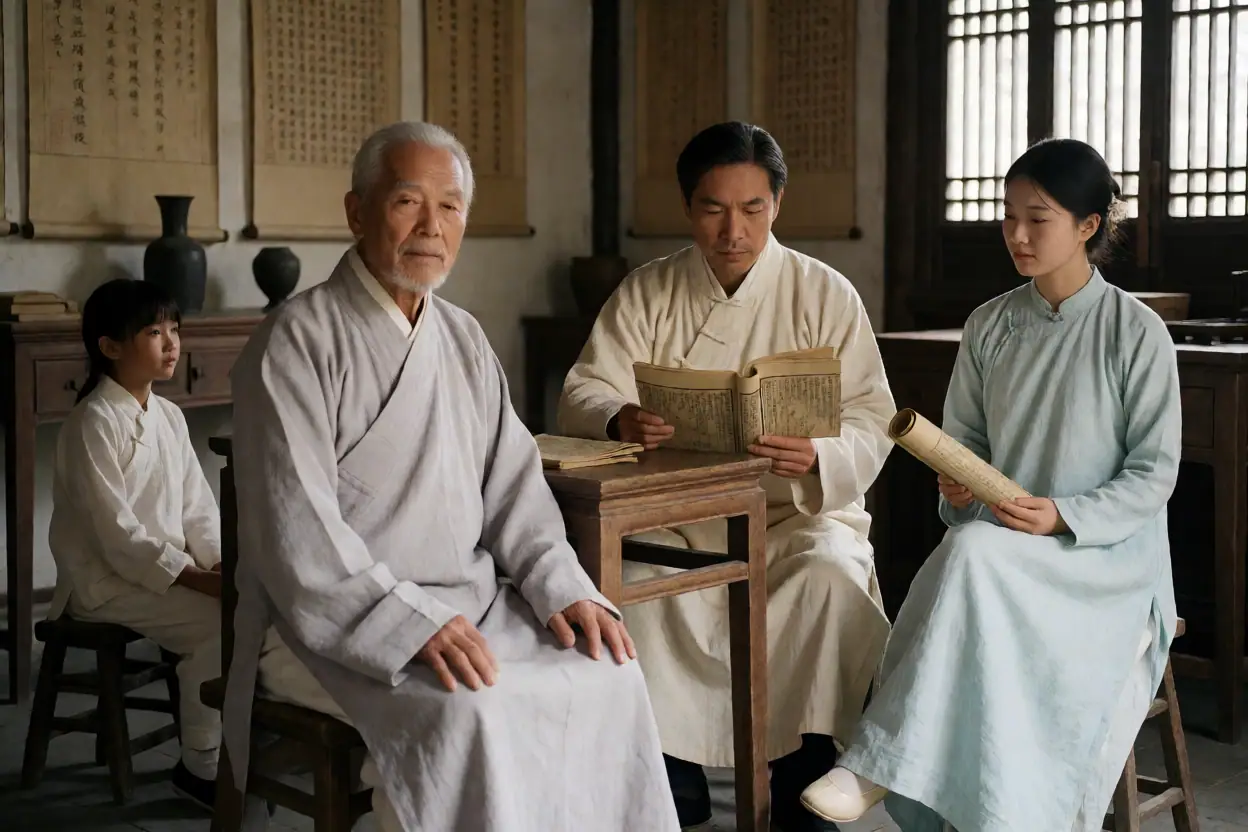
The Sanxi Ke Genealogy is a family document recording a branch of the Ke clan in southern Zhejiang. The original place of publication and publisher are unknown. It comprises 2 volumes and focuses primarily on lineage tables. The surviving first volume contains 136 pages. The catalogue states that the beginning of the book contains a preface dated the 12th year of the Qing Guangxu period, namely 1886. The inner margins also record a revision in the Guangxu jia-shen year, referring to the 10th year of the Guangxu period. The two dates may correspond respectively to the stages of compilation, printing, or preface writing, or they may differ because of variations in cataloguing practices. The original texts of the prefaces and postscripts, colophons, and inner margins should be consulted before any conclusion is drawn.
The genealogy lists Ke Mengnan, Ke Guoying, Ke Kuaiwen, Ke Zhangzhou, Ke Zhangchang, and Ke Wenbin among those who worked on its compilation. Some individuals are also recorded with a personal name, courtesy name, or style name. For example, Ke Mengnan is recorded as having the personal name Lianyao, the courtesy name Keyan, and the style name Tingshi; Ke Guoying is recorded as having the personal name Yuwen, the courtesy name Zhengjian, and the style name Lisu. Such name information helps identify the same individual in preface signatures, lineage tables, and family documents, but differences caused by variant characters, identical names, and later transcription must still be taken into account.
According to the genealogy's own account, the first-generation ancestor was Ke Chugu, a Tang-dynasty figure with the lineage designation Guangyi, who once served as a Zhongshu Doctor. The genealogy also states that he migrated from central Fujian to Yicheng and then to Mount Weiyu in Huangyi. The 5th generation lists Ke Yunhong and Ke Yunyong, with the courtesy names Ding Shan and Ding Wang respectively, and identifies both as sons of Lord Yushu. By the 12th generation, the genealogy identifies Ke Yousun as the founding ancestor of Sanxi, with the courtesy name Bowu and the lineage designation Longshi-fourteen. He is described as a descendant of Ke Yunyong who, during the Zhizheng era of the Yuan dynasty, moved from Shaxi in Huangyi to Yongjia Sanxi as a uxorilocal resident. The official positions, dates, historical place names, and generational connections above are all recorded within the genealogy; at present, they should not be treated outside the context of the original genealogy as established historical facts.
The genealogy records that the descendants of Ke Yousun divided into 3 branches by the 14th generation: Ke Renfu as the senior branch, Ke Yifu as the second branch, and Ke Xinfu as the third branch. The Renfu branch further lists Junjing, Junli, Junyu, Junzheng, Jun'an, and Junbao among its 15th-generation members. Because some of the known pages are damaged or incomplete, whether the list of individuals is complete, whether the sequence is continuous, and the subsequent lineages of the other 2 branches all require further checking against the second volume and continuation genealogies of the same clan.
ZongMai's surname resources list Jiyang Hall among the commonly found ancestral halls of the Ke surname. Clues concerning ancestral commanderies involve Jiyang, Qiantang, and Henan, while larger concentrations are found in Zhejiang, Fujian, Guangdong, Jiangxi, and Taiwan. However, sharing a surname does not automatically indicate belonging to the same lineage, and commonly used ancestral-hall names and ancestral-commandery references cannot directly prove the branch affiliation of the Sanxi Ke clan. Accounts connecting the origin of the Ke surname to Ke County, Mount Ke, or an enfeoffed territory are useful only as clues to surname culture. Whether they have a verifiable connection with the lineage in this genealogy remains to be established through corroborating documents.
When conducting further ancestral research, begin by using online genealogies to read the prefaces, general notes, generation-order lists, and lineage tables page by page. Then compare place names such as Yongjia Sanxi, Huangyi Shaxi, and Mount Weiyu with records of administrative divisions, villages, and individuals in local-gazetteer databases. Tombstone rubbings, contracts, spirit tablets, old photographs, and oral accounts preserved by the family can be organized into a family memoir, with the speaker and recording date identified. Only when names, spouses, birth order, places of residence, and dates correspond continuously is it appropriate to attempt to connect different genealogies or branch houses.