Researching the Second Volume of the He Genealogy of Jinghu Hall
Existing catalogue information indicates that a genealogical work titled “He Genealogy of Jinghu Hall” consists of at least two volumes, with the item examined here being the second volume. Since the preface, editorial notes, lineage records, and compilation and publication details have not yet been presented in full, its regional affiliation, branch lineage, and compilation date still require further verification against the genealogy pages, local gazetteers, and the family’s old holdings.

Existing genealogy catalogues list the title “He Genealogy of Jinghu Hall, Volume 2” and show that the work is offered in separate volumes, including the first volume, the second volume, and the complete set. The viewing information for the second volume indicates 368 pages, but this may refer to the number of pages in the digital images and should not be equated directly with the number of leaves, volumes, or the actual length of the original genealogy. Since a complete cover, preface, table of contents, editorial notes, imprint, and genealogy-compilation register have not yet been seen, it is not currently possible to determine the date of compilation, printing method, collection and transmission history, or specific branch lineage of this genealogy.
“Jinghu Hall” is an important clue for identifying this genealogy, but the ancestral origin cannot be determined from the hall name alone. A hall name may derive from a commandery origin, place of residence, the deeds of an eminent predecessor, or the cultural aspirations of those who compiled the genealogy. Multiple hall names may also be used within the same surname, and identical hall names do not necessarily indicate connected lineages. Common commandery-origin clues for the He surname recorded in ZongMai surname resources include Kuaiji, Guangping, and Henan, along with records of hall names such as “Kuaiji Hall.” There are also traditional accounts concerning the formation of the He surname, including accounts of the Qing clan changing its surname to avoid a naming taboo. These materials are references at the level of surname culture and cannot be applied directly to the specific family of Jinghu Hall.
To confirm the genealogy’s regional affiliation, priority should be given to examining its opening and closing sections. The preface usually explains the reasons for the first migration, the background to the genealogy’s compilation, and the circumstances of successive revisions. The editorial notes may reveal the scope of inclusion and the method used to arrange the lineage. Register numbers for distributed copies, donor lists, ancestral-hall property records, and the places of residence of individuals can help identify the area of settlement. Clues indicating He-surname distribution can be found in Hunan, Zhejiang, Jiangsu, Henan, Sichuan, and other places, but this broad distribution does not prove that the He family of Jinghu Hall necessarily originated in any one of them. A reliable conclusion about migration also requires the changes in place names, the dates of the individuals, and the generational relationships to correspond with one another.
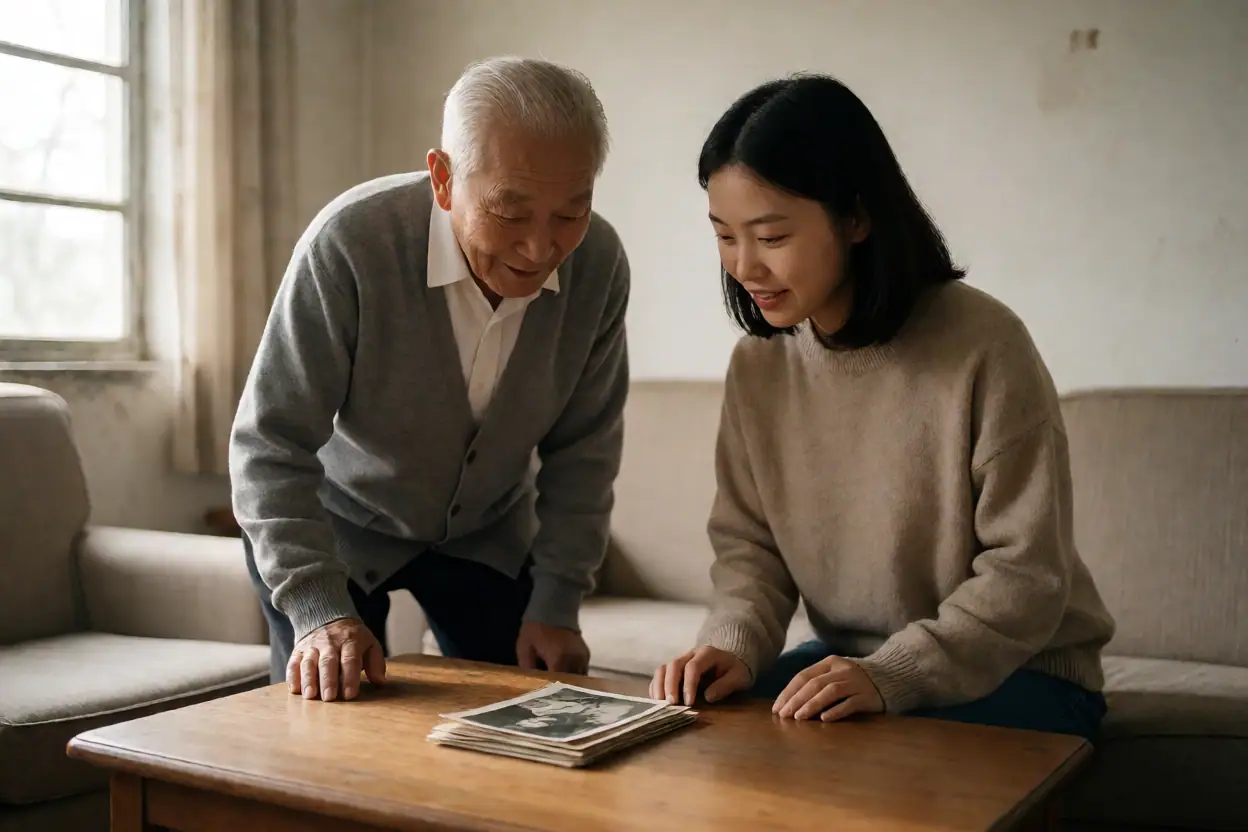
When tracing one’s roots, one can first identify the founding ancestor, first migrant ancestor, generation names, and village names page by page in online genealogies, and then use surname databases to verify variant characters, former place names, and hall-name records. Local-gazetteer databases can then be searched for entries on individuals, examinations and officeholding, clans, temples, and villages, with the results cross-checked against gravestones, contracts, old household-register records, and documents held by the family. Family memoirs may also preserve details concerning migration, marriage, and forms of kinship address, but oral materials are prone to chronological displacement; the narrator, time of recording, and information source should therefore be noted.
The function of the second volume within the complete genealogy remains unclear. It may continue the lineage records of the preceding volume, or it may primarily contain branch genealogies, literary works, or appendices. Only after obtaining the tables of contents for all volumes and comparing the transitions between the preceding and following volumes will it be possible to determine whether generations are missing, whether the branches divided into separate lines, and whether the generation names are continuous. Until these checks are completed, the more cautious formulation is: the existing catalogue establishes that a volume of a He genealogy bearing “Jinghu Hall” in its title once circulated, but its ancestral affiliation, migration route, and relationship to other He branches still require joint confirmation from the genealogy text and local historical documents.
Learn More and Verify
- Cataloguing Clues and Research Path for Volume Seven of the Chen Clan Shenyi Genealogy
- Reference Clues for the Ninth Volume of the Eighth Revision of the Shuanggui Hall Tang Clan Genealogy
- Volume Seven of the Jiang Clan Genealogy of Shilong, Xiangxiang: Family Records Organized by Branch
- Volume 6 of the Baimaotang Chen Clan Genealogy: from the genealogy title to family clues
Genealogy Knowledge and Methods for Compiling Genealogies · Finding Genealogies and Local Gazetteers · Organize family-root-seeking leads