The Origins and Development of the Ji Clan and Ji Sun Branches: From an Old Lu State Lineage to Later Distribution
The traditional origins of the Ji clan are often traced to the Ji-surname ruling clan of the State of Lu, with the stories of Jiyou and his descendants providing important clues. The relationship between Ji and Jisun, migrations to different regions, and specific genealogical lines still require item-by-item verification against genealogies, local gazetteers, and family documents.

Accounts of the Ji clan’s origins are generally linked to the Ji-surname ruling clan of the State of Lu. According to tradition, during the Spring and Autumn period, Ji You, a younger brother of Duke Zhuang of Lu, participated in suppressing the Rebellion of Qingfu. His descendants are said to have gradually adopted related designations such as the Ji and Ji Sun surnames, based on an ancestral courtesy name or family appellation. This account appears in traditional surname narratives, but whether the historical figures, changes in appellations, and later branches in different regions can be connected in a complete line cannot be determined solely from the surname itself.
During the Spring and Autumn period, the Ji Sun clan was involved in the administration of the State of Lu for an extended period and left numerous records in Lu’s political history. Later discussions of the Ji clan often present this political family, its background as part of Lu’s ruling clan, and Ji-surname branches formed in different historical periods alongside one another. It should be noted that “Ji clan” and “Ji Sun clan” in ancient texts sometimes referred to specific families or political groups, whereas “the Ji surname” in later genealogies may encompass branches of different origins; the two are not inherently equivalent. Factors such as clan appellations, surname changes to avoid tabooed names, and the establishment of separate household registers by branch may also have resulted in multiple surname forms appearing in the same area, or in a lack of verifiable common lineage among families sharing the same surname.
Since the Ming and Qing dynasties, people with the Ji surname have frequently appeared in historical records and literary accounts relating to literature, the civil service examinations, and local culture. Some families gained local prominence by passing down a tradition of poetry and learning and placing a strong emphasis on education. Specific individuals, however, should be verified through cross-referenced records in official histories, epitaphs, family genealogies, and local gazetteers. A blood relationship should not be inferred directly merely because people share a surname or a common ancestral hall name. The family origins of figures such as Ji Yuyong, Ji Xian, Ji Kaisheng, and Ji Zhenyi should likewise be checked separately against their native places, courtesy names and style names, genealogies, and documentary sources.
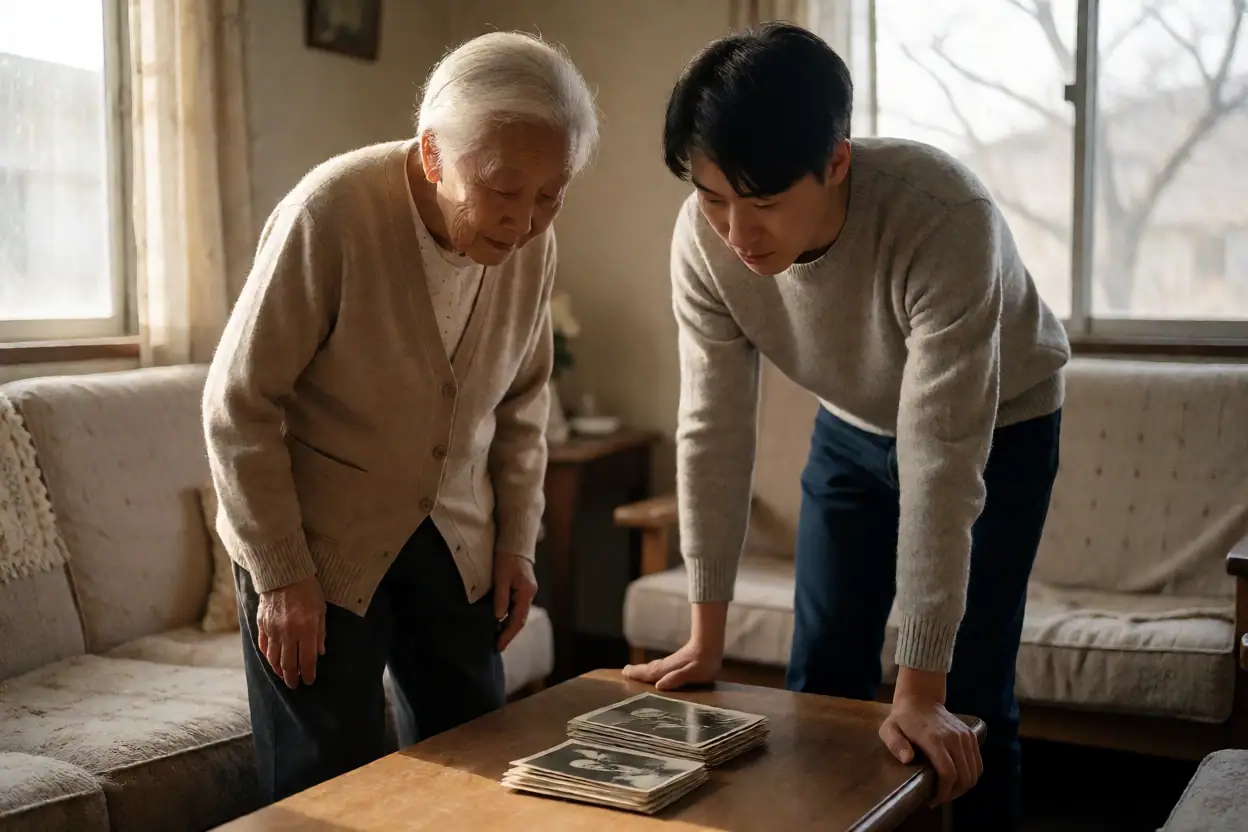
Existing materials on the Ji Sun surname can currently be organized as an independent line of inquiry. Available surname records show that the Ji Sun surname has been entered into the database, but information on its origin, ancestral commandery, ancestral hall name, generation names, population distribution, and migration routes remains to be supplemented. To investigate a specific branch, it is advisable to first record its ancestral place of residence, the name of its founding ancestor in the place of migration, the date of migration, the location of its ancestral hall or graves, the characters used for generation names, and family oral accounts, and then compare them with online genealogies, family memoirs, and village histories, biographical accounts, and civil service examination registers in local gazetteers. Statements in genealogies such as “descended from a certain ancestor” or “originating in the State of Lu” should be distinguished from historical facts that can be corroborated by contemporaneous documents.
In the process of tracing one’s roots, the most valuable approach is often not to begin by seeking a single common ancestor, but to gradually confirm the points of connection between branches. If prefaces to genealogies, lineage charts, genealogy compilation dates, information about the compilers, and the locations where the originals were kept can be obtained, the continuity and credibility of the genealogical records can be assessed further. If different genealogies conflict over ancestral places of residence, generation names, or migration routes, multiple possibilities should be retained until they can be evaluated in light of supplementary evidence from local gazetteers, tombstone materials, and family documents. Thus, research into the Ji and Ji Sun clans has both a long historical trail and problems involving scattered sources, overlapping appellations, and branches requiring further investigation. It is best pursued cautiously, branch by branch, with evidence cross-checked from multiple sources.
Learn More and Verify
- An Examination of the Origins of the Mao Clan through the Wuping Ancient Plaque: Cross-Verification from Cultural Relics to Genealogies
- An Analysis of Genealogical Accounts of the Lin Clan’s Founding Ancestor and the Origins of the Chen Clan
- The Danyang Hall Lineage: The Origins, Migrations, and Genealogical Culture of the Bao Family as a Path to Tracing Its Roots
- The Origins and Development of the Mingguang Yue Family: Clues to Migration and Surname Changes in an Ancestral Shrine Record
Genealogy Knowledge and Methods for Compiling Genealogies · Finding Genealogies and Local Gazetteers · Organize family-root-seeking leads