What “Guodong,” “Guoliang,” and “Guocai” Reveal About Family Hopes in Naming Triplets
A personal account of naming triplets with the surname “Guo” highlights the importance Chinese families place on the meaning of names, generational naming conventions, name taboos, and practical considerations in writing and using names. A name may express hopes and good wishes, but by itself cannot prove a family’s origins or clan relationships.
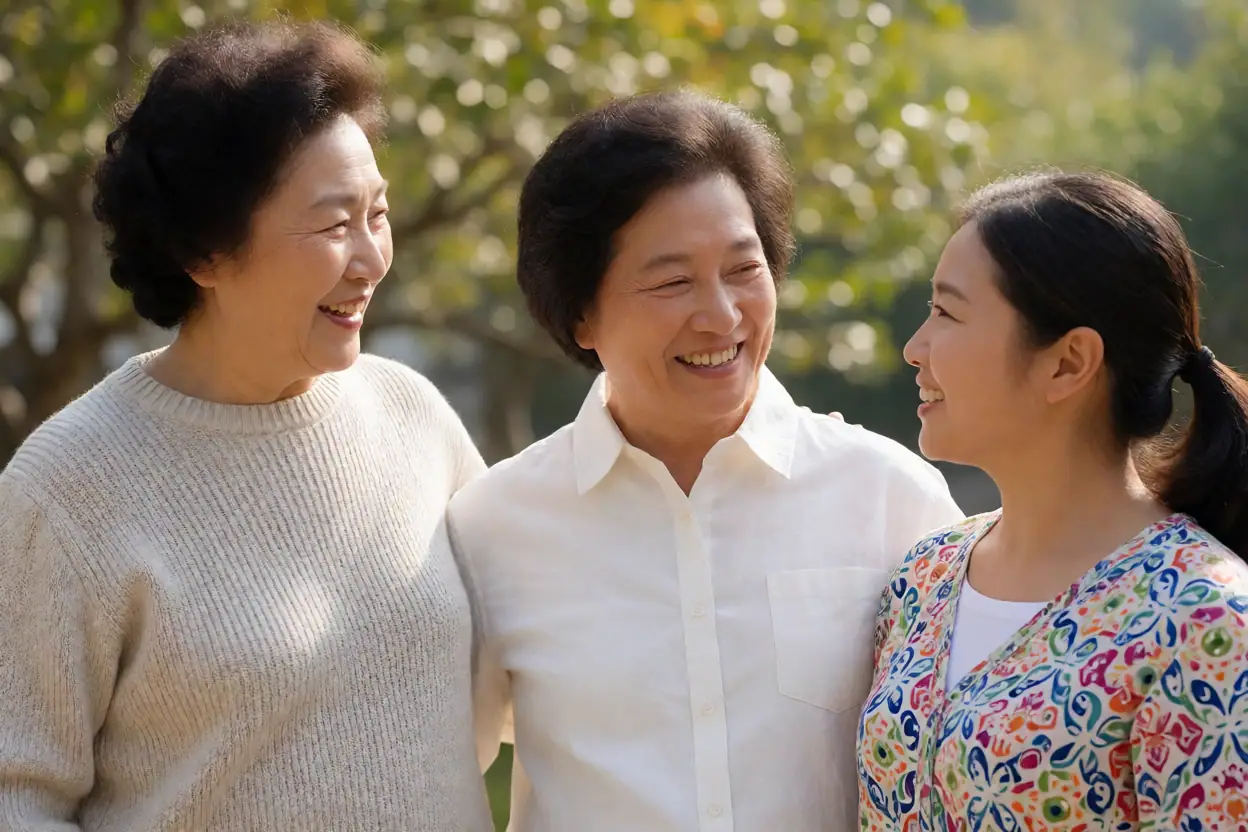
A name is often the first expression of a family’s hopes for a newborn. In a personal account dated January 20, 2018, a father with the surname “Guo” welcomed triplets, and after discussion, the family named them “Guodong,” “Guoliang,” and “Guocai.” “A person of great ability” is a common expression of praise in Chinese, and the three names both retain the same surname and form a mutually resonant set, expressing the elders’ hopes that the children will grow into capable people and shoulder responsibility.
In terms of naming practices, this type of coordinated naming is not uncommon. Brothers and sisters share the same surname, while their given names revolve around a common theme, reflecting the connections among family members and making them easier to distinguish in family memory. Whether the names follow a generational naming pattern or continue a tradition from the ancestors cannot be determined from the three characters “Dong,” “Liang,” and “Cai” alone. Generational naming patterns usually need to be cross-checked against genealogies, clan regulations, gravestones, ancestral hall records, or oral accounts from elders. Similar naming styles should not be taken as direct proof that people belong to the same branch.
The specific origins and transmission of the surname “Guo” may vary by region and family. Surname records can provide a framework for organizing origin legends, distribution clues, ancestral halls and associated names, prestigious ancestral localities, and migration records, but these details generally need to be examined against the genealogical records of a specific region and family. People with the same surname may descend from different founding ancestors, or different family lines may have developed through long-term migration, marriage, adoption, or surname changes. Therefore, seeing the same surname can indicate no more than a shared surname designation; it cannot confirm a blood relationship.
This account also mentions several practical issues to consider when choosing a name. First, some families avoid using the same characters as those of direct-line elders, out of respect for family forms of address and everyday social conventions; this is a customary choice, not a universally binding rule of fact. Second, rare characters, variant characters, or writing forms that are difficult to recognize may cause inconvenience when registering information, obtaining identity documents, enrolling in school, or handling workplace records. Third, beyond the meaning of a name, one should also consider whether its pronunciation is smooth, whether it is easy to write, and whether it could easily create ambiguity in different contexts.
If you wish to learn more about the origins of a particular branch of the “Guo” surname, you can begin with materials still held by the family, including old household registration booklets, photographs of gravestones, records of ancestral residences, household division documents, family letters, and recollections from elders. Online genealogies are useful for organizing known relatives, birthplaces, and migration dates, while family memoirs can help preserve oral history. When researching village histories, administrative boundary changes, and population migration, local gazetteers can also be consulted for comparison. When names differ, aliases appear, or recollections conflict, retain the different accounts and note the source and degree of reliability of the evidence.
“Guodong,” “Guoliang,” and “Guocai” are first and foremost names filled with good wishes. They express a family’s hopes for the children’s future, rather than providing definitive proof concerning their ancestors, ancestral hall name, or lineage. In tracing family roots, names can serve as one clue, but a determination of clan affiliation still requires the combined support of continuous kinship links, clear location information, and historical materials that corroborate one another.
Learn More and Verify
- Volume Seven of the Jiang Clan Genealogy of Shilong, Xiangxiang: Family Records Organized by Branch
- Family Memories of the Hou Clan in Northwestern China and Their Impact on Local History
- The Qu clan of Tongcheng: a joint genealogy of two branches—a family memory of a surname change and preserving one’s roots
- Family memories and historical context in the clues surrounding Di figures
Genealogy Knowledge and Methods for Compiling Genealogies · Finding Genealogies and Local Gazetteers · Organize family-root-seeking leads