Examining Memories and Family Lineages of the Luan Family
Existing materials, ranging from figures of the Spring and Autumn period and modern-era local notables to contemporary art practitioners, present the multifaceted activities of people surnamed Luan. These biographical accounts may serve as leads for further investigation, but ancestral origins, branch affiliations, and migration relationships must still be verified item by item against genealogies, local gazetteers, and family memories.
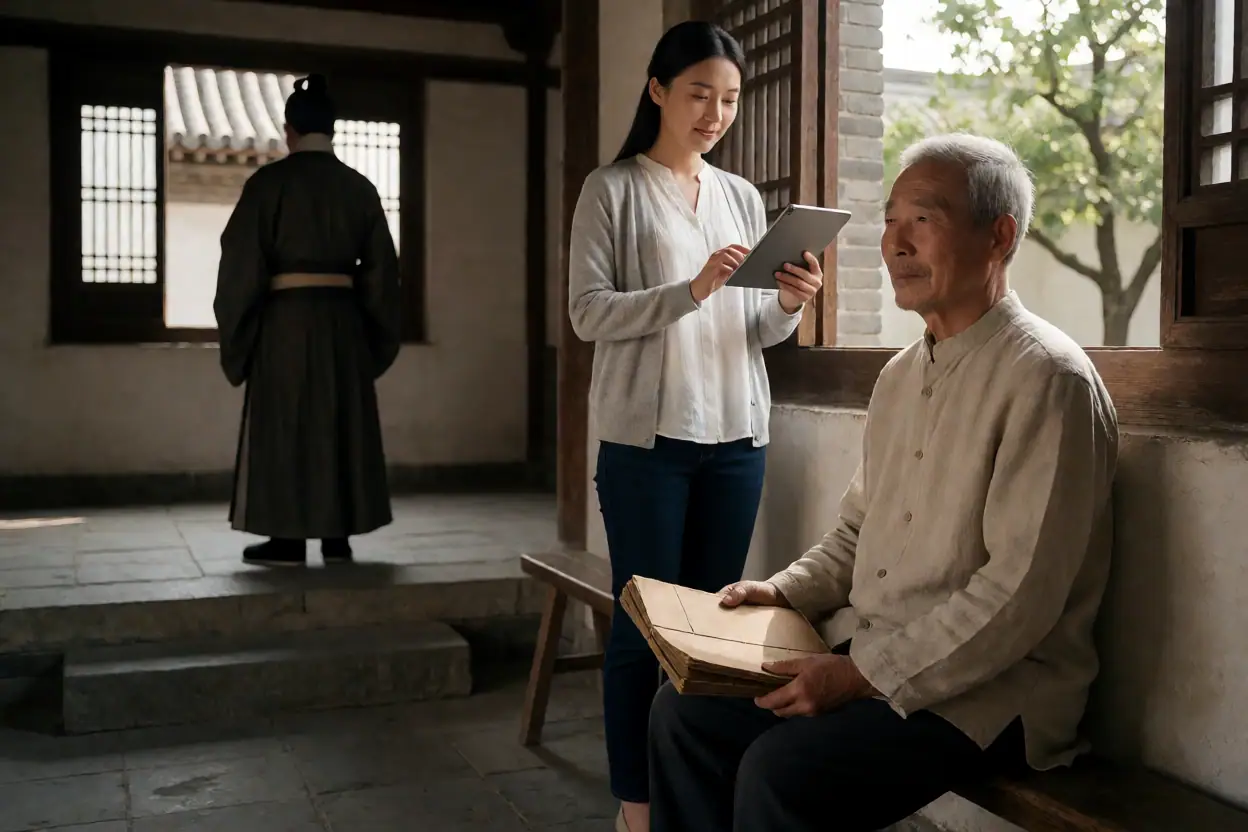
Historical records of people surnamed Luan appear in political and military activities during the pre-Qin period and continue through modern and contemporary local cultural, medical, and artistic practices. Observing these figures within the same surname lineage reveals the diverse imprints left by the Luan surname across different regions and historical periods. However, sharing a surname does not in itself establish membership in the same clan, still less can genealogical relationships be determined solely from a place of residence or an ancestral hall name.
Sources on Luan figures of the Spring and Autumn period mention Luan Fuji, Luan Shi, and Luan Yan. Luan Fuji was from the state of Jin and met with misfortune after becoming involved in the San Xi incident; Luan Shi was a member of the Qi ruling clan, styled Ziqi, and once served as a senior official before fleeing to Lu after a political conflict; Luan Yan is recorded as the son of Luan Shu, once served as a Jin military commander, and was posthumously titled Huanzi. These records reflect the activities of Luan figures in such feudal states as Jin and Qi, but whether these individuals belonged to a continuously traceable family lineage should still be determined through cross-checking transmitted historical works, original genealogical records, and local documents.
In the modern era, the experiences of local figures such as Luan Laizong and Luan Minggang more clearly demonstrate the connection between individual choices and regional society. Luan Laizong was from Huatuan Village, Weixian County. He earned an official distinction in his early years, later turning to astronomical observation and meteorological research, and left writings on astronomy and agricultural seasons. Luan Minggang was originally named Luan Zhaofeng. His ancestors practiced medicine and pharmacy, while he himself practiced traditional Chinese medicine for many years, once serving at a local hospital and organizing his prescription experience in his later years. In addition to biographical materials, the dates of birth and death, appointments, and writings of these figures may be further checked against county gazetteers, professional archives, pharmacy records, and family memoirs.
Contemporary people surnamed Luan are active in a wider range of fields. The materials list Luan Yijia, a calligraphy and seal-carving practitioner from Haicheng, Liaoning, whose artistic experience includes exhibitions, seal carving, and collecting works; the names of calligrapher Luan Jingtao and xiangsheng performer Luan Yunping are also included in the relevant index of figures. Index-style records generally establish only the correspondence between a person and the surname. Research into family background, ancestral place of origin, transmission within the family, or family migration still requires support from the person's publicly available biography, genealogical records, or local cultural materials.
Research into the Luan family roots can proceed on three levels: first, use surname databases to organize variant forms of the characters, ancestral commanderies, ancestral hall names, and historical figures; next, compare online genealogies for the first ancestor to migrate, generation names, places of residence, and branch-division records; and finally, combine local gazetteers, gravestones, ancestral hall materials, and family memoirs to reconstruct migration routes. For Luan families in Shandong, Liaoning, and other regions, the earliest verifiable place of residence of each branch, the time its genealogy was compiled, and its state of preservation should be recorded separately, avoiding the assembly of legends from different regions into a single lineage. If discrepancies are found in personal names, dates, or place names, they may be listed as leads requiring verification and checked further against images of the original genealogy, the original text of gazetteers, and family documents.