Viewing the Wuchengtang Tuantian Zeng Genealogy Supplement from Volume 43
Existing bibliographic information indicates that the Tuantian Zeng Genealogy Supplement is relatively large in scale, comprising main volumes, a separate volume, introductory volumes, and volumes on collateral lines, with Volume 43 being one volume among them. Because the date of compilation, the compilers, the region referred to by Tuantian, and the specific lineage remain unclear, further verification should be conducted using the genealogy prefaces, table of contents, local gazetteers, and family documents.
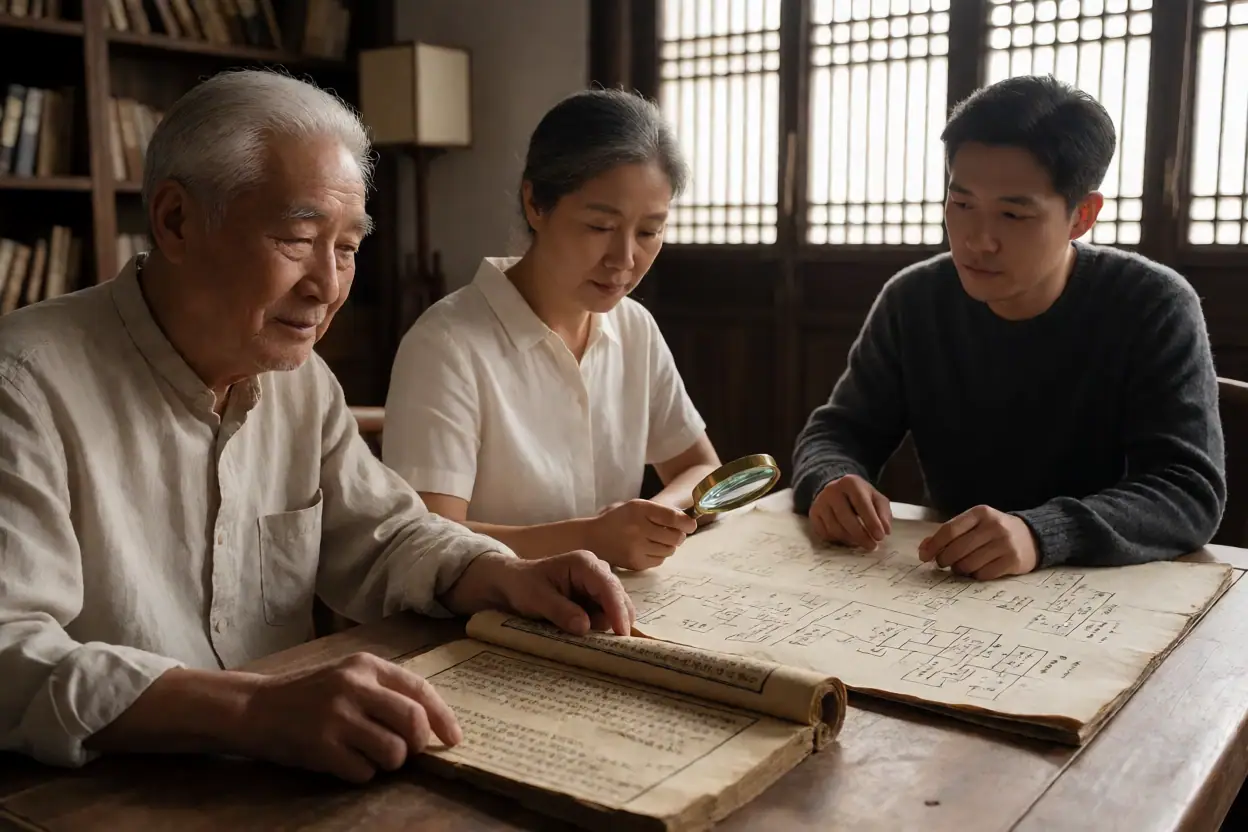
The Tuantian Zeng Genealogy Supplement is inscribed with “Wuchengtang.” Bibliographic information states that the complete genealogy includes seventy-six volumes, one separate volume, four introductory volumes, and five volumes on collateral lines; Volume 43 is only one physical fascicle within the full set of genealogical records. The number of volumes and the number of fascicles do not necessarily correspond one to one, so it is not possible to determine the corresponding volume number, branch, or geographic scope based solely on “Volume 43.” At this stage, there is also insufficient information to confirm whether this volume contains lineage charts, biographies, migration records, or supplementary materials such as ancestral hall property and contracts.
Here, “Wuchengtang” is more likely a hall-name identifier in the genealogy title, but the reasons for its formation and its relationship to a specific ancestor, commandery designation, or place of residence should still be determined based on the hall-name notes, genealogy prefaces, ancestral hall records, and explanations from successive genealogy compilations within the text. It is especially important to note that “Wucheng” may also appear as a place name, a commandery designation, or a surname name, and these should not be directly equated with one another. Existing information on the Wucheng surname is not yet complete, so the Tuantian Zeng should not be classified into the Wucheng surname system simply because “Wuchengtang” appears in the genealogy title.
“Tuantian” may refer to a settlement, an old place name, or a branch designation, but information at the provincial, prefectural, county, and other administrative levels is currently lacking. In ancestral research, one may first consult the introductory volumes, because genealogy prefaces, editorial notes, tables of contents, lists of compilers, and migration records can usually explain the circumstances of the first migration, branch divisions, and the relationship between earlier and later genealogies. Then, clues such as names, generation characters, spouses, places of residence, and birth and death dates can be extracted from Volume 43 and cross-checked against other volumes. If only a single page or scattered personal names are available, lineages should not be assembled immediately, and the same surname, the same hall name, or identical generation characters should not be used as the sole basis for identifying a common lineage.
Online genealogies can be used to organize the correspondence among volumes, fascicles, and pages, while retaining page numbers or image evidence for each kinship relationship. Ancestral-home names, migration routes, ancestral hall locations, and former ranking orders found in family memoirs can also serve as search clues, but oral memory may involve chronological misplacement or changes in place names and therefore needs to be corroborated with the original genealogy text. Local gazetteer databases are suitable for researching the historical evolution of the name Tuantian, as well as local Zeng settlements, ancestral halls, individuals, and migration backgrounds. If county gazetteers, local histories, inscriptions, or contracts from the same period can be found, the assessment will be more reliable.
This genealogy set is large in scale and separately lists volumes on collateral lines, indicating that its editorial structure may be relatively complex. The specific scope of the so-called “collateral lines” should not be presumed; it may involve affinal relatives, female-line descendants, appended individuals, or other related families, and must be interpreted only after consulting the editorial notes. Subsequent research should prioritize confirming the original title of the genealogy, the date of compilation, the compilers, the completeness of the preserved copy, the exact location of Tuantian, and the table of contents for Volume 43. Until this basic information has been established, statements about the founding ancestor, migration direction, origin of the hall name, and continuous lineage should all be treated with caution.
Learn More and Verify
- An Examination of Volume Twelve of the Wucheng Hall Tuantian Zeng Clan’s Continuation Genealogy
- Learn about the Zeng Clan Genealogy of Tuantian Wucheng Hall through Clue No. 28
- Organizing and Analyzing Wucheng Surname Materials Through Genealogy Volumes
- A Chronicle of the Fourth Genealogy Gathering of the Hu Clan of Xinglong Hall in Yizheng, Yangzhou
Genealogy Knowledge and Methods for Compiling Genealogies · Finding Genealogies and Local Gazetteers · Organize family-root-seeking leads